


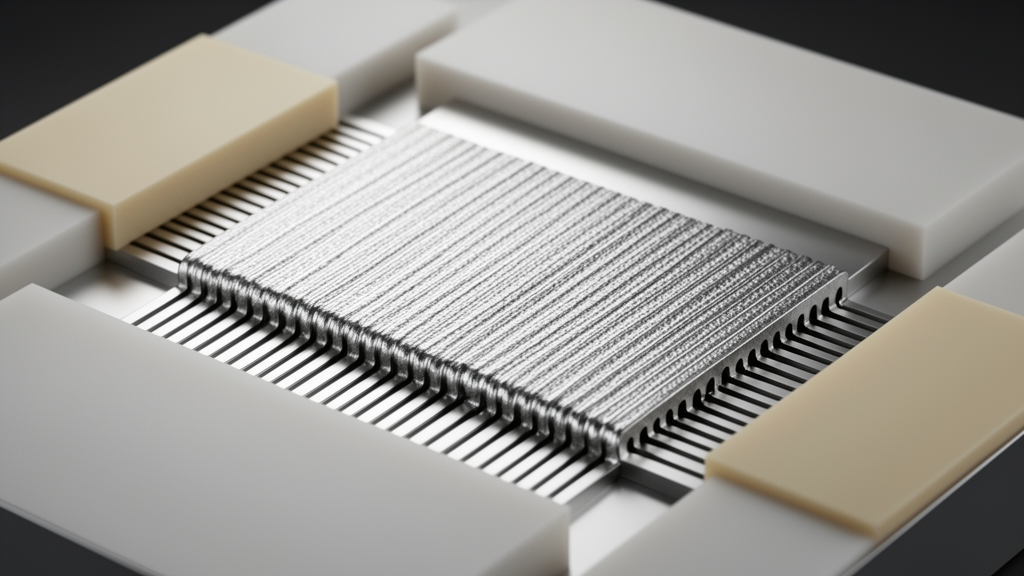
Modulating electroplating current density allows researchers to engineer the microstructure of flexible nickel-polyethylene terephthalate-nickel composite foils, boosting their performance as current collectors in solid-state batteries. Conventional copper current collectors in solid-state systems face critical challenges from corrosion and mechanical degradation. While nickel emerges as a promising alternative because of its superior anodic stability, the relationship linking its microstructure, properties, and performance in composite collectors has remained underexplored.
To address these performance limitations, the authors fabricated flexible Ni/PET/Ni composite foils by precisely modulating the electroplating current density to engineer the nickel microstructure.
The optimized composite foil, prepared at a current density of 1 A/dm² and designated as CNF-1, exhibited a refined surface morphology of 1.2 µm and a low surface roughness with an Ra value of 0.218 µm. Structural and durability assessments revealed that the engineered material possessed high tensile strength measuring 372.33 MPa, alongside exceptional corrosion resistance characterized by a current density of 1.785×10⁻⁶ A/cm².
When evaluated as an anode current collector in silicon-carbon‖lithium half cells, the CNF-1 foil delivered an initial discharge capacity of 597.98 mAh/g at 0.1 C and demonstrated superior cycling stability, outperforming conventional copper foil. The findings establish electroplating current density modulation as a viable strategy for designing durable, high-performance current collectors for advanced solid-state battery applications.
Subject of Research: Nickel composite current collectors for solid-state batteries
Article Title: Modulating current density engineers the microstructure of Ni/PET/Ni composite foils to boost solid state battery performance
Article References: Zhang, Z., Liu, E., Cai, H., Zhang, J., & Yang, Q. (2026). Modulating current density engineers the microstructure of Ni/PET/Ni composite foils to boost solid state battery performance. Discover Materials. https://doi.org/10.1007/s43939-026-00959-y
Image Credits: AI Generated
DOI: 10.1007/s43939-026-00959-y
Keywords: solid-state batteries, current collectors, nickel composite foil, electroplating, current density modulation, silicon-carbon anode, tensile strength, corrosion resistance, Modulating, current, density, engineers
Cite Scienmag News
Denise Maddox. (November 10, 2026). Tuned Current Density Optimizes Nickel Composite Foils for Solid-State Batteries. Scienmag. https://scienmag.com/tuned-current-density-optimizes-nickel-composite-foils-for-solid-state-batteries/
Denise Maddox. "Tuned Current Density Optimizes Nickel Composite Foils for Solid-State Batteries." Scienmag, 10 November 2026, https://scienmag.com/tuned-current-density-optimizes-nickel-composite-foils-for-solid-state-batteries/. Accessed 10 November 2026.
Denise Maddox. "Tuned Current Density Optimizes Nickel Composite Foils for Solid-State Batteries." Scienmag. November 10, 2026. https://scienmag.com/tuned-current-density-optimizes-nickel-composite-foils-for-solid-state-batteries/




