

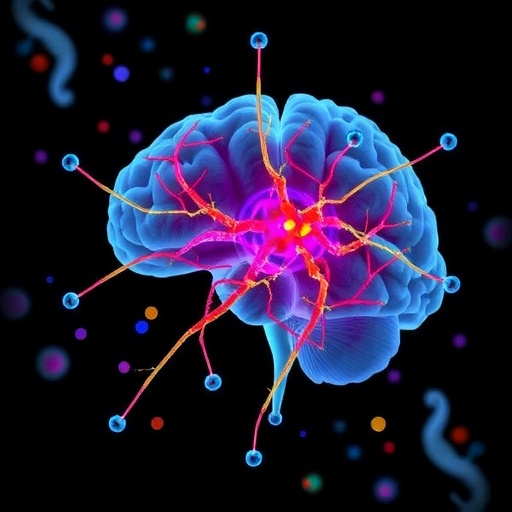
In a groundbreaking advancement poised to reshape glioblastoma treatment, researchers have developed a sophisticated nanoparticle system designed to co-deliver macrophage engager mRNA alongside PD-L1 antibodies directly to tumor sites. This innovative approach, detailed in a recent publication in Nature Communications, has shown promising potential to boost immunotherapeutic efficacy against one of the most aggressive and treatment-resistant brain tumors. The convergence of molecular engineering and immunology represented in this study opens new horizons for precision medicine targeting the tumor microenvironment in glioblastoma patients.
Glioblastoma multiforme (GBM) remains one of the deadliest forms of brain cancer, characterized by rapid progression and notorious resistance to conventional therapies such as surgery, radiation, and chemotherapy. Immune checkpoint blockade has emerged as a revolutionary strategy in oncology; however, its success against GBM has been limited. Tumor-induced immunosuppression, notably via the PD-1/PD-L1 axis, dampens the antitumor immune response, preventing cytotoxic T cells from adequately attacking tumor cells. The current study innovates by employing engineered nanoparticles capable of delivering two synergistic immunotherapeutic agents—macrophage engager mRNA and PD-L1 blocking antibodies—directly into the tumor milieu.
Central to this novel methodology is the design of tumor-responsive nanoparticles, which capitalizes on the distinct biochemical signature of the glioblastoma microenvironment. These nanoparticles are engineered to remain inert within systemic circulation but selectively activate upon exposure to tumor-specific enzymes and acidic pH. This tumor-responsive mechanism not only enhances delivery efficiency but also minimizes off-target effects and systemic toxicity, addressing critical challenges that have historically limited immunotherapy in brain tumors.
The co-delivery system leverages the transformative potential of messenger RNA as a therapeutic agent. The macrophage engager mRNA encodes for bi-functional proteins designed to reprogram tumor-associated macrophages (TAMs)—key players in the immunosuppressive tumor microenvironment. Normally, TAMs adopt a phenotype that promotes tumor growth and resistance to immune attacks. By delivering engager mRNA, the treatment converts these macrophages into potent antitumor effectors, capable of phagocytosing cancer cells and recruiting additional immune effector cells, thereby enhancing the tumor’s immunogenicity.
Simultaneously, the nanoparticles release PD-L1 antibodies, which serve as immune checkpoint inhibitors by binding to the PD-L1 molecules expressed on glioblastoma cells and suppressive immune cells. This blocks the interaction with PD-1 receptors on T cells, effectively releasing the immune system’s brakes and restoring the cytotoxic activity of T lymphocytes against tumor cells. The dual-action design allows for the coordinated modulation of both innate and adaptive immunity, a strategy that is anticipated to overcome the immunoresistant features of glioblastoma.
The synthesis and characterization of these nanoparticles were meticulously optimized. The delivery platform employs biodegradable polymers that ensure controlled release kinetics suitable to the dynamic tumor environment. Surface modifications with tumor-targeting ligands further enhance specificity, facilitating the nanoparticles’ traversal across the blood-brain barrier (BBB), a notoriously difficult obstacle in neuro-oncology drug delivery. The study’s data indicate successful BBB penetration, evidenced by significant accumulation of therapeutic agents within intracranial tumor tissues in preclinical mouse models.
Preclinical efficacy trials demonstrated impressive results with this co-delivery system. Treatment groups receiving the combined macrophage engager mRNA and PD-L1 antibody exhibited marked tumor regression and extended survival compared to controls. Remarkably, histological analyses uncovered a pronounced increase in M1-polarized macrophages and activated CD8+ T cells within the tumor, confirming the immunological reprogramming induced by the treatment. These findings herald the potential of this platform to transform immunotherapy outcomes in GBM.
Beyond efficacy, the safety profile of the nanoparticle system was rigorously evaluated. No significant systemic inflammatory responses or organ toxicities were observed in treated animals. Importantly, the tumor-responsive activation mechanism appeared to restrict immune stimulation to the tumor site, reducing the risk of autoimmune sequelae—a critical consideration for immunotherapeutics. These encouraging safety data bolster the translational potential of the approach for clinical trials.
Mechanistic studies shed light on the interaction dynamics between delivered mRNA-encoded proteins and endogenous immune cells. The macrophage engagers effectively function as bispecific antibodies, simultaneously binding macrophages and tumor antigens, thus facilitating targeted phagocytosis. Meanwhile, PD-L1 blockade synergistically amplifies T cell-mediated cytotoxicity. This combinatorial immune modulation represents a sophisticated intervention that could circumvent both innate and adaptive immunosuppression, a dual barrier that has thwarted many single-agent immunotherapies.
In addition to therapeutic implications, the modular design of these nanoparticles allows for rapid adaptation to other tumor types and immune targets. The customizable mRNA payload and antibody combinations position this platform as a versatile tool in oncology, potentially enabling personalized treatment regimens based on patient-specific tumor immunoprofiles. Such adaptability aligns with the current trend toward precision immuno-oncology.
The study also addresses critical aspects of mRNA stability and expression within the tumor microenvironment. Nanoparticle encapsulation protects mRNA from degradation by extracellular nucleases, while the tumor-responsive release kinetics ensure localized and sustained protein expression. This strategic delivery overcomes inherent limitations of mRNA therapeutics, enhancing their clinical viability and expanding their functional repertoire in cancer immunotherapy.
Researchers also emphasize the translational challenges ahead, recognizing the complexity of human glioblastoma compared to murine models. Variability in PD-L1 expression, macrophage heterogeneity, and the unique human immune landscape necessitate further optimization and validation. Ongoing endeavors will focus on scalable manufacturing, long-term safety, and combinational strategies with other immuno-oncology agents or therapies to maximize clinical benefit.
Future directions include exploring synergistic effects between this co-delivery system and other immunomodulators such as STING agonists, CAR-T cells, or radiation therapy. The dynamic interplay between tumor cells, immune infiltrates, and therapeutic agents invites a multipronged treatment approach. This study’s framework lays the foundation for integrating multiple therapeutic modalities into a cohesive regimen tailored for glioblastoma’s complexity and heterogeneity.
The implications of this research extend far beyond glioblastoma, hinting at a paradigm shift in how immunotherapies can be precisely delivered and locally activated within solid tumors. By marrying advanced nanoscale drug delivery techniques with cutting-edge immunological targets, this approach pioneers a new class of immunotherapeutic strategies that could redefine cancer management.
This seminal work by Zhang, H., Miao, J., Gao, L., and colleagues embodies the forefront of translational cancer research. Their elegant design of tumor-responsive nanoparticles co-delivering macrophage engager mRNA and PD-L1 antibodies represents a beacon of hope for patients suffering from glioblastoma, one of the most formidable brain malignancies. As this technology advances toward clinical application, it promises to transform not only the prognosis of glioblastoma patients but also the landscape of immuno-oncology therapeutics.
Subject of Research: Glioblastoma immunotherapy utilizing tumor-responsive nanoparticle-mediated delivery of macrophage engager mRNA and PD-L1 antibody.
Article Title: Co-delivering macrophage engager mRNA and PD-L1 antibody via tumor-responsive nanoparticles for glioblastoma immunotherapy
Article References: Zhang, H., Miao, J., Gao, L. et al. Co-delivering macrophage engager mRNA and PD-L1 antibody via tumor-responsive nanoparticles for glioblastoma immunotherapy. Nat Commun (2026). https://doi.org/10.1038/s41467-026-71646-y
Image Credits: AI Generated


