


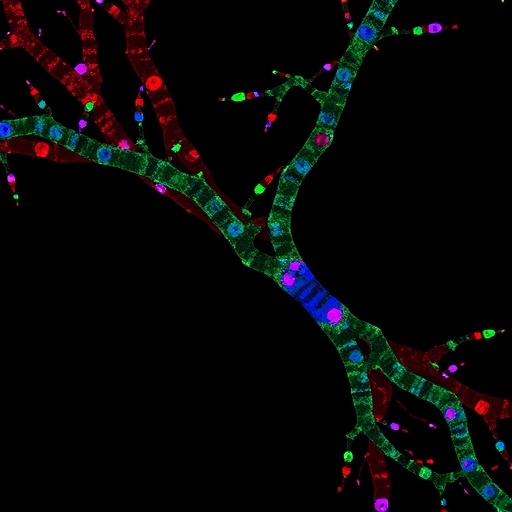
Ewing sarcoma, an aggressive cancer that predominantly affects children and adolescents, has long challenged researchers because of its ability to grow rapidly, spread to distant organs, and return after treatment. A new study published in Oncotarget suggests that interfering with a network of receptor tyrosine kinases may temporarily slow the disease in experimental models. The research examined the multi-kinase inhibitor K252a in human Ewing sarcoma tumors grown in immunodeficient mice and found that treatment was associated with reduced activity of Trk, PI3K, and IGF1R signaling pathways—molecular systems that help cancer cells survive, proliferate, and adapt.
The study was led by Bruna Almeida dos Santos, with Caroline Brunetto de Farias serving as corresponding author. The researchers focused on tropomyosin receptor kinases, commonly known as Trk receptors. TrkA, TrkB, and TrkC are encoded by the genes NTRK1, NTRK2, and NTRK3, respectively. These receptors normally transmit signals initiated by neurotrophins, proteins involved in neuronal development and maintenance. In cancer, however, abnormal receptor expression or activation can support cell survival and uncontrolled growth. Earlier work from the same research group indicated that TrkA and TrkB are expressed in Ewing sarcoma cells and that blocking these receptors can reduce tumor-cell proliferation.
To test the effect of broader Trk pathway inhibition in living organisms, the researchers used SK-ES-1 cells, a human Ewing sarcoma cell line. The cells were implanted into immunodeficient mice, allowing tumors to develop without being rejected by the animals’ immune systems. Once the tumors reached approximately 80–100 cubic millimeters, the mice received daily intraperitoneal injections of K252a at a dose of 0.5 milligrams per kilogram for 18 days. Control animals received the vehicle solution instead. K252a is not a selective Trk inhibitor; it can interfere with several protein kinases, meaning that its biological effects may involve multiple signaling systems simultaneously.
The treatment produced a measurable but temporary change in tumor growth. During part of the treatment period, particularly between days 9 and 15, tumors in K252a-treated mice grew more slowly than those in the control group. The difference did not persist, however. By day 18, tumor volumes in the treated animals had returned to levels comparable to those observed in the control group. The investigators also reported no significant differences in body weight or in the serum biochemical markers measured during the experiment, although these observations do not establish the compound’s safety for clinical use.
Molecular analysis of the tumor tissue offered clues about the temporary response. Tumors exposed to K252a showed significantly lower levels of total and phosphorylated TrkA and TrkB. Phosphorylation is a chemical modification that often activates signaling proteins, so reduced phosphorylation can indicate diminished receptor signaling. The researchers also observed reductions in total and phosphorylated PI3K, a central component of the PI3K–AKT pathway, which regulates cell survival, metabolism, growth, and resistance to stress. TrkC levels, by contrast, did not change significantly, suggesting that the three Trk receptors may not contribute equally to signaling in this model.
The analysis also revealed changes in the insulin-like growth factor pathway. Both total and phosphorylated insulin-like growth factor 1 receptor, or IGF1R, were reduced in tumors from treated animals. IGF1R is another receptor tyrosine kinase that can stimulate downstream pathways such as PI3K–AKT and promote proliferation and survival in cancer cells. The overlap between Trk and IGF1R signaling is particularly important because cancer cells can use interconnected pathways to compensate when one growth signal is blocked. The findings therefore suggest that K252a may have affected a broader signaling network rather than acting through Trk receptors alone.
The researchers tested this possibility in cultured SK-ES-1 cells by combining K252a with NVP-ADW742, a selective inhibitor of IGF1R. At the concentrations used, each compound alone caused only a relatively small decrease in cell viability. When the two compounds were administered together, the reduction in viability was significantly greater than that produced by either treatment alone. This result is consistent with the idea that simultaneous disruption of Trk-related and IGF1R signaling could make it more difficult for Ewing sarcoma cells to maintain the survival signals they need. The experiment remains an early laboratory observation and does not demonstrate that the combination would be effective or tolerable in patients.
The study also explored whether the expression of NTRK genes was related to overall survival in patients with Ewing sarcoma. The researchers analyzed two independent gene-expression datasets and found that higher NTRK2 expression was associated with shorter overall survival in a Children’s Oncology Group cohort. In a separate EuroEwing cohort, higher NTRK1 expression was associated with longer survival. NTRK3 showed contrasting associations between the patient populations. These relationships remained statistically significant after correction for multiple comparisons, but the cohorts were relatively small. Differences in patient characteristics, treatment, sample collection, and molecular profiling could also influence the results, so the findings should be regarded as exploratory rather than as validated clinical biomarkers.
The authors emphasize that the study’s conclusions are limited by the use of a single cell line-derived xenograft model and by K252a’s broad kinase activity. Because the compound can inhibit several enzymes, the temporary delay in tumor growth cannot be attributed exclusively to Trk inhibition or to any one molecular pathway. Further work will be needed in additional Ewing sarcoma models, including tumors with different genetic and biological features, and with more selective inhibitors capable of separating the contributions of TrkA, TrkB, TrkC, PI3K, and IGF1R. Even with these limitations, the results highlight the signaling dependence of Ewing sarcoma and point toward combination strategies that could be investigated as potential ways to overcome the tumor’s ability to bypass single-pathway treatment.
News Publication Date: August 10, 2026
Web References: https://doi.org/10.18632/oncotarget.28911; https://www.oncotarget.com/archive/v17/
References: dos Santos et al., “Delayed growth of SK-ES-1 Ewing sarcoma tumor xenografts is associated with reduced Trk and IGF1R pathway markers,” Oncotarget, published August 7, 2026. DOI: 10.18632/oncotarget.28911
Cite Scienmag News
Nathaniel Bowman. (August 10, 2026). Trk and IGF1R Signaling Linked to Delayed Ewing Sarcoma Growth. Scienmag. https://scienmag.com/trk-and-igf1r-signaling-linked-to-delayed-ewing-sarcoma-growth/
Nathaniel Bowman. "Trk and IGF1R Signaling Linked to Delayed Ewing Sarcoma Growth." Scienmag, 10 August 2026, https://scienmag.com/trk-and-igf1r-signaling-linked-to-delayed-ewing-sarcoma-growth/. Accessed 4 September 2026.
Nathaniel Bowman. "Trk and IGF1R Signaling Linked to Delayed Ewing Sarcoma Growth." Scienmag. August 10, 2026. https://scienmag.com/trk-and-igf1r-signaling-linked-to-delayed-ewing-sarcoma-growth/


