


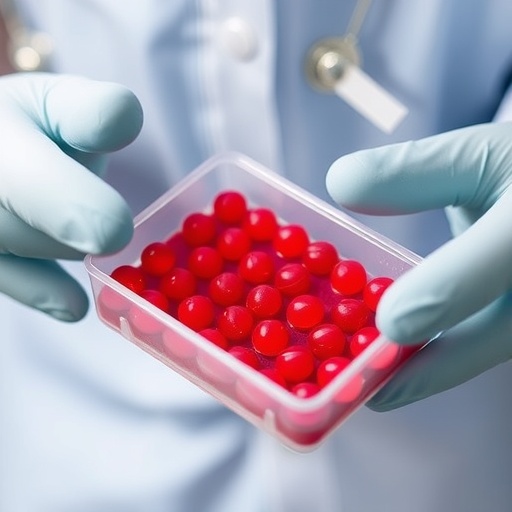
University of Pittsburgh physician-scientists have reported results from an adaptive clinical trial suggesting that refrigerated platelets can remain effective for up to 21 days, potentially transforming how hospitals collect, store and deliver one of the most important therapies for patients with life-threatening bleeding. The findings, published in JAMA, indicate that chilled platelets performed as well as conventionally stored platelets in patients undergoing cardiac surgery, while offering a shelf life nearly four times longer. The study could support regulatory changes in the United States and other countries, allowing refrigerated platelets to be used for actively bleeding patients. If adopted broadly, the approach may increase platelet availability, reduce costly waste and make it more practical for rural hospitals, community medical centers and military medical units to maintain a reliable emergency supply.
Platelets are small, disc-shaped blood components that circulate through the bloodstream and respond rapidly when blood vessels are damaged. After an injury, they adhere to exposed tissue, activate, change shape and recruit additional platelets to build a temporary plug. They also support the formation of fibrin, the protein mesh that stabilizes a clot. Patients undergoing major surgery, suffering traumatic injuries or experiencing severe illness may lose platelets through bleeding, dilution or impaired production, leaving them unable to control blood loss without transfusion. Although platelets are essential in these situations, they are among the most difficult blood products to store. In current practice, donated platelets are generally held at room temperature under continuous agitation, a method that preserves their immediate clot-forming performance but limits their usable shelf life to approximately five to seven days.
That short storage window creates a fragile supply chain. Approximately 2.5 million room-temperature platelet units are collected annually in the United States, yet an estimated 10% to 20% are discarded before use because they expire. Recent research has placed the resulting hospital losses at roughly $300 million. The challenge is especially severe outside major metropolitan areas, where hospitals may treat too few patients with catastrophic bleeding to justify keeping room-temperature platelets on hand. A facility that stocks the product must balance the possibility of urgently needing it against the likelihood that units will expire unused. Because blood donations may require as long as two days to process and transport, even a temporary surge in trauma, surgery or other medical demand can expose hospitals to dangerous shortages.
For decades, regulators viewed refrigeration as a potential solution that came with a serious clinical cost. Early studies conducted in healthy volunteers suggested that cooling platelets reduced their circulation time after transfusion, leading to the belief that refrigerated products were less effective than room-temperature units. More recent laboratory and preclinical investigations, however, have indicated that cold storage may preserve or enhance several properties relevant to emergency bleeding. Refrigerated platelets tend to become activated more quickly, adhere efficiently to injured surfaces and may be particularly suited to patients who need immediate clot formation rather than long-term circulation. The trade-off is that chilled platelets may not remain in the bloodstream as long as room-temperature products, making them a potentially strong option for active hemorrhage but not necessarily a universal replacement for every transfusion indication.
To test the approach in patients, Philip Spinella, a professor of surgery and critical care medicine at the University of Pittsburgh School of Medicine and co-director of the university’s Trauma and Transfusion Medicine Research Center, led the Chilled Platelet Study, known as CHIPS. The randomized clinical trial enrolled 1,000 children and adults undergoing cardiac surgery at 27 sites in the United States and Australia between December 2021 and March 2025. Participants were assigned to receive either standard platelets stored at room temperature for fewer than seven days or refrigerated platelets. The trial was designed as an adaptive study, allowing investigators to evaluate accumulating evidence without waiting until the entire participant group had been treated before making decisions about the next stage.
Under the trial design, independent data analysts reviewed outcomes after every 200 participants. If the chilled platelets were performing at least as well as the conventional products, the investigators increased the maximum storage age of the refrigerated units by five days for the next group. The process continued until the study reached a possible storage duration of 21 days. This structure allowed the researchers to test progressively older chilled platelets while maintaining safety oversight. Rather than assuming that a product stored for three weeks would behave identically to one stored for several days, the adaptive design treated storage duration as a question that had to be answered sequentially. The resulting evidence showed that refrigerated platelets stored for as long as three weeks were as effective at treating bleeding as room-temperature platelets stored for up to one week.
The result is important because the practical extension is greater than the storage numbers alone suggest. If blood banks require approximately two days to process donations, a 21-day refrigerated shelf life could provide hospitals with nearly four times as much usable time compared with the current five-to-seven-day window. That additional time could reduce expiration, simplify distribution and allow regional blood centers to move platelets over longer distances without the same pressure to use them immediately. Vitalant, which supplied the platelets for the study, has reported that about 15% of hospitals may experience at least one delayed platelet transfusion during an average month because of shortages. A longer-lived product could help keep platelets available on hospital shelves when trauma events, surgical surges or other emergencies abruptly increase demand.
The potential benefits are particularly significant for children. Unlike many clinical studies that exclude pediatric patients when the intervention is not designed specifically for them, CHIPS included infants, children and adults from the beginning. Roughly one-third of the participants were children, reflecting the high transfusion needs associated with pediatric cardiac surgery. Small children can experience substantial blood loss relative to their total blood volume, and cardiac procedures may produce complex disturbances in clotting that require rapid replacement of platelets and other blood components. Including pediatric patients means the trial may provide evidence relevant to a population often left out of general surgical research. It also offers a stronger basis for considering refrigerated platelets in hospitals that care for children but lack the patient volume to maintain a large conventional platelet inventory.
The findings could also influence emergency medicine and military medicine. In remote or austere settings, where transportation delays and limited refrigeration infrastructure complicate blood logistics, a dependable supply of longer-lasting platelets could expand the ability to treat hemorrhage close to the point of injury. Spinella, who is also associate medical director of the University of Pittsburgh’s Center for Military Medicine Research, said the approach may make platelet therapy more feasible in conflict areas. For civilian hospitals, the same principle applies to rural communities and smaller medical centers that cannot afford the waste associated with maintaining short-lived room-temperature products. The study was funded by the Defense Health Agency’s Operational Medical Systems through the Defense Health Agency Contracting Activity, reflecting the military’s interest in improving access to blood products during prolonged evacuation routes and high-demand events.
The CHIPS results do not mean that refrigerated platelets will immediately replace all conventional platelet transfusions. Regulatory agencies, including the U.S. Food and Drug Administration, must review the evidence and determine how the products should be manufactured, labeled, distributed and used. Hospitals will also need validated protocols for temperature control, inventory rotation, quality testing and clinical selection. Nevertheless, the trial provides evidence that could support a major change in transfusion medicine: storing platelets cold for up to 21 days without sacrificing their ability to control surgical bleeding. In a health system pressured by an aging donor population, declining replacement by younger donors, high rates of product wastage and recurring shortages, a safer, longer-lasting platelet supply could turn a chronically scarce resource into a more flexible and widely available treatment.
News Publication Date: 17-Aug-2026
Web References: University of Pittsburgh School of Medicine — https://www.medschool.pitt.edu/; Chilled Platelet Study — https://clinicaltrials.gov/study/NCT04834414; U.S. Food and Drug Administration — https://www.fda.gov/; University of Pittsburgh Trauma and Transfusion Medicine Research Center — https://researchsites.pitt.edu/ttmrc; Vitalant — https://www.vitalant.org/
References: JAMA; Hematology research on platelet wastage — https://pmc.ncbi.nlm.nih.gov/articles/PMC9821291/
Cite Scienmag News
Ophelia Keating. (August 17, 2026). Trial finds chilled platelets safely expand lifesaving supplies for bleeding patients. Scienmag. https://scienmag.com/trial-finds-chilled-platelets-safely-expand-lifesaving-supplies-for-bleeding-patients/
Ophelia Keating. "Trial finds chilled platelets safely expand lifesaving supplies for bleeding patients." Scienmag, 17 August 2026, https://scienmag.com/trial-finds-chilled-platelets-safely-expand-lifesaving-supplies-for-bleeding-patients/. Accessed 4 September 2026.
Ophelia Keating. "Trial finds chilled platelets safely expand lifesaving supplies for bleeding patients." Scienmag. August 17, 2026. https://scienmag.com/trial-finds-chilled-platelets-safely-expand-lifesaving-supplies-for-bleeding-patients/


