


A comprehensive study examining stillbirth rates within a large commercially insured U.S. population between 2016 and 2022 offers critical insight into the complex interplay of clinical risk factors and socio-economic determinants, highlighting significant disparities in maternal and fetal health outcomes. This investigation, conducted by a team of researchers including Dr. Jessica L. Cohen of Harvard T.H. Chan School of Public Health, addresses gaps in our understanding of how geographic, racial, and economic factors converge to influence stillbirth incidences across multiple strata of society.
Stillbirth—defined as the death of a fetus at or after 20 weeks of gestation—remains a persistent public health challenge, with rates in the United States notably higher than those in other developed countries. Precise characterization of risk patterns over time is essential for informing preventative strategies and optimizing prenatal care. The study leverages a vast dataset encompassing millions of births insured commercially, thereby controlling for insurance coverage variability and focusing on additional determinants that contribute to stillbirth risk beyond economic access to healthcare.
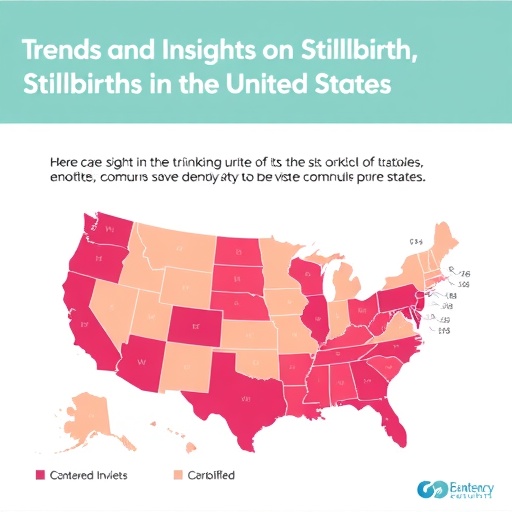
Geographic disparities in stillbirth rates emerge as a critical dimension in this research, demonstrating that access to timely and appropriate obstetric care varies significantly across different regions. Rural areas, often underserved in terms of healthcare infrastructure and specialist availability, reveal higher stillbirth incidences compared to urban centers. The study incorporates sophisticated spatial analysis techniques to map these patterns, providing a granular understanding of how proximity to healthcare facilities and regional socioeconomic status correlate with fetal mortality outcomes.
Beyond geography, income inequality manifests as a profound influencer of pregnancy outcomes. Despite universal commercial insurance coverage within the cohort, the study reveals persistent gradients in stillbirth risk linked to community-level income disparities. This suggests that broader social determinants of health, including housing stability, nutrition, environmental exposures, and psychosocial stressors, exert substantial effects on gestational survivability, underscoring the limitations of insurance coverage alone as a protective factor.
Race and ethnicity are integral dimensions of the analysis, illuminating enduring inequities in stillbirth rates consistent with systemic disparities observed across maternal health metrics. Notably, the study finds elevated stillbirth risks among historically marginalized racial and ethnic groups even within insured populations, indicating that structural racism and implicit biases continue to influence clinical outcomes through complex pathways. Detailed examination of these patterns calls for culturally sensitive interventions and equitable health system reforms.
Clinical risk factors remain paramount in the stratification of stillbirth risk, with the study meticulously adjusting for known complications such as hypertensive disorders, diabetes mellitus, and previous obstetric history. The integration of electronic health record data allows for the refinement of risk models, facilitating enhanced predictive accuracy. This multidimensional approach aids in discerning which clinical indicators might serve as effective targets for early intervention.
The research methodology embodies rigorous measurement theory principles, employing validated algorithms to ensure reliability and accuracy in capturing stillbirth events amid administrative datasets. This methodological robustness supports the evaluation of subtle risk factor interactions and temporal trends over the seven-year study window, contributing to a nuanced understanding of evolving population health dynamics.
Notably, the study engages with the interface between health insurance structure and population health, probing the hypothesis that commercial insurance coverage modulates but does not eliminate disparities in adverse pregnancy outcomes. This challenges assumptions that insurance status is the dominant factor and pivots attention toward integrated strategies spanning clinical care improvements and socioeconomic policy reforms.
Pertinent to obstetrics practice, findings from this research advocate for a paradigm shift towards more personalized, risk-adaptive prenatal care frameworks that incorporate social determinants alongside traditional medical assessments. The implications for reducing stillbirth rates extend to the refinement of screening protocols, resource allocation, and targeted support services for at-risk populations.
Moreover, the investigation enriches the epidemiological literature by extending demographic and economic analyses to the clinical domain. By bridging social science perspectives on income inequality, ethnicity, and geography with medical insights into pregnancy complications, the study embodies an interdisciplinary model essential for tackling complex public health phenomena.
The dataset’s scope and temporal coverage permit examination of changes coinciding with policy events and healthcare system transformations, enabling evaluations of interventions such as expanded maternal health programs or changes in insurance regulations. Although primarily descriptive, these longitudinal insights pave the way for future causal inference studies that can inform precise policymaking.
Ultimately, this research underscores that advances in reducing fetal mortality require synergistic efforts beyond the clinic walls. Addressing stillbirth necessitates comprehensive strategies intertwining medical innovation, health equity initiatives, community engagement, and socioeconomic upliftment. The intricate tapestry of factors identified compels stakeholders in public health, clinical practice, and policy realms to collaborate intensively toward eliminating preventable stillbirth.
For researchers, clinicians, and policymakers dedicated to maternal and child health, this study offers a rich resource elucidating contemporary challenges and spotlighting avenues for impactful interventions. As efforts to monitor and mitigate stillbirth continue, the integration of such robust multi-level analyses remains indispensable in achieving meaningful reductions and ultimately safeguarding the well-being of mothers and infants nationwide.
News Publication Date: [Date not provided]
Web References: [No link provided]
References: DOI 10.1001/jama.2025.17392
Cite Scienmag News
Courtney Benton. (October 27, 2025). Trends and Insights on Stillbirths in the United States. Scienmag. https://scienmag.com/trends-and-insights-on-stillbirths-in-the-united-states/
Courtney Benton. "Trends and Insights on Stillbirths in the United States." Scienmag, 27 October 2025, https://scienmag.com/trends-and-insights-on-stillbirths-in-the-united-states/. Accessed 4 September 2026.
Courtney Benton. "Trends and Insights on Stillbirths in the United States." Scienmag. October 27, 2025. https://scienmag.com/trends-and-insights-on-stillbirths-in-the-united-states/


