


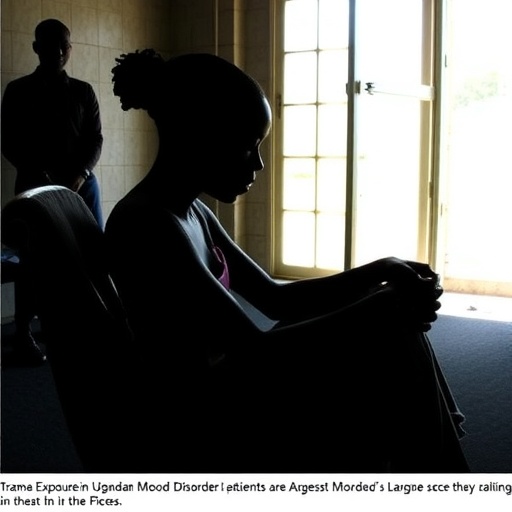
In a groundbreaking new study published in BMC Psychiatry, researchers have highlighted the striking prevalence of trauma exposure among individuals diagnosed with mood disorders in Uganda, underscoring urgent yet often overlooked challenges faced by psychiatric patients in low-resource settings. Mood disorders, encompassing major depressive disorder and bipolar disorder, represent a significant public health concern worldwide, but this latest examination paints a vivid picture of how trauma intertwines with mental health in regions grappling with widespread violence and limited mental health infrastructure.
The investigation was conducted at the Mbarara Regional Referral Hospital, a tertiary psychiatric facility in Uganda, between April and June 2023. Researchers assessed 221 adult patients with diagnosed mood disorders, employing robust clinical tools such as the Stressful Life Events Screening Questionnaire (SLESQ) to measure trauma exposure and the Columbia-Suicide Severity Rating Scale (C-SSRS) to gauge suicidality. This comprehensive assessment aimed to map not just the frequency but also the typology and correlates of trauma within this vulnerable population.
Results from the study illuminate a grim reality: over 70% of participants reported experiencing trauma at some point in their lives. Crime-related trauma predominated overwhelmingly, affecting more than 95% of those exposed. The pervasiveness of violence, including physical abuse, robbery, and assault, appeared to be a dominant facet of participants’ traumatic experiences, reflecting broader societal challenges in Uganda, where crime and violence remain significant public health concerns.
A particularly notable finding was the differential pattern of trauma exposure between individuals with bipolar disorder versus those suffering from major depressive disorder. Physical abuse was reported significantly more often by patients with bipolar disorder, a detail that may hint at distinct trauma-related pathways influencing the expression and progression of various mood disorders. This distinction emphasizes the necessity for clinicians to adopt disorder-specific trauma screening and intervention strategies.
Beyond clinical diagnoses, demographic features also played a critical role in trauma prevalence. Older patients showed a higher likelihood of trauma exposure, suggesting cumulative risk across the lifespan. Furthermore, a family history of suicide attempts emerged as an independent predictor, linking genetic or environmental vulnerabilities with increased susceptibility to both trauma and mood disorder complications. This complex interrelationship warrants further molecular and psychosocial research to unpack underlying mechanisms.
The mental health landscape in Uganda generally faces significant systemic challenges, with scant resources and limited access to specialized psychiatric care. Against this backdrop, the study’s emphasis on routine trauma screening is timely and essential. Implementing trauma-informed care within psychiatric services could revolutionize treatment outcomes by addressing root contributors to mood disorder severity and chronicity rather than merely managing symptomatic manifestations.
From a methodological standpoint, the cross-sectional design provided a snapshot of trauma’s footprint within this psychiatric population but also calls for longitudinal studies. Understanding how trauma exposure interacts over time with mood disorder trajectories and treatment responses would enrich clinical understanding, potentially guiding personalized interventions and public health policies.
Trauma-informed approaches extend beyond clinical settings, requiring societal and governmental commitment to reduce crime and violence, strengthen family support structures, and enhance mental health literacy. The authors advocate for integrated strategies to mitigate trauma’s deleterious effects, recognizing that psychiatric formulations must adapt to sociocultural and environmental realities, especially in low-income countries like Uganda.
This study contributes to an expanding body of knowledge affirming trauma’s centrality in mood disorders globally but fills a critical gap by documenting these dynamics in underrepresented African populations. It challenges researchers and clinicians alike to reconsider prevailing paradigms that often overlook cultural context and systemic adversity as fundamental factors shaping mental health outcomes.
Importantly, the findings expose a feedback loop where trauma not only precipitates mood disorders but also exacerbates risk factors such as suicidality, creating a vicious cycle difficult to break without specialized intervention. The study’s call for trauma-informed care thus represents both a clinical imperative and a moral obligation to prevent avoidable suffering among psychiatric patients.
As global mental health initiatives gain traction, integrating evidence from diverse settings like Uganda will be crucial to designing equitable and effective mental health systems. By highlighting trauma exposure’s magnitude in a tertiary psychiatric setting, this research advocates for policy reforms and resource allocation aimed at comprehensive mental health care that addresses both psychosocial and clinical needs.
In sum, this pioneering investigation offers a critical window into the complex interplay between trauma and mood disorders in a resource-limited context, emphasizing the urgency of embedding trauma screening and informed interventions into psychiatric care frameworks. It stands as a clarion call for clinicians, researchers, and policymakers to prioritize trauma-sensitive approaches to improve the lives of millions struggling with mental illness worldwide.
Cite Scienmag News
Glenn Wilkins. (October 9, 2025). Trauma Exposure in Ugandan Mood Disorder Patients. Scienmag. https://scienmag.com/trauma-exposure-in-ugandan-mood-disorder-patients/
Glenn Wilkins. "Trauma Exposure in Ugandan Mood Disorder Patients." Scienmag, 9 October 2025, https://scienmag.com/trauma-exposure-in-ugandan-mood-disorder-patients/. Accessed 8 October 2026.
Glenn Wilkins. "Trauma Exposure in Ugandan Mood Disorder Patients." Scienmag. October 9, 2025. https://scienmag.com/trauma-exposure-in-ugandan-mood-disorder-patients/

