


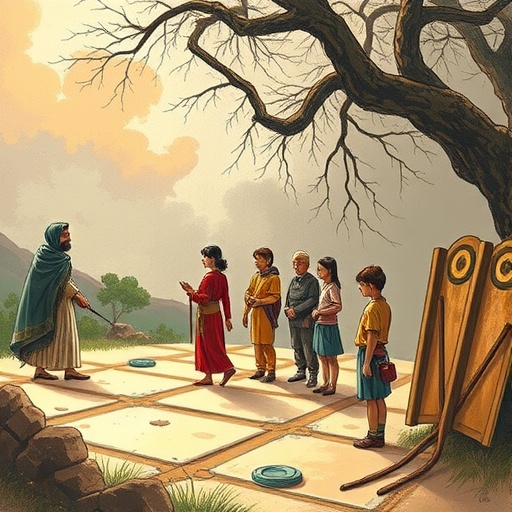
In the realm of education, particularly within the domain of history, a transformative shift is taking place as educators increasingly adopt innovative teaching strategies. One such approach, inquiry-based learning, appears to be influencing students’ attitudes toward learning significantly. A recent study conducted by Abebe, Zeleke, and Melese investigates this phenomenon specifically in the context of secondary schools in Bonga Town, located in Southwest Ethiopia. Their research delves into the effects of the 5E instructional model— a framework designed to promote effective inquiry-based learning— on students’ engagement and attitudes towards history education.
Researchers are progressively recognizing that traditional methods of instruction often fail to engage students effectively. Historically, education has been dominated by rote memorization and passive learning, where students are mere recipients of information. This conventional approach may lead to disinterest in subjects deemed less relevant or overly challenging, such as history. The study undertaken by Abebe and colleagues aims to tackle these issues by employing a more interactive and participatory method of teaching aimed at boosting students’ motivation and interest in learning history.
The 5E instructional model serves as the foundation for the inquiry-based learning framework examined in this study. This model comprises five essential phases: Engage, Explore, Explain, Elaborate, and Evaluate. This structure encourages students to take an active role in their own learning journey. The “Engage” phase grabs students’ attention and stimulates their curiosity, while the “Explore” phase allows them to investigate and interact with the subject matter first-hand. The subsequent phases guide students toward a deeper understanding and ability to apply what they’ve learned in various contexts.
In their research, Abebe, Zeleke, and Melese carefully designed a curriculum based on the 5E model for history classes in Bonga Town’s secondary schools. By incorporating inquiry-based activities, they envisioned a classroom environment that promotes critical thinking, problem-solving, and collaborative learning. The study included a diverse group of students and utilized both qualitative and quantitative data collection methods to assess the impact of this instructional strategy on students’ attitudes toward learning history.
One of the fundamental findings of the research indicates a marked improvement in students’ enthusiasm and engagement levels when taught through the inquiry-based 5E model compared to traditional teaching strategies. Students reported feeling more involved in their learning processes and expressed a stronger desire to explore historical concepts more deeply. The interactive nature of the curriculum helped shift perceptions about learning history as a stagnant, boring subject to one that is dynamic and relevant.
Additionally, the collaborative nature of inquiry-based learning fostered a sense of community among students. They engaged in discussions, shared insights, and worked together to solve problems, leading to a more connected learning experience. Such interactions not only improved their social skills but also provided a platform for diverse perspectives, reinforcing the idea that history is a multifaceted subject rich with various interpretations and understandings.
Students also responded positively to the autonomy provided within the learning process. The inquiry-based model allowed them to take charge of their learning, encouraging self-directed research on historical events that sparked their interest. By empowering students to follow their curiosity, educators can instill a lifelong love for learning, which is particularly crucial in a rapidly changing world where critical thinking and analytical skills are paramount.
The qualitative feedback from students concerning their experiences in the inquiry-based environment further underscores the efficacy of this approach. Many students expressed how they found history more enjoyable and fascinating than before, appreciating the connections made between historical events and contemporary issues. Such insights reveal that when students see relevance in what they are learning, they are more likely to engage deeply and retain information longer.
The findings from this research also have implications beyond the classroom walls; they suggest the need for a broader adoption of inquiry-based learning strategies in educational systems throughout Ethiopia and potentially beyond. As the global landscape shifts toward more interactive and technology-driven learning paradigms, traditional educational models must evolve to meet the needs of current and future generations of students.
In conclusion, the inquiry-based learning through the 5E instructional model presents a substantial opportunity to enhance how history is taught in secondary education. By engaging students in a holistic learning process that emphasizes exploration and critical thinking, educators can transform students’ attitudes towards history into one of enthusiasm and curiosity. Studies like those conducted by Abebe, Zeleke, and Melese highlight the necessity of innovative teaching methods that are adaptable and can resonate with students of various backgrounds and learning styles. Future research and practice should continue to investigate and implement such pedagogical shifts, ultimately enriching the educational landscape in Ethiopia and beyond.
Cite Scienmag News
Courtney Benton. (September 23, 2025). Transforming History Learning Attitudes through 5E Model. Scienmag. https://scienmag.com/transforming-history-learning-attitudes-through-5e-model/
Courtney Benton. "Transforming History Learning Attitudes through 5E Model." Scienmag, 23 September 2025, https://scienmag.com/transforming-history-learning-attitudes-through-5e-model/. Accessed 5 September 2026.
Courtney Benton. "Transforming History Learning Attitudes through 5E Model." Scienmag. September 23, 2025. https://scienmag.com/transforming-history-learning-attitudes-through-5e-model/


