

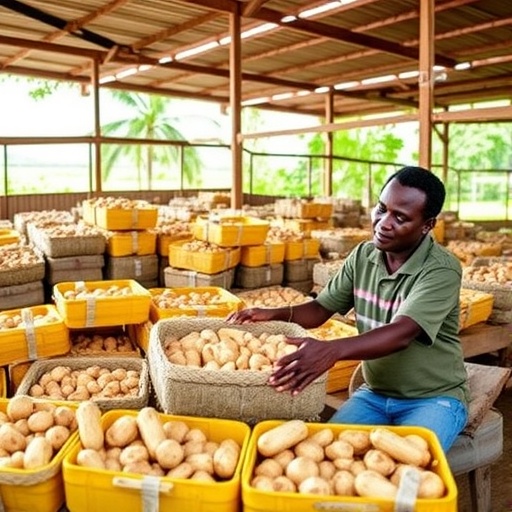
In a transformative shift that could redefine cassava processing in Nigeria, a comprehensive study has highlighted the economic viability and technology adoption among cassava processors. Researchers led by Adejumo, Adebola Ikudayisi, and Omotosho embarked on this critical investigation to reveal insights into the current state of post-harvest processing technologies. As Nigeria stands as one of the world’s largest cassava producers, understanding these dynamics is vital for the nation’s agricultural landscape.
The study emphasizes the importance of transitioning from traditional manual processing methods to advanced mechanized solutions. This transition is not just about modernization; it carries the promise of increased profitability, which is paramount for farmers operating in an often challenging economic environment. Traditional methods, while historically significant, can result in inefficiencies and higher costs, preventing processors from maximizing their potential yields.
In the heart of this analysis lies the profitability aspect of cassava processing technologies. The researchers meticulously evaluated different processing methods and their respective outputs, revealing a stark contrast between manual and machine-assisted processing. Machine processing significantly reduced labor costs and processing time while simultaneously increasing output quality. This dual benefit creates a compelling financial incentive for processors to embrace mechanization.
Adopting post-harvest technologies is not merely an economic decision; it has broader implications for food security in Nigeria. As the population grows and food demand surges, enhancing the efficiency of cassava processing becomes essential to meet both local and international market needs. The study underscores that investing in technology is crucial to improve not only yield but also the nutritional value of cassava products available to consumers.
Moreover, the research highlights the barriers faced by processors in adopting these advanced technologies. While the benefits are clear, the initial cost of machinery, lack of access to financing, and limited technical skills among laborers impede the adoption process. The study calls for multi-faceted interventions, including government support in the form of subsidies and training programs tailored to equip processors with the necessary skills to operate and maintain modern machinery.
The research further explores the interplay between technology adoption and market access. Processors who embrace modernization often find themselves with improved market opportunities. The study noted that modern technology enhances product quality, which is crucial for competitive pricing in both local and international markets. This improvement in market access is pivotal as it not only benefits individual processors but can stimulate economic growth in community settings.
Analyzing various regions within Nigeria, the research identifies how geography influences technology adoption in cassava processing. Certain areas, particularly those with better access to resources and markets, exhibit higher rates of mechanization compared to others. This disparity offers insights into how localized strategies can be developed to support those regions lagging in technology adoption, thereby ensuring a more balanced economic development across the nation.
Helming the research, Adejumo stated that the findings are not a mere exposition of facts but a call to action. By spotlighting the profitability and feasibility of mechanized processing, the study seeks to inspire stakeholders across the agricultural ecosystem to champion the cause of technology adoption. He articulates a vision of a future where Nigerian cassava processors lead in innovation, productivity, and sustainability.
Furthermore, the implications of such a transformation extend to environmental concerns. As mechanization increases efficiency, it can lessen the over-reliance on natural resources by reducing waste and improving energy use in processing. The eco-friendly aspects of modern technologies further align with global sustainability goals, making a robust case for supporting mechanized processing in cassava.
Highlighting successful case studies, the researchers point to processors who have already transitioned to machine-assisted methods. These pioneering individuals or groups have demonstrated remarkable increases in their output and profitability, serving as powerful testimonials to motivate others in the industry. Sharing these experiences can accelerate change by providing relatable examples of the benefits derived from modern processing technologies.
In addition, the collaborative nature of the research emphasizes the role of partnerships among stakeholders, including academic institutions, government bodies, and private sector players. Collaborative efforts can lead to resource sharing and innovation, creating an ecosystem that supports continual improvement in agricultural practices. By pooling knowledge and resources, stakeholders can tackle challenges head-on, making the adoption of post-harvest technologies a collective goal.
As this research sheds light on the profitability and adoption of cassava processing technologies, it paints a hopeful picture of the future of agriculture in Nigeria. The integration of modern technology into traditional practices not only holds promise for improved livelihoods but also resonates with a broader narrative of food security, economic resilience, and sustainability.
The urgency of the situation calls for immediate attention from policymakers, as the competition in global markets grows fiercer, driving the need for countries like Nigeria to enhance productivity in their agricultural sectors. The path ahead requires decisive actions, not just in technology adoption, but also in creating supportive frameworks that enable all stakeholders to thrive.
In conclusion, the research conducted by Adejumo and colleagues represents a pivotal step toward understanding and enhancing the post-harvest processing landscape in Nigeria. By elucidating the profitability and feasible pathways for technology adoption, this study lays the groundwork for fostering a more prosperous, efficient, and resilient agricultural economy that can stand as a beacon for other developing nations.
Subject of Research: Post-harvest processing technologies among cassava processors in Nigeria.
Article Title: From manual to machine: profitability and adoption of post-harvest processing technologies among cassava processors in Nigeria.
Article References: Adejumo, O., Adebola Ikudayisi, A., Omotosho, A.O. et al. From manual to machine: profitability and adoption of post-harvest processing technologies among cassava processors in Nigeria. Discov Agric 3, 279 (2025). https://doi.org/10.1007/s44279-025-00465-4
Image Credits: AI Generated
DOI: https://doi.org/10.1007/s44279-025-00465-4
Keywords: cassava processing, post-harvest technology, profitability, Nigeria, mechanization, agricultural innovation, food security.


