


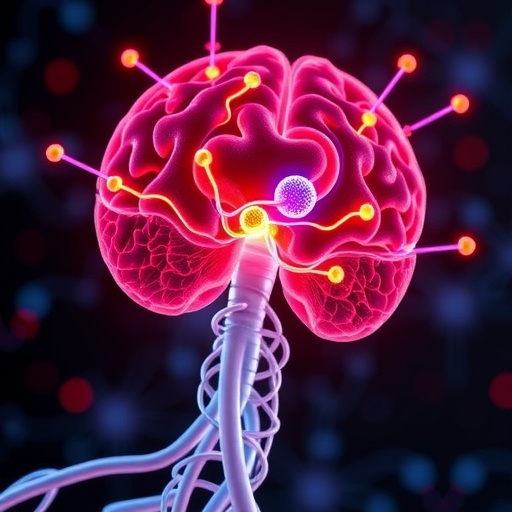
In the ever-evolving landscape of mental health research, impulsivity stands out as a complex and multifaceted trait cutting across traditional psychiatric boundaries. Recent scientific discourse is increasingly focused on developing transdiagnostic neuromodulation strategies to address impulsivity within a broad spectrum of mental disorders. Moving beyond conventional disorder-specific frameworks, this approach harnesses emerging neurobiological insights to craft precision-targeted therapies, offering fresh hope for managing impulsive behaviors that have long challenged clinicians and researchers alike.
Historically, psychiatric diagnoses often segmented mental health conditions into discrete categories, which, while clinically useful, have struggled to encapsulate the nuanced, overlapping symptoms of traits like impulsivity. Advances in neuroimaging and behavioral science have revealed that impulsivity does not confine itself neatly within diagnostic boxes such as ADHD, substance use disorders, or eating disorders. Instead, it manifests as a complex dimension, involving diverse neural circuits and behavioral expressions. This recognition has driven the adoption of transdiagnostic frameworks emphasizing shared maladaptive processes rather than isolated symptom clusters.
Key to this paradigm shift is the Research Domain Criteria (RDoC) initiative spearheaded by the National Institute of Mental Health. RDoC reframes mental disorders by focusing on observable behaviors and their underlying neurobiological substrates, transcending traditional diagnostic categories. It identifies core constructs — including those related to impulsivity — defined across multiple levels of analysis, from genes to neural circuits and behavior. This approach provides a rigorous scaffold for understanding impulsivity as a spectrum trait, facilitating the development of interventions that target its foundational neural mechanisms across disorders.
Neuromodulation technologies lie at the heart of this emerging transdiagnostic strategy. Techniques such as transcranial magnetic stimulation (TMS), deep brain stimulation (DBS), and focused ultrasound (FUS) enable precise targeting of brain circuits implicated in impulsive behaviors. Research has identified the cortico-striato-thalamo-cortical loop — especially frontostriatal pathways — as critical nodes orchestrating impulsivity. Disruptions or dysregulations in these circuits are common in conditions marked by impulsivity, such as ADHD and addiction, making them promising foci for neuromodulatory interventions.
However, despite the promise of neuromodulation, bridging the gap between neurobiological insights and effective, generalized clinical therapies remains an immense challenge. The heterogeneity of impulsivity manifestations — from rash decision-making to motor disinhibition — demands nuanced, multi-level assessments. Additionally, while neuroimaging has illuminated target regions, translating these findings into interventions that yield consistent and scalable clinical outcomes requires integrating mechanistic, methodological, and translational research efforts.
A newly proposed framework, termed Transdiagnostic Neuromodulation for Impulsivity (TNMI), seeks to unify these advances under a practical, clinically applicable model aligned with RDoC principles. TNMI integrates detailed clinical phenotyping with neurocircuitry mapping and tailored neuromodulation protocols, shifting psychiatric intervention from symptom suppression towards modulating underlying brain function across diagnostic categories. By doing so, it aspires to accelerate the development of precise, individualized therapies that accommodate the dimensionally varied nature of impulsivity.
Central to this framework is the rigorous assessment of impulsivity using both subjective and objective methods. Traditional self-report scales, such as the Barratt Impulsiveness Scale and UPPS-P, offer useful trait-level insights but often suffer from biases and limited correlation with behavioral measures. Objective neuropsychological tasks, including delay discounting paradigms and response inhibition challenges like the Stop-Signal Reaction Time and Go/NoGo tests, probe distinct impulsivity components and neural substrates. The TNMI framework emphasizes combining these approaches to capture impulsivity’s multidimensional constructs comprehensively.
Neuroimaging plays a pivotal role in identifying and personalizing therapeutic targets within the TNMI approach. Structural and functional MRI studies have delineated key regions linked to impulsivity, including the dorsolateral prefrontal cortex, anterior cingulate cortex, orbitofrontal cortex, and basal ganglia components such as the nucleus accumbens. Connectivity analyses clarify how dysfunction within frontostriatal and limbic networks correlates with impulsive behavior across disorders. Such data enable guided intervention placement—whether superficial cortical areas accessible via TMS or deeper nuclei amenable to DBS or focused ultrasound.
Implementation of neuromodulation within the transdiagnostic context requires precision on spatial, temporal, and energetic fronts. Spatially, individualized neuroimaging-guided positioning enhances target accuracy, essential given anatomical variability. Temporally, stimulation protocols must consider frequency and pattern modifications to entrain or disrupt pathological neural rhythms associated with impulsivity. Energetically, titrating intensity optimizes therapeutic effects while minimizing adverse outcomes, paralleling pharmacological dose-response principles in psychiatry.
The neuromodulation armamentarium is wide-ranging, from non-invasive techniques like conventional TMS and transcranial electrical stimulation to emerging approaches including high-intensity transcranial alternating current stimulation and temporal interference stimulation. Less invasive modalities present attractive options for broad patient applicability and testability, while invasive interventions such as DBS remain reserved for severe cases, where precision and durability are paramount. Each modality offers unique advantages, yet the selection within TNMI must be tailored to individual neurocircuitry profiles and symptom dimensions.
As neuromodulation technologies evolve, their integration with real-time neuroimaging and neurophysiological monitoring anticipates the advent of adaptive, closed-loop systems. Such systems could respond dynamically to fluctuating neural activity associated with impulsive states, enabling context-specific intervention dosing to optimize outcomes. This represents a horizon in personalized neuropsychiatric care, leveraging brain-computer interfaces and advanced analytics to transcend static treatment paradigms.
Looking forward, the TNMI framework provides a scaffold not only for impulsivity but also for exploring its interactions with other symptom domains, including hallucinations and delusions, further broadening its transdiagnostic utility. However, empirical testing through mechanistic, methodological, and translational research is imperative. Key hypotheses involve validating whether targeted frontostriatal neuromodulation enhances treatment response rates over traditional diagnostic-specific therapies and whether it reduces variability across heterogeneous patient groups.
The path toward clinical translation will require rigorous trials assessing standardized protocols for neuromodulatory interventions, integrating multimodal assessments of impulsivity and neurocircuitry. Equally important is unveiling the mechanistic underpinnings of impulsive behavior within and across disorders to refine target selection and stimulation parameters. Bridging these levels promises a leap in intervention efficacy, heralding a new era of biologically grounded psychiatry.
In conclusion, impulsivity—long regarded as a vexing clinical challenge—may soon become the prototype for transdiagnostic neuromodulation approaches in mental health. By embracing dimensional constructs, integrating sophisticated neuroimaging, and harnessing evolving technologies, the TNMI framework illuminates a path toward precision medicine in psychiatry. This endeavor redefines mental health treatment, prioritizing neural circuit modulation over categorical diagnoses and offering renewed hope for patients burdened by impulsivity-driven disorders.
Cite Scienmag News
Glenn Wilkins. (June 23, 2025). Transdiagnostic Neuromodulation: Shaping Impulsivity’s Future. Scienmag. https://scienmag.com/transdiagnostic-neuromodulation-shaping-impulsivitys-future/
Glenn Wilkins. "Transdiagnostic Neuromodulation: Shaping Impulsivity’s Future." Scienmag, 23 June 2025, https://scienmag.com/transdiagnostic-neuromodulation-shaping-impulsivitys-future/. Accessed 4 September 2026.
Glenn Wilkins. "Transdiagnostic Neuromodulation: Shaping Impulsivity’s Future." Scienmag. June 23, 2025. https://scienmag.com/transdiagnostic-neuromodulation-shaping-impulsivitys-future/


