

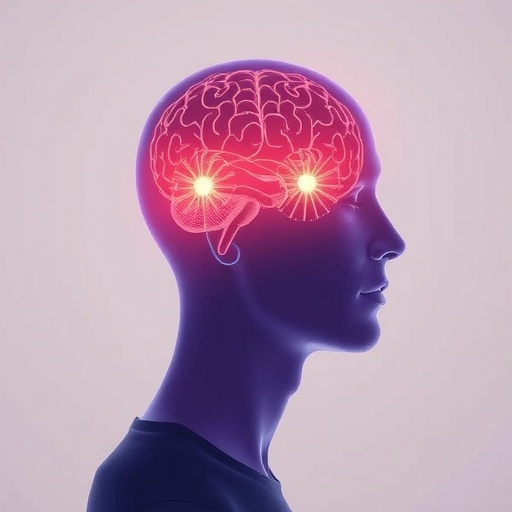
In a groundbreaking advancement in the domain of mental health treatment, recent research has illuminated the promising potential of transcranial magnetic stimulation (TMS) as a transformative tool in modulating neural circuits associated with suicidal ideation and behavior. This innovative investigation, spearheaded by Wang, Chen, Wang, and colleagues, delves deeply into the neural underpinnings of suicide risk and offers an unprecedented glimpse into how non-invasive brain stimulation can recalibrate aberrant neural pathways to alleviate suicidal tendencies.
Suicide remains one of the leading causes of mortality globally, with conventional therapeutic interventions often falling short in efficacy, especially in acute crisis scenarios. Consequently, the scientific community has been fervently searching for novel approaches that go beyond traditional pharmacological and psychotherapeutic regimens. The current study presents a compelling case for TMS, a technique that uses targeted magnetic fields to induce electrical currents in specific brain areas, thereby modifying neural activity without the invasiveness or systemic side effects typically associated with medication.
Central to this research is the elucidation of the precise neural circuits implicated in suicidality. Using state-of-the-art neuroimaging combined with advanced neurophysiological assessments, the authors mapped the intricate web of brain regions involved in suicide risk. Notably, the prefrontal cortex—responsible for executive function and emotional regulation—and the limbic system—governing mood and affect—emerged as principal nodes where dysregulation predisposes individuals to suicidal behaviors. By targeting these areas with TMS, researchers were able to modulate connectivity patterns, resulting in observable behavioral improvements.
The mechanism of TMS in this context is particularly fascinating. Magnetic pulses delivered in carefully calibrated sequences can enhance or inhibit neuronal firing patterns, promoting synaptic plasticity akin to long-term potentiation or depression. This neuroplastic effect is critical in correcting maladaptive circuit dynamics that sustain negative thought patterns and impulsivity characteristic of suicidal ideation. The team’s rigorous protocol included identifying personalized stimulation parameters tailored to each subject’s neurobiological profile, maximizing therapeutic impact.
Behavioral outcomes measured through standardized clinical scales demonstrated significant reduction in suicidal ideation intensity and frequency following TMS sessions. Importantly, these improvements were sustained over several months, suggesting durable neural remodeling rather than transient symptomatic relief. The safety profile observed was favorable, with minimal side effects recorded, underscoring TMS as a viable adjunct or alternative to pharmacotherapy, especially for patients resistant to conventional treatments.
The study further explored the implications of TMS modulation on cognitive domains intimately linked to suicide risk, such as decision-making, impulse control, and emotional resilience. Enhancements in these areas post-intervention provide mechanistic insights into how brain stimulation translates into tangible clinical benefits. Such findings validate the theoretical framework positing that suicide is not solely a psychiatric diagnosis but also a neurobiological disorder amenable to circuit-level interventions.
One of the most revolutionary aspects of this work lies in its potential to bridge the gap between psychiatry and neurology by highlighting suicide as an emergent phenomenon of neural circuit dysfunction. By framing suicidal behavior within this neuroscientific paradigm, the study opens avenues for precision medicine approaches that integrate neuroimaging biomarkers to guide individualized TMS therapy protocols.
Moreover, this research advances our comprehension of the bidirectional communication between cortical and subcortical structures in emotional regulation. The observed modulation of the dorsolateral prefrontal cortex and its downstream effects on the amygdala and hippocampus exemplify how targeted stimulation can recalibrate stress and fear processing circuits, which are often hyperactive in individuals experiencing suicidal crises.
In the broader context of mental health technology, these findings pave the way for more accessible and scalable brain stimulation treatments. Unlike electroconvulsive therapy, TMS is non-invasive and can be administered in outpatient settings, which significantly broadens its applicability and patient acceptance. Coupled with the integration of artificial intelligence for real-time monitoring and adaptive stimulation parameters, TMS could soon become a frontline intervention in suicide prevention strategies.
The researchers also addressed the neuroethical considerations surrounding TMS intervention, emphasizing informed consent, patient autonomy, and long-term monitoring to safeguard against unintended effects. This conscientious approach ensures that the application of TMS aligns with medical ethics while fostering public trust in neuromodulation therapies.
From a translational perspective, the scalability of TMS treatments hinges upon standardized protocols and clinician training programs emphasized by the authors. They advocate for multidisciplinary collaboration to refine patient selection criteria and optimize stimulation parameters, thereby enhancing reproducibility and the generalizability of results across diverse populations.
Intriguingly, this study ignites hope for synergistic multimodal treatment frameworks where TMS could be combined with psychotherapy, pharmacology, and digital therapeutics. Such integrative models may amplify treatment efficacy by concurrently targeting neurochemical imbalances and dysfunctional neural circuits, addressing suicide risk holistically and effectively.
In conclusion, the work of Wang and colleagues represents a seminal contribution to suicide prevention science by demonstrating how transcranial magnetic stimulation can recalibrate dysfunctional neural networks implicated in suicidal ideation. This innovative approach not only alleviates symptoms but also targets the neurobiological substrates that sustain suicidality, marking a paradigm shift in clinical psychiatry and neuroscience.
As the global health community grapples with rising suicide rates exacerbated by socio-economic and pandemic-related stressors, the advent of TMS as a neurocircuit-based intervention offers a beacon of hope. Ongoing and future investigations spurred by these findings will undoubtedly refine and expand the utility of neuromodulation techniques in mitigating one of humanity’s most profound public health challenges.
With continued research momentum and technological innovation, it is conceivable that TMS will soon transcend experimental boundaries to become an entrenched modality in suicide risk reduction, reshaping therapeutic landscapes and improving countless lives worldwide.
Subject of Research: Modulation of suicide-related neural circuits via transcranial magnetic stimulation to reduce suicide risk.
Article Title: Modulation of suicide-related neural circuits by transcranial magnetic stimulation and its role in reducing suicide risk.
Article References:
Wang, S., Chen, C., Wang, J. et al. Modulation of suicide-related neural circuits by transcranial magnetic stimulation and its role in reducing suicide risk. Transl Psychiatry (2025). https://doi.org/10.1038/s41398-025-03790-w
Image Credits: AI Generated


