

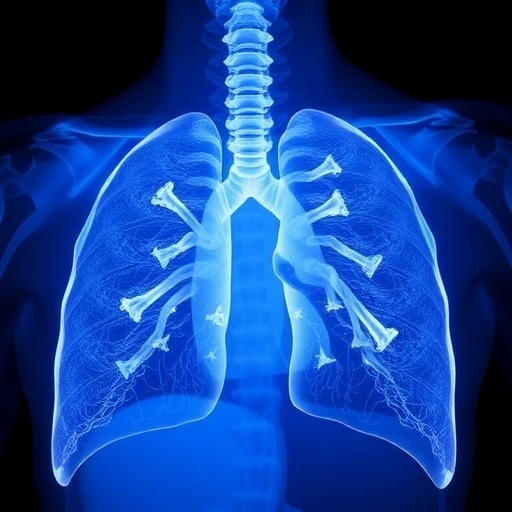
Transbronchial lung cryobiopsy has emerged as a revolutionary technique in the diagnostic landscape of interstitial lung disease, particularly among older adults. With an aging population more susceptible to complex respiratory conditions, this innovative biopsy method offers a minimally invasive approach, ensuring a prompt and accurate diagnosis. The recent study conducted by Menigoz et al. highlights the potential of this procedure as not only safe but also effective in providing essential tissue samples for the evaluation of lung diseases, which are notoriously challenging to diagnose.
The process of transbronchial lung cryobiopsy involves utilizing extreme cold to freeze lung tissue during a bronchoscopy procedure. This freezing action creates a solidified tissue sample, which can then be easily extracted for further examination. Unlike traditional biopsy methods, cryobiopsy allows for larger, more intact tissue samples to be obtained, which can significantly enhance diagnostic accuracy. The implications of having access to a procedure that is both less invasive and yields higher quality samples cannot be overstated, particularly in a field where definitive diagnoses can be elusive.
Older patients often present unique challenges when it comes to diagnosing interstitial lung diseases due to comorbidities and the general frailty associated with aging. Many conventional biopsy techniques may pose significant risks in this demographic, leading to a potential underdiagnosis of underlying conditions. The advent of cryobiopsy provides a much-needed safe harbor, allowing for diagnostic endeavors that take into account the delicate nature of older patients’ health. This efficacy underscores the importance of further integrating this technique into routine clinical practice.
The study by Menigoz and colleagues sheds light on the experiences of older individuals undergoing this biopsy technique, documenting not only the safety but also the comfort levels of patients throughout the procedure. The research supports the idea that patients experience reduced discomfort when compared to traditional methods, a vital consideration for a population often dealing with heightened anxiety regarding medical interventions. Thus, cryobiopsy stands as an enlightening development that could reshape our approaches to lung pathology in the elderly.
From a technical perspective, the mechanics of how transbronchial lung cryobiopsy operates are particularly fascinating. The procedure begins with the insertion of a bronchoscope – a thin, flexible tube equipped with a camera – into the patient’s airways. Once reaching the target area of the lung, a cryoproper is deployed. This tool releases gas in a controlled manner, freezing the tissue at the selected site. Following a brief period of freezing, the premature ice crystal formation encapsulates the lung tissue, allowing for its gentle detachment from surrounding structures. The resultant frozen sample is subsequently collected for pathological analysis, providing a rich source of information for disease characterization.
Importantly, the use of cryobiopsy in the diagnosis of interstitial lung disease holds the promise of reducing the time span from presentation to diagnosis. Given the urgent nature of respiratory symptoms, such delays can be detrimental to patient outcomes. Quick and accurate differentiation between various types of lung disease is crucial for effective management and treatment. With this novel approach, healthcare providers can obtain decisive results more rapidly, leading to timely interventions.
The safety profile of transbronchial lung cryobiopsy was another focal point in Menigoz et al.’s study, shedding light on its complication rates. Traditional biopsy methods often carry higher risks, including serious complications such as pneumothorax or significant bleeding. However, early indications from cryobiopsy highlight a far more favorable risk assessment. The methodology’s design inherently reduces trauma to the lung, which is vital in elderly populations who may not tolerate invasive maneuvers as well as their younger counterparts.
Moreover, implications extend beyond diagnosis. The information garnered from a cryobiopsy can help physicians tailor treatment regimens with unprecedented accuracy, aligning therapeutic strategies with specific disease paradigms derived from detailed histological analysis. This capacity for personalized medicine strengthens the dyadic relationship between provider and patient, fostering a more collaborative approach to healthcare planning.
As the body of evidence surrounding transbronchial lung cryobiopsy expands, its role in training future healthcare providers becomes even more pronounced. Emphasizing familiarity with this technique within medical curricula could significantly enhance the preparedness of emerging specialists. By highlighting advancements in diagnostic capabilities, educational institutions can ensure that the next generation of medical professionals is equipped with the tools necessary to tackle the growing prevalence of interstitial lung diseases.
This shift towards adopting minimally invasive techniques in the management of complex lung conditions is indicative of a broader trend in medicine. As advancements in technology continue to shape the landscape of diagnostics, the emphasis on patient-centered care remains paramount. The cryobiopsy technique exemplifies this trend, balancing the need for accurate results with the overarching pursuit of patient safety and comfort.
The findings from Menigoz et al. add to an evolving dialogue about how we approach the vulnerabilities faced by older patients in healthcare settings. By leveraging innovations like cryobiopsy, the medical community can move towards a future where chronic respiratory conditions are met with timely diagnoses and appropriate interventions, thereby improving overall health outcomes.
While the research underscores the promising nature of transbronchial lung cryobiopsy, it paves the way for future studies to further refine the technique and expand its applications. Longitudinal investigations could assist in establishing best practices, identify potential limitations, and outline the parameters for its implementation across various clinical settings. As different populations are studied, we may begin to uncover the full spectrum of benefits that this procedure can offer.
In conclusion, the integration of transbronchial lung cryobiopsy into clinical practice for older patients represents an exciting frontier in the realm of pulmonary diagnostics. This innovative technique not only holds potential for enhanced diagnostic accuracy but aligns seamlessly with the evolving philosophy of patient-centric care. The emphasis on refining strategies to address complex illnesses in the aging population could ultimately lead to a brighter and healthier future for those affected by interstitial lung disease.
Through thorough exploration of this method, the broader medical community can not only better address health disparities in older adults but ensure that advancements in technology translate into tangible benefits for the patients who need them the most.
Subject of Research: Transbronchial lung cryobiopsy in older adults with interstitial lung disease
Article Title: Transbronchial lung cryobiopsy: a safe and effective technique in the diagnosis of interstitial lung disease in the older people
Article References:
Menigoz, C., Moui, A., Sagan, C. et al. Transbronchial lung cryobiopsy: a safe and effective technique in the diagnosis of interstitial lung disease in the older people.
BMC Geriatr (2026). https://doi.org/10.1186/s12877-025-06615-z
Image Credits: AI Generated
DOI: 10.1186/s12877-025-06615-z
Keywords: Transbronchial lung cryobiopsy, interstitial lung disease, older adults, diagnostic technique, minimally invasive procedure, pulmonary diagnostics, cryobiopsy safety, patient-centered care.


