

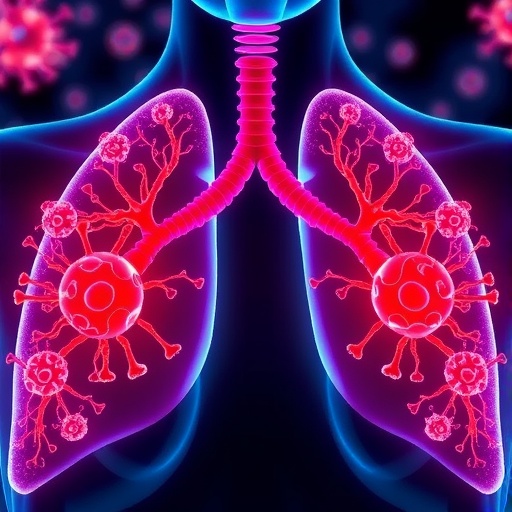
Recent breakthroughs in our understanding of the immune system have unveiled exciting avenues for therapeutic interventions in conditions such as acute lung injury (ALI). A pioneering study conducted by Sun et al. has shed light on the concept of “trained immunity,” a term that refers to the long-lasting adaptation of innate immune cells due to prior stimulation. This research presents compelling evidence that trained immunity can significantly mitigate ALI through the activation of alveolar macrophages, engaging critical metabolic pathways linked to cell survival and function.
In a groundbreaking approach, the authors of the study meticulously documented how the activation of alveolar macrophages via the AKT2-PDK1 axis is central to the metabolic reprogramming that defines trained immunity. This metabolic shift is essential for optimizing the functional capabilities of macrophages, equipping them to respond more robustly to inflammatory insults. By employing a series of rigorous experimental methodologies, including in vitro and in vivo models, they demonstrated a clear association between enhanced macrophage responsiveness and reduced lung injury severity.
The AKT2-PDK1 signaling axis emerges as a pivotal player in this intricate dance of immune regulation. Specifically, AKT2 is a serine/threonine kinase that, upon activation, promotes various cellular processes including growth, survival, and metabolism. PDK1, a crucial activating kinase for AKT, results in downstream signaling that orchestrates diverse cellular functions. This study provides valuable insights into how these pathways can be manipulated to bolster immune responses in the lungs, particularly under pathophysiological conditions aggravated by inflammatory stimuli.
One of the most striking aspects of the research lies in its innovative approach to the modulation of immune function through trained immunity. Unlike traditional vaccines which elicit adaptive immune responses targeting specific pathogens, trained immunity harnesses the innate immune system’s capacity for enhanced responsiveness upon subsequent exposures. By focusing on the innate immune components, the authors suggest that a broader, more universal approach could be developed for protecting against a range of pulmonary diseases.
Moreover, the study underscores the significance of metabolic reprogramming among immune cells. The innate immune cells, particularly macrophages, are known for their plasticity—capable of shifting their metabolism based on environmental cues. In conditions like ALI, the demand for energy and biosynthetic precursors increases as immune cells ramp up their activities. This metabolic flexibility allows macrophages to undergo phenotypic changes essential for effective pathogen clearance and the resolution of inflammation.
Interestingly, the authors discuss the implications of their findings within the realm of clinical applications. Given the high incidence of ALI linked to various etiologies, including infections, chemical exposures, and mechanical ventilation, there is a pressing need for effective therapeutic strategies. By leveraging the principles of trained immunity, new interventions could potentially provide a protective advantage for at-risk populations, reducing the morbidity and mortality associated with severe lung injuries.
The study also poses fundamental questions regarding the specificity and longevity of trained immunity. How long does the protective effect of trained immunity last, and can it be sustained over time? These questions pave the way for future research aimed at delineating the mechanisms that underpin memory-like properties in innate immune cells. As researchers continue to explore these concepts, the prospect of developing pharmacological agents that promote trained immunity offers a fascinating landscape for further investigation.
Notably, the broader implications of this research extend beyond ALI. Investigators may find parallels in other inflammatory diseases where metabolism-driven immune responses play a role, including metabolic syndrome and cardiovascular diseases. This suggests that the interdisciplinary nature of immunology could benefit from integrating metabolic studies to uncover new dimensions of immune regulation.
Furthermore, the paper highlights the importance of interdisciplinary collaboration in addressing complex biomedical challenges. By drawing from fields such as molecular biology, immunology, and metabolic research, scientists can cultivate a holistic understanding of the immune responses at play. This collaborative approach is crucial for translating fundamental discoveries into clinical practices that can improve patient outcomes.
As the field progresses, the need for robust clinical trials becomes paramount. These will be essential for validating the efficacy of strategies aimed at enhancing trained immunity in the clinical setting. Researchers will need to navigate various hurdles, including patient heterogeneity and the complexities of human immune responses, in their quest to translate preclinical findings into meaningful therapies.
In essence, the study conducted by Sun et al. represents a prominent step towards redefining our approach to immune intervention in acute lung injury. By illuminating the mechanisms underlying trained immunity, researchers not only enhance our basic understanding of immune responses but also accelerate the development of innovative therapeutic modalities aimed at saving lives and improving health outcomes for patients suffering from lung injuries and beyond.
As we eagerly anticipate future studies that will build upon these foundational insights, it becomes clear that the exploration of trained immunity might just be the beacon of hope that the medical community has long sought in combating complex immunological challenges.
Subject of Research: Trained immunity and its effects on acute lung injury.
Article Title: Trained immunity attenuated acute lung injury by activating alveolar macrophages via AKT2-PDK1 axis-mediated metabolic reprogramming.
Article References: Sun, Z., Meng, H., Wang, X. et al. Trained immunity attenuated acute lung injury by activating alveolar macrophages via AKT2-PDK1 axis-mediated metabolic reprogramming. J Transl Med 23, 1412 (2025). https://doi.org/10.1186/s12967-025-06879-4
Image Credits: AI Generated
DOI: https://doi.org/10.1186/s12967-025-06879-4
Keywords: Trained immunity, acute lung injury, alveolar macrophages, metabolic reprogramming, AKT2-PDK1 axis.


