


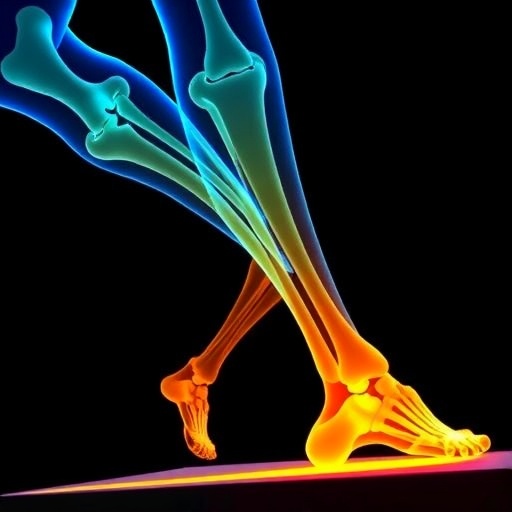
Recent studies in biomedical engineering have illuminated the complex dynamics of trabecular bone, particularly under the stresses imposed by daily activities such as walking. The research conducted by Wang, Chen, and Wu provides a comprehensive overview of how trabecular bones respond to physiological gait loads, revealing critical insights into bone health and disease. This exploration is essential, as it directly relates to the development of treatments for conditions such as osteoporosis and other bone-related ailments in the aging population.
Trabecular bone, commonly referred to as cancellous or spongy bone, is characterized by its porous structure, which plays a vital role in reducing weight while maintaining strength. Unlike its dense counterpart, cortical bone, trabecular bone allows for a significant amount of flexibility and energy absorption during mechanical loads. This adaptability is crucial for sustaining bone integrity, especially during dynamic activities such as walking, which involve repeated loading cycles.
The research conducted by the team led by Wang utilized state-of-the-art simulation techniques to model the mechanical environment surrounding trabecular bones. By employing advanced computational biomechanics, the study sought to quantify the stresses and strains experienced by trabecular connections under various gait parameters. Such detailed modeling not only elucidates how bones behave under load but also helps in understanding the adaptive responses of bone tissue to mechanical stimuli.
One of the standout findings of this investigation is the direct correlation found between gait characteristics and the mechanical strain experienced by trabecular bone. The researchers identified that different walking styles and speeds yield varying stress distributions across the bone structure. This highlights the complexity of how everyday movements contribute to the overall health and remodeling of bone tissue, underscoring the importance of physical activity in bone maintenance.
Furthermore, the study noted significant variations in stress distribution depending on the geometric configuration of trabecular bone. These nuances suggest that individuals with differing bone morphology may experience distinct mechanical environments, which could influence their susceptibility to fractures. Such insights pave the way for personalized medicine approaches in the prevention and treatment of bone diseases.
An essential aspect of the research involved assessing the implications of altered mechanical environments caused by pathological conditions. With the increasing prevalence of osteoporosis worldwide, understanding how the mechanical load on trabecular bone changes when the bone density is compromised is vital. This knowledge can directly inform clinical practices and preventative strategies tailored to improve bone health in at-risk populations.
Additionally, the researchers employed experimental validation through the use of mechanobiology techniques to confirm their simulation results. This two-pronged approach adds robustness to their findings, offering a more comprehensive understanding of how trabecular bone behaves under load. By aligning computational predictions with experimental outcomes, the study reinforces the reliability of the data presented.
Another critical component of the investigation was exploring the effects of aging on trabecular bone mechanics. As individuals age, changes in bone microarchitecture are inevitable, often resulting in decreased bone strength. The research findings suggest that as bone structure alters over time, the response to physiological loading may also change, leading to higher risks of fractures. This connection between aging and mechanical response is a crucial piece of the puzzle for aging populations.
The implications of this research extend beyond academia. There is enormous potential for applying these findings in clinical settings, particularly in developing therapeutic interventions aimed at mitigating the risks associated with bone loss. Clinicians can leverage this knowledge to recommend appropriate exercise regimens that promote bone health and reduce the likelihood of debilitating fractures.
Moreover, understanding the mechanical environment of trabecular bone can also influence the design of orthopedic implants and surgical techniques. By considering the intricate interactions of bone loading mechanics, engineers and surgeons can improve implant designs to better mimic the natural loading patterns of healthy bone. This could lead to enhanced outcomes for patients undergoing orthopedic procedures.
The integration of biomechanics and material science in this field of study marks an exciting avenue for future research. As technology continues to advance, it opens doors to developing more sophisticated models and devices that can monitor bone health in real time, providing invaluable insights into how bones adapt over time. Such innovations could transform prevention strategies from reactive to proactive, offering a significant improvement in public health outcomes related to bone diseases.
Overall, the research conducted by Wang and colleagues represents a significant step forward in our understanding of the interplay between gait and the mechanical environment of trabecular bones. The findings not only illuminate the physiological processes involved but also underscore the importance of maintaining physical activity across life spans to promote bone health. With ongoing research and technological advancements, the future looks promising for enhancing our approaches to bone disease prevention and treatment.
In conclusion, as the world continues to grapple with an aging population, studies like this one are vital. They not only enhance our understanding of biomechanics but also pave the way for innovative solutions to combat the challenges posed by age-related bone health issues. The interplay between mechanical loading and bone adaptation is foundational in shaping future research directions and therapeutic paradigms. It is clear that the path toward improving bone health will rely heavily on integrating biomechanics into clinical practice, fostering better health outcomes for individuals of all ages.
Cite Scienmag News
Ophelia Keating. (November 26, 2025). Trabecular Bone Mechanics Under Physiological Gait Load. Scienmag. https://scienmag.com/trabecular-bone-mechanics-under-physiological-gait-load/
Ophelia Keating. "Trabecular Bone Mechanics Under Physiological Gait Load." Scienmag, 26 November 2025, https://scienmag.com/trabecular-bone-mechanics-under-physiological-gait-load/. Accessed 5 September 2026.
Ophelia Keating. "Trabecular Bone Mechanics Under Physiological Gait Load." Scienmag. November 26, 2025. https://scienmag.com/trabecular-bone-mechanics-under-physiological-gait-load/


