


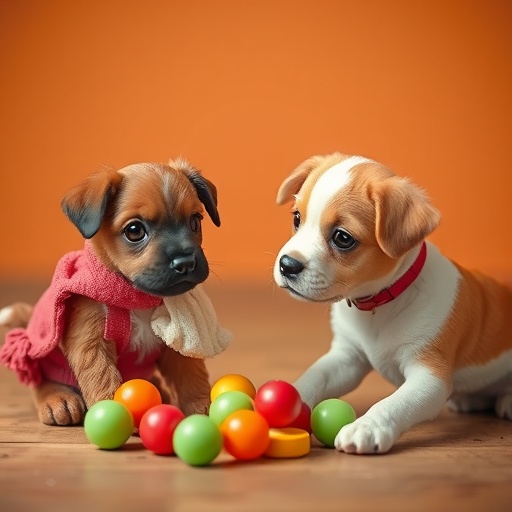
In a groundbreaking study set to reshape our understanding of canine cognition and play, researchers have examined the fascinating dynamics of toy exploration among gifted word learner dogs compared to their typical counterparts. The pivotal research, conducted by a team led by anthropologist Andrea Sommese and noted animal behaviorist Ádám Miklósi, reveals compelling insights into how differences in cognitive abilities influence toy interaction and learning in dogs. This research holds significant implications not only for canine training but also for understanding the evolution of communication and learning in domestic animals.
As pets have become increasingly ingrained in our lives, scientists have sought to dissect the cognitive abilities that distinguish certain breeds from others. While some dogs are celebrated for their ability to learn commands and tricks rapidly, others exhibit a profound understanding of objects and their meanings. The current study focuses on dogs recognized as gifted word learners, often defined as those that can associate human words with corresponding objects and respond accordingly, an ability that seems to be rare among typical dogs.
Central to the study is the concept of toy exploration, a prism through which canine cognition can be analyzed. The researchers designed a series of controlled experiments to assess how both gifted and typical dogs engage with a variety of toys. The toys were selected based on their ability to stimulate different cognitive functions, providing a broad framework for understanding the nuances of play behavior in dogs. The results promise to shed light on the cognitive processes behind not just play, but also learning, memory, and social interaction in dogs.
During the experiment, both groups of dogs were presented with new toys characterized by stimulating shapes, colors, and sounds. The gifted word learner dogs demonstrated a distinct advantage in deciphering the functions and potential uses of these toys, often exhibiting strategic thinking in how they approached their play. This was particularly evident in their ability to match specific toys with verbally provided cues, showcasing an exceptional level of comprehension and associative learning that went beyond mere instinctual play behavior.
On the other hand, typical dogs, while certainly engaging with the toys, did so in a less complex manner. Their interactions were exploratory but lacked the depth of understanding displayed by the gifted learners. This juxtaposition highlights not only the capabilities of the highly trained dogs but also sparks questions regarding the genetic and environmental influences on such cognitive traits in canines.
The researchers also employed video analysis to capture each dog’s interaction, meticulously documenting behaviors such as the duration of engagement with each toy and the types of exploration exhibited. Beyond mere play, the study examined the dogs’ social interactions, particularly how they communicated with their human handlers during the exploration phases. The gifted dogs tended to seek affirmation from their handlers, paralleling human behaviors where individuals look for social cues in uncertain environments, thereby showing a level of social cognition along with their exploratory skills.
Interestingly, the implications of this study extend into the realm of canine training methodologies. Trainers and canine behaviorists can glean substantial insights from the findings, as understanding the cognitive mechanics behind toy exploration can lead to more tailored training strategies that optimize learning based on each dog’s abilities. This could revolutionize how we approach training for various tasks, from assistance work to performance in competitive settings, ultimately leading to happier and more fulfilled dogs.
This research not only provides crucial data but also opens up broader discussions about animal intelligence and the evolutionary pathways that may have led to differences in cognitive abilities among dog breeds. As dogs are domesticated descendants of wolves, the study encourages reflection on the behavioral adaptations that have emerged in these animals through human interaction over thousands of years. The researchers contend that their findings could prompt a reevaluation of common understandings of intelligence in the canine world and the potential to unlock the capabilities of all dogs through innovative training techniques.
The study also raises ethical considerations regarding the treatment and training practices of dogs based on their cognitive abilities. As society progresses towards a more nuanced understanding of animal intelligence, there lies a responsibility to ensure that dogs are trained and treated in ways that respect their individual capabilities, allowing them to thrive both mentally and physically.
In conclusion, the findings of Sommese, Miklósi, and their colleagues highlight the intricate relationship between play, cognition, and communication in dogs, suggesting that understanding these dynamics could enhance our bonds with these remarkable companions. As the ongoing research in animal cognition continues to evolve, it draws parallels with broader themes of evolution, communication, and intelligence across species, and underscores the need for compassionate and informed approaches to understanding our beloved pets.
The ongoing dialogue surrounding the cognitive capabilities of dogs not only informs breeding and training practices but also enhances our appreciation of their roles as companions in our lives. This study is poised to push boundaries further, inviting pet owners, trainers, and researchers alike to re-examine the intelligence and spirit of canine companions, ultimately paving the way for a future where the extraordinary abilities of all dogs can be recognized and harnessed.
Sommese, A., Miklósi, Á., Nostri, S. et al. Toy exploration in gifted word learner dogs and typical dogs.
Anim Cogn (2026). https://doi.org/10.1007/s10071-026-02047-3
Cite Scienmag News
William Thompson. (January 30, 2026). Toy Exploration in Gifted vs. Typical Dogs. Scienmag. https://scienmag.com/toy-exploration-in-gifted-vs-typical-dogs/
William Thompson. "Toy Exploration in Gifted vs. Typical Dogs." Scienmag, 30 January 2026, https://scienmag.com/toy-exploration-in-gifted-vs-typical-dogs/. Accessed 3 September 2026.
William Thompson. "Toy Exploration in Gifted vs. Typical Dogs." Scienmag. January 30, 2026. https://scienmag.com/toy-exploration-in-gifted-vs-typical-dogs/


