

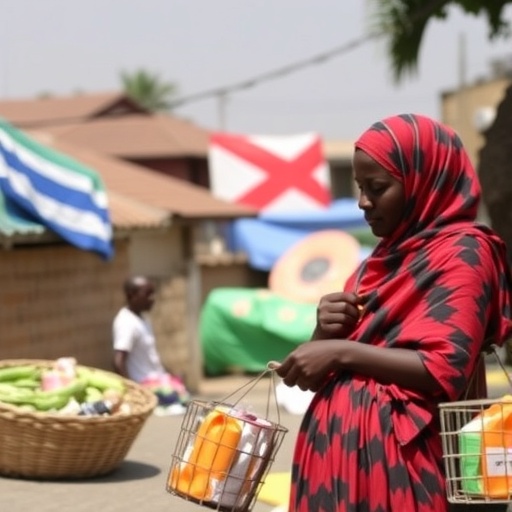
In the landscape of global finance, remittances have emerged as a crucial lifeline for numerous households, particularly in regions grappling with economic instability. A recent study titled “Sustaining household consumption through remittances in Somalia from a time-series perspective” by Abdulle, Omar, and Ibey delves into the dynamics of these financial flows and their profound implications for household consumption in Somalia. Through its meticulous analysis, the research unravels the intricate patterns of remittance transfers and examines their significance in the socio-economic fabric of Somali society.
Understanding remittances is pivotal when examining the Somali context. These financial transfers, typically sent by expatriates working abroad, are an essential source of income for many families. They serve not only as financial support but also as a stabilizing factor in times of economic turbulence. The study chronicles the historical trend of remittances in Somalia, shedding light on how they have evolved over the years and the role they play in bolstering families’ purchasing power.
One of the striking findings from the research is the correlation between remittance inflows and household consumption patterns. The analysis utilizes a time-series approach, allowing for an in-depth exploration of data over a specified period. This methodology proves beneficial for discerning long-term trends and anomalies that may surface in broader economic contexts. As the study reveals, families receiving remittances can enjoy enhanced access to essential goods and services, illustrating the transformative power of these funds.
The significance of remittances extends beyond individual households; they contribute to broader economic resilience in Somalia. With the backdrop of recurrent crises—from political instability to natural disasters—remittances enable families to maintain their consumption levels even during challenging periods. This resilience is vital for sustaining local economies, as increased household expenditure stimulates demand for various goods and services. In this way, remittances serve as a countercyclical force, mitigating the adverse effects of economic downturns.
Moreover, the findings indicate that remittances are not uniformly distributed across the Somali population. Certain regions receive significantly higher financial inflows than others, creating disparities in consumption capabilities. The study emphasizes the need for targeted policies that address these imbalances, ensuring that all households, regardless of their geographical location, can benefit from remittance flows. This nuanced understanding of regional disparities is critical for policymakers aiming to foster inclusive economic development.
The research also critically assesses the factors influencing remittance flows. Elements such as the political climate, the state of international relations, and the economic conditions of host countries play a pivotal role in shaping remittance patterns. For instance, as more Somalis migrate to various parts of the world, the channels through which they send money back home have also diversified, incorporating both formal and informal systems. The study examines how these channels impact the overall effectiveness and efficiency of remittance transfers in reaching intended recipients.
Another intriguing aspect of the research is its exploration of the relationship between remittances and financial literacy among recipients. As households receive these funds, their capacity to manage and allocate resources effectively can vary greatly. The study suggests that enhancing financial literacy programs could empower recipients to maximize the benefits of remittances, ultimately leading to improved household welfare and consumption stability.
Furthermore, the implications of remittance usage are profound. While many households allocate funds towards daily consumption, investments in education and health is also a priority. The study illustrates how remittance-derived resources are not solely consumed in the short term but are often redirected towards long-term wellbeing. This forward-looking approach highlights the potential of remittances to alter the trajectory of families by investing in future generations.
As economic theorists have postulated, the multiplier effect of remittances on local economies is noteworthy. When recipients spend money on goods and services, it circulates within the community, fostering a cycle of economic activity. The study’s data reveal that increased remittance flows have a direct link to local business growth, illustrating the interconnectedness between personal financial support and broader economic outcomes.
Additionally, the role of technology in facilitating remittances cannot be understated. The advent of mobile banking and digital payment platforms has transformed the remittance landscape, particularly in developing regions like Somalia. The ease of sending and receiving money through mobile technologies has not only reduced transaction costs but has also bridged gaps in accessibility. The research underscores the need for continuous investment in technology to further enhance the effectiveness of remittance systems.
In the face of evolving economic environments, the study calls for ongoing monitoring and research into remittance dynamics. As patterns shift in response to global events—be it economic crises or technological advancements—understanding these changes will be crucial for ensuring that remittances continue to support household consumption effectively. As Somalia navigates its socio-economic challenges, remittances will play an integral role in driving resilience and fostering sustainable growth.
As this discussion concludes, it is essential to acknowledge the complexity of remittances and their multifaceted implications. While they provide immediate financial relief and support, their long-term impact on household consumption, economic stability, and community development is where their true power lies. This study, through its comprehensive time-series analysis, paves the way for future research, policy consideration, and the pursuit of strategies that harness the full potential of remittances for the betterment of Somali households.
In summary, the ability of remittances to sustain household consumption in Somalia cannot be overstated. The collaborative analysis conducted by Abdulle, Omar, and Ibey offers insightful perspectives on how these financial flows are not merely lifebuoys for families but significant contributors to the broader economic fabric. This revelation not only highlights the importance of remittances in the context of Somalia but also underscores the need for concerted efforts to amplify their positive impact on society.
Subject of Research: The impact of remittances on household consumption in Somalia.
Article Title: Sustaining household consumption through remittances in Somalia from a time-series perspective.
Article References:
Abdulle, A.S., Omar, M.M., Ibey, A.M.Y. et al. Sustaining household consumption through remittances in Somalia from a time-series perspective.
Discov Sustain (2026). https://doi.org/10.1007/s43621-026-02676-1
Image Credits: AI Generated
DOI:
Keywords: Remittances, Household Consumption, Somalia, Economic Resilience, Financial Literacy, Time-Series Analysis.


