

Thursday, October 22, 2026
Science
No Result
View All Result
  • Login
  • HOME
  • SCIENCE NEWS
  • CONTACT US
  • HOME
  • SCIENCE NEWS
  • CONTACT US
No Result
View All Result
Scienmag
No Result
View All Result
Home Science News Social Science

TikTok and Instagram wellness posts reflect orthorexia-related attitudes, content analysis finds

October 22, 2026
in Social Science
Daisy Hatcher
By Daisy Hatcher Scienmag Editorial Profile - Food Safety and Toxicology
Reading Time: 2 mins read
0
TikTok and Instagram wellness posts reflect orthorexia-related attitudes, content analysis finds

TikTok and Instagram wellness posts reflect orthorexia-related attitudes, content analysis finds

65
SHARES
587
VIEWS
Share on FacebookShare on Twitter
ADVERTISEMENT

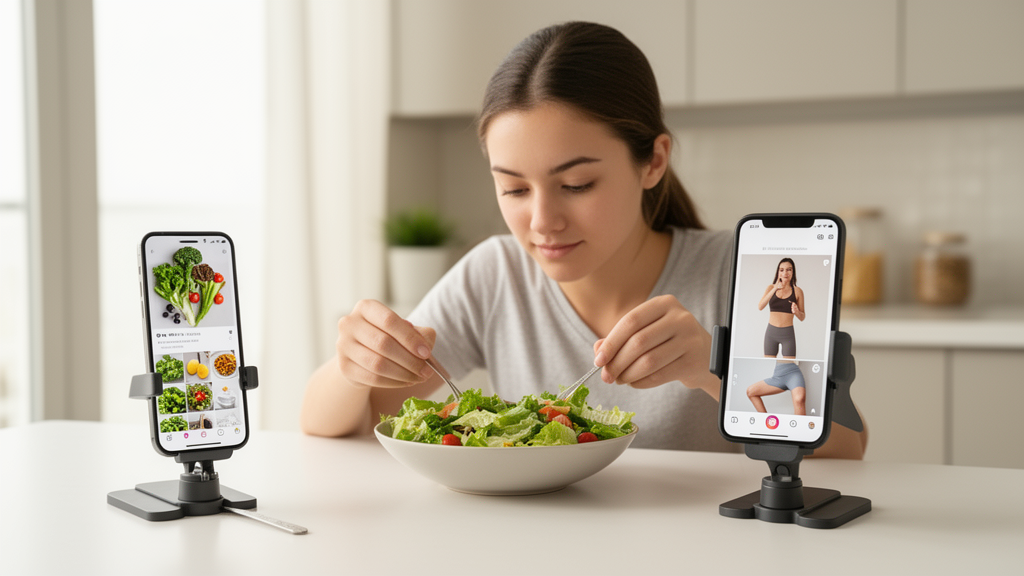
A content analysis of 300 popular TikTok and Instagram posts found that wellness content frequently combined restrictive food rules, moral judgments about food, appearance-focused definitions of health and unrealistic dietary ideals, with messages that resemble attitudes associated with orthorexia nervosa. Researchers at Flinders University published the analysis in the Journal of Technology in Behavioral Science on 22 July 2026. The study examined what creators posted rather than whether exposure to social media causes obsessive eating behaviour or eating disorders, so its findings describe patterns in the sampled content and cannot establish a causal effect on viewers.

The researchers selected popular posts tagged #healthylifestyle, #nutrition and #cleaneating. They reported that 67% of the analysed posts emphasized clean or healthy eating, almost one-third promoted food restrictions or rules, and one in five framed foods as “good” or “bad.” Nearly two-thirds featured body objectification, while many linked health directly to achieving a lean, toned appearance. Three-quarters also promoted supplements or superfoods, often presenting them as essential to health despite limited scientific context.

Overall, the posts frequently communicated rigid standards about what people should eat and how their bodies should look, even when framed as encouragement toward healthier habits. The study also evaluated the credentials of the people producing the content. Unqualified influencers accounted for 78% of the creators analysed, and more than two-thirds of the health information was classified as misleading or deceptive.

Qualified health professionals were significantly more likely to provide accurate, evidence-based advice. Because the sample covered 300 popular posts on two platforms and three hashtags, the results should not be generalized automatically to all wellness content, other platforms or social media users in general. Lead author Katie Porteous, a Flinders University psychology doctoral student, said many of the analysed posts promoted strict food rules, clean-eating ideals and the belief that health could be achieved through perfect dietary choices.

Those messages closely resemble attitudes associated with orthorexia nervosa, which the release describes as going beyond an interest in healthy eating to a fixation on eating the “right” foods and avoiding those perceived as unhealthy. International body image expert Ivanka Prichard said such messages are often packaged as self-improvement advice while encouraging increasingly rigid and perfectionistic standards around eating. The researchers also noted that health is influenced by genetics, lifestyle, culture and personal circumstances, meaning there is no single diet that works for everyone.

By studying published posts rather than audiences, the research provides evidence of potentially concerning messaging without demonstrating that social media exposure leads to orthorexia nervosa, body-image distress or other clinical outcomes.

Subject of Research: Content analysis of clean-eating and wellness messages shared on TikTok and Instagram

Article Title: Eat like me to look like me

Article References: Eat like me to look like me. Original publication (Bibliographic details unavailable.)

Image Credits: AI Generated

DOI: Not provided

Keywords: social media, orthorexia nervosa, clean eating, TikTok, Instagram, content analysis, diet culture, body image, influencer content, health misinformation, like, look

Cite Scienmag News

Daisy Hatcher. (October 22, 2026). TikTok and Instagram wellness posts reflect orthorexia-related attitudes, content analysis finds. Scienmag. https://scienmag.com/tiktok-and-instagram-wellness-posts-reflect-orthorexia-related-attitudes-content-analysis-finds/


Daisy Hatcher. "TikTok and Instagram wellness posts reflect orthorexia-related attitudes, content analysis finds." Scienmag, 22 October 2026, https://scienmag.com/tiktok-and-instagram-wellness-posts-reflect-orthorexia-related-attitudes-content-analysis-finds/. Accessed 22 October 2026.

Daisy Hatcher. "TikTok and Instagram wellness posts reflect orthorexia-related attitudes, content analysis finds." Scienmag. October 22, 2026. https://scienmag.com/tiktok-and-instagram-wellness-posts-reflect-orthorexia-related-attitudes-content-analysis-finds/

Tags: appearance-focused health messagingbody imagebody objectification on social mediaclean eatingcontent analysiscontent analysis of health-related postsdiet culturehealth and beauty standards in social mediahealth misinformationinfluence of social media on eating attitudesinfluencer contentInstagramLikelookmoral judgments about foodorthorexiaorthorexia nervosapromotion of supplements and superfoodsrestrictive eating behaviorssocial mediasocial media wellness contentTikTokTikTok and Instagram health postsunrealistic dietary ideals
Share26Tweet16
Previous Post

World-record speed–distance trade-offs reflect more than athlete physiology

Next Post

Mathematical study proposes hesitant graph energy for business-location ranking

Related Posts

Modeling and analysis of private domain operations: platform traffic allocation and retailer pricing
Social Science

Modeling and analysis of private domain operations: platform traffic allocation and retailer pricing

October 22, 2026
Seven LMU Researchers Receive ERC Starting Grants
Social Science

Seven LMU Researchers Receive ERC Starting Grants

October 22, 2026
Model links spatial capacity and utility to resilience in karst towns
Social Science

Model links spatial capacity and utility to resilience in karst towns

October 22, 2026
Mouse study links stress to shortened astrocyte cilia in amygdala
Social Science

Mouse study links stress to shortened astrocyte cilia in amygdala

October 22, 2026
Iraqi Governance Committees Linked to Greater Financial Disclosure
Social Science

Iraqi Governance Committees Linked to Greater Financial Disclosure

October 22, 2026
TikTok Body Videos Link Self-Objectification With Content-Specific Mood Changes
Social Science

TikTok Body Videos Link Self-Objectification With Content-Specific Mood Changes

October 22, 2026
Next Post
Mathematical study proposes hesitant graph energy for business-location ranking

Mathematical study proposes hesitant graph energy for business-location ranking

  • Mothers who receive childcare support from maternal grandparents show more optimized

    Mothers who receive childcare support from maternal grandparents show more parental warmth, finds NTU Singapore study

    27656 shares
    Share 11059 Tweet 6912
  • University of Seville Breaks 120-Year-Old Mystery, Revises a Key Einstein Concept

    1061 shares
    Share 424 Tweet 265
  • Bee body mass, pathogens and local climate influence heat tolerance

    682 shares
    Share 273 Tweet 171
  • Researchers record first-ever images and data of a shark experiencing a boat strike

    546 shares
    Share 218 Tweet 137
  • Groundbreaking Clinical Trial Reveals Lubiprostone Enhances Kidney Function

    531 shares
    Share 212 Tweet 133
Science

Embark on a thrilling journey of discovery with Scienmag.com—your ultimate source for cutting-edge breakthroughs. Immerse yourself in a world where curiosity knows no limits and tomorrow’s possibilities become today’s reality!

RECENT NEWS

  • Mathematical study proposes hesitant graph energy for business-location ranking
  • TikTok and Instagram wellness posts reflect orthorexia-related attitudes, content analysis finds
  • World-record speed–distance trade-offs reflect more than athlete physiology
  • Study reconstructs five decades of groundwater loss in California’s Tulare Basin

Categories

  • Agriculture
  • Anthropology
  • Archaeology
  • Athmospheric
  • Biology
  • Biotechnology
  • Blog
  • Bussines
  • Cancer
  • Chemistry
  • Climate
  • Earth Science
  • Editorial Policy
  • Marine
  • Mathematics
  • Medicine
  • Pediatry
  • Policy
  • Psychology & Psychiatry
  • Science Education
  • Science News
  • Social Science
  • Space
  • Technology and Engineering

Subscribe to Blog via Email

Enter your email address to subscribe to this blog and receive notifications of new posts by email.

Join 5,151 other subscribers

© 2025 Scienmag - Science Magazine

Welcome Back!

Login to your account below

Forgotten Password?

Retrieve your password

Please enter your username or email address to reset your password.

Log In
No Result
View All Result
  • HOME
  • SCIENCE NEWS
  • CONTACT US

© 2025 Scienmag - Science Magazine

Discover more from Science

Subscribe now to keep reading and get access to the full archive.

Continue reading