


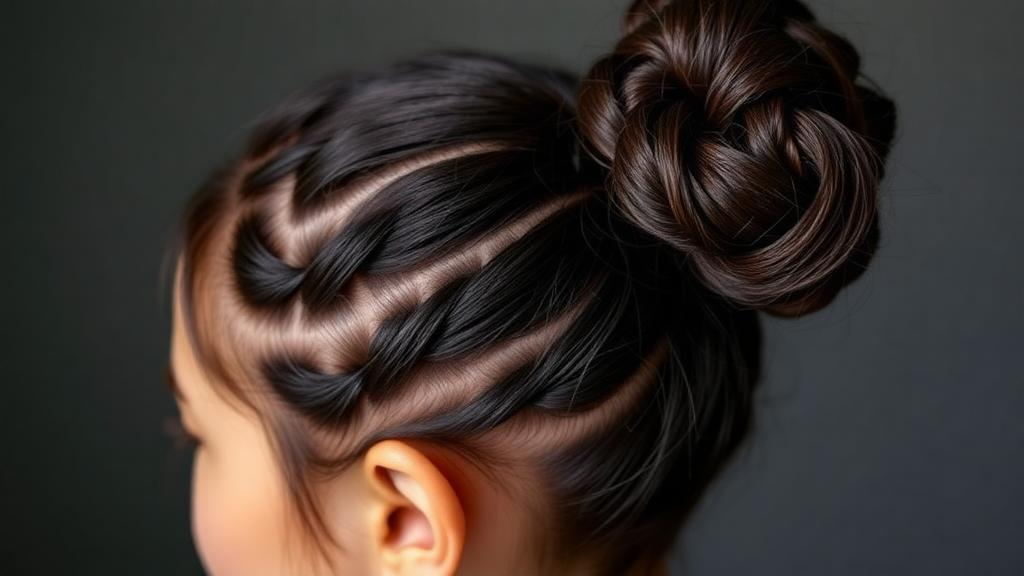
Traction alopecia, the hair loss condition caused by prolonged or repetitive mechanical tension on the hair follicle, is one of the most common yet most preventable forms of alopecia worldwide. A new comprehensive review published in the Archives of Dermatological Research argues that the condition has been too narrowly framed as a purely dermatological problem, and that effective care demands a whole-person approach spanning biology, behavior, culture, occupation, and psychology. The review, led by Angelica R. Carnemolla of Larkin Community Hospital Palm Springs Campus together with colleagues at osteopathic medical schools and Broward Health Medical Center, applies an osteopathic framework to synthesize what is known about the condition, from its epidemiology and microscopic pathology to its treatment options, including a novel discussion of osteopathic manipulative treatment as an adjunctive therapy.
The central clinical message of the review is a race against time. In its early inflammatory stage, traction alopecia is potentially reversible: the follicle is irritated and inflamed, but it has not yet been irreversibly destroyed. If the mechanical stress continues unrecognized, however, the chronic tension gradually converts the condition into a permanent scarring alopecia, in which follicles are replaced by fibrous tissue and hair can never regrow. This window of reversibility is precisely why delayed recognition is so consequential. The authors emphasize that clinicians, hairstylists, and patients themselves often fail to connect early signs, such as marginal hairline thinning, small bumps around follicles, or broken hairs at the temples, with the hairstyles and habits that cause them, allowing a preventable condition to progress to an irreversible one.
The biological mechanism is deceptively simple. Hair follicles are anchored in the scalp and nourished by a rich supply of blood vessels and supporting structures, including the dermal papilla, which signals hair growth. When hairstyles pull repeatedly on hairs, for example tight braids, ponytails, weaves, extensions, or tightly wrapped head coverings, the constant tension damages the follicle at its weakest points. Over time this mechanical stress triggers inflammation around the follicle, and the body’s repair response can ultimately scar the area. The review also highlights an underappreciated risk factor known as nocturnal traction: hairstyles maintained while sleeping, such as tight buns or rollers worn overnight, can exert tension for hours at a time without the wearer noticing. Occupational practices contribute as well, from the documented nurse’s cap alopecia caused by pinned caps to studies of alopecia among active-duty service women whose tight hair buns were required by uniform standards.
Diagnosis relies on a combination of clinical pattern recognition, trichoscopy, and, when necessary, histopathology. Traction alopecia characteristically affects the hair margins, the hairline, temples, and nape of the neck, because these are the areas where styling tension is greatest. Trichoscopic findings evolve with disease stage: early disease may show peripilar casts, broken hairs at different lengths, and small pustules or black dots at the margins, while later disease shows decreased hair density, loss of the vellus hairs that normally fringe the hairline, and eventually smooth, scarred skin devoid of follicular openings. The review notes that standardized clinical photography is increasingly recommended to document hair loss progression over time, an important tool given how slowly and subtly the condition advances. Histopathology in late-stage disease confirms the replacement of follicles with fibrous tissue, cementing the diagnosis of scarring alopecia and ending any hope of spontaneous regrowth in affected zones.
What sets this review apart is its insistence that traction alopecia cannot be understood, or treated, in isolation from identity and culture. Hair plays a distinctive role in personal identity, self-esteem, confidence, and social belonging, and this is nowhere more evident than in the communities most affected by the condition. The authors draw on literature documenting the cultural significance of hair among Black women and girls, where hairstyles such as braids, locs, and weaves carry deep historical and social meaning, and where hair satisfaction has been shown to influence body image and appearance evaluation among Black adolescent girls. Similar cultural dimensions appear in other communities: traction alopecia has been described in Sikh men who tie their hair under turbans, in hijab-wearing women, and in Orthodox Jewish populations using skull caps with pin fasteners. Any management plan that ignores these cultural contexts, the authors argue, is unlikely to succeed, because patients may be asked to give up practices central to their identity without being offered meaningful alternatives.
This cultural sensitivity extends to prevention, which the review treats as the cornerstone of management. The evidence base includes practical guidance from dermatology organizations on reducing damage from weaves and extensions, recommendations to rotate hairstyles, avoid excessive tension at the hairline, and take breaks between chemically processed or tightly styled periods. The review also underscores knowledge gaps: a prior study in the same journal documented substantial gaps in healthy hair care knowledge within the African American community, suggesting that public education must be delivered in culturally responsive ways, ideally through trusted messengers such as hairstylists, community health workers, and clinicians trained to discuss hair practices without judgment. Pediatric cases deserve particular attention, since braids and ponytails in young children can initiate follicular damage early, and prevention habits established in childhood carry lifelong benefits.
Once the condition is established, treatment options fall into several tiers. Behavioral modification, loosening or changing hairstyles, remains the single most important intervention, and it is most effective before scarring sets in. Pharmacological options include topical minoxidil to support regrowth in affected but not yet scarred areas, and increasingly low-dose oral minoxidil, whose safety has been assessed in multicenter studies of more than a thousand patients. Interestingly, the review cites work suggesting that alpha-1 adrenergic agonist induced piloerection, the involuntary standing of hairs, may theoretically protect against traction damage, an intriguing pharmacological angle on a mechanical problem. For advanced, scarred disease, surgical options such as hair transplantation are the mainstay, and the review points to the broader literature on hair restoration techniques for reconstructing lost hairlines.
The review then surveys a range of adjunctive and emerging therapies that reflect the regenerative turn in dermatology. Platelet-rich plasma injections, microneedling, low-level light therapy, exosome treatments, and stem cell based approaches are all discussed as strategies to stimulate follicular recovery, though the authors are careful to note that the evidence for many of these modalities in traction alopecia specifically remains limited. Nutraceuticals, including vitamin and mineral supplementation where deficiencies exist, and botanical agents such as Withania somnifera root extract, which has been tested in a randomized placebo-controlled trial for hair health, round out the adjunctive landscape. Wigs and hair prostheses are also addressed as important options for patients with established loss, with practical guidance on selecting appropriate devices that do not themselves create new tension or pressure damage, a phenomenon documented in case series of hair system-induced alopecia.
The most distinctive contribution of the review is its exploration of osteopathic medicine’s role. Osteopathic physicians are trained in a biopsychosocial, whole-person model, and osteopathic manipulative treatment encompasses hands-on techniques, including lymphatic procedures, aimed at improving tissue mobility, circulation, and lymphatic drainage. The authors review osteopathic literature on the application of manipulative treatment to dermatological disease and on the lymphatic system’s role in tissue repair and regeneration, and they note experimental evidence that standardized scalp massage can increase hair thickness by inducing stretching forces on dermal papilla cells in the subcutaneous tissue. They also discuss the potential relevance of vagal tone and vagal nerve stimulation to anti-inflammatory regulation, a growing research area with documented effects in inflammatory conditions. The authors are explicit that osteopathic interventions for traction alopecia have not yet been rigorously tested and call for future studies to evaluate them, positioning OMT as a promising adjunct rather than a proven therapy.
Ultimately, the review’s conclusion is that restoring hair growth is only part of the therapeutic goal. Because hair loss carries a significant psychological burden, with documented links between alopecia and psychiatric distress, management must include psychosocial support and counseling alongside medical treatment. The authors argue for an integrated model in which evidence-based dermatologic care, culturally responsive education, behavioral change, and appropriate adjunctive therapies are combined in a patient-centered plan. For a condition that is entirely preventable yet frequently irreversible by the time it reaches the clinic, that reframing may be the review’s most important contribution: the best treatment for traction alopecia begins long before the dermatologist’s office, in the everyday choices about how hair is styled, and in a health system prepared to meet patients where their hair, and their identity, actually lives.
Subject of Research: Traction alopecia: causes, diagnosis, and holistic management of tension-induced hair loss
Article Title: Holistic review of traction alopecia: osteopathic medicine insights and beyond
Article References: Carnemolla, A. R., Kemelmakher-Liben, K., Gill, S., Sanjabi, T., Hassan, L., Eppley, D. A., & Elway, M. (2026). Holistic review of traction alopecia: osteopathic medicine insights and beyond. Archives of Dermatological Research, 318(1), Article 503. https://doi.org/10.1007/s00403-026-04991-z
Image Credits: AI Generated
DOI: 10.1007/s00403-026-04991-z
Keywords: traction alopecia, hair loss, scarring alopecia, osteopathic medicine, osteopathic manipulative treatment, hair follicle, dermatology, trichoscopy, minoxidil, hair care practices, cultural hairstyling, prevention
Cite Scienmag News
Ophelia Keating. (October 4, 2026). Tight Hairstyles, Lasting Damage: A Whole-Person Look at Traction Alopecia. Scienmag. https://scienmag.com/tight-hairstyles-lasting-damage-a-whole-person-look-at-traction-alopecia/
Ophelia Keating. "Tight Hairstyles, Lasting Damage: A Whole-Person Look at Traction Alopecia." Scienmag, 4 October 2026, https://scienmag.com/tight-hairstyles-lasting-damage-a-whole-person-look-at-traction-alopecia/. Accessed 4 October 2026.
Ophelia Keating. "Tight Hairstyles, Lasting Damage: A Whole-Person Look at Traction Alopecia." Scienmag. October 4, 2026. https://scienmag.com/tight-hairstyles-lasting-damage-a-whole-person-look-at-traction-alopecia/


