


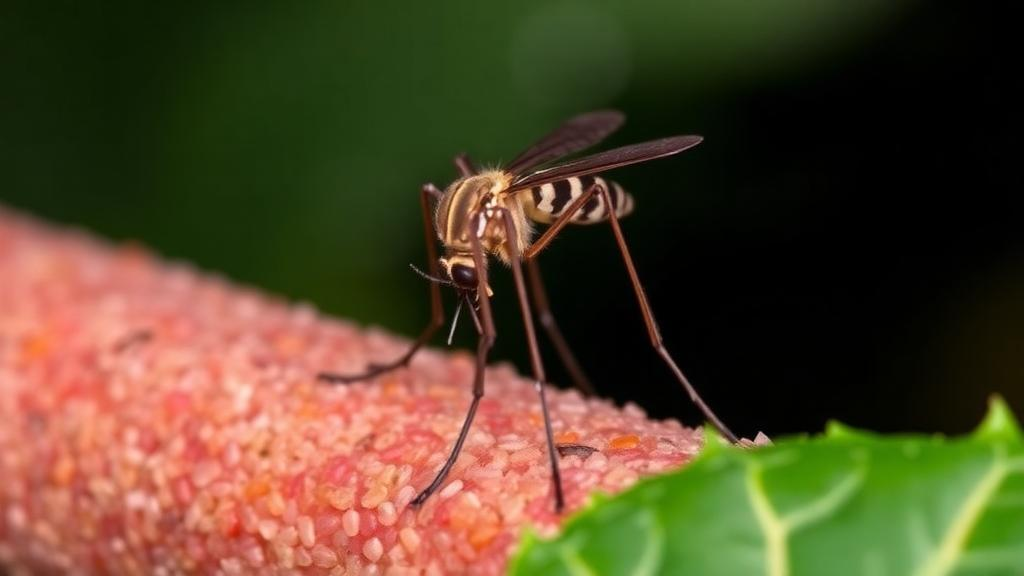
Chikungunya virus has quietly become one of the most successful emerging pathogens of the past two decades, now reported across 119 countries and territories with recent outbreaks sweeping through Asia, Europe, and the Americas. Yet the virus has not spread as a single, uniform entity. Within the East/Central/South African genotype, which has increasingly predominated in multiple regions of the world, three distinct sub-lineages have risen to dominance in different geographic arenas. A new study published in PLOS Pathogens by Yuhua Liao, Jingqi Yang, Jingzhe Shang, Hangyu Zhou, and Aiping Wu offers a molecular explanation for this puzzling pattern, showing that each sub-lineage has independently evolved its own strategy for adapting to mosquito vectors, and that these divergent strategies underlie their regional competitive advantages.
The research team assembled complete chikungunya virus genomes and applied comparative phylogenomic analyses to reconstruct the evolutionary history of the three ECSA sub-lineages: ECSA-IOL, ECSA-2.1, and ECSA-2.2. To probe how natural selection has acted on each lineage, they deployed a battery of selection pressure methods, including RELAX, BUSTED, and Contrast-FEL, which can detect intensification or relaxation of selective constraints across branches and identify individual codon sites under divergent selection between lineages. This combination allowed the authors to move beyond simple phylogenetic tree-building and ask a more mechanistic question: what molecular changes distinguish lineages that dominate one region from those that dominate another?
The clearest and most consequential finding concerns ECSA-2.1, the sub-lineage responsible for the explosive displacement of the previously dominant Asian genotype across the Americas. The selection analyses revealed intensified selection acting specifically on the structural-protein genes of ECSA-2.1, the portion of the viral genome encoding the proteins that form the virion and interact directly with mosquito and host cells. Intensified selection on structural proteins is precisely the signature one would expect when a virus is under strong pressure to optimize its interactions with vector and host entry machinery, and the pattern suggests that this sub-lineage has been actively refining its vector-facing molecular toolkit.
Crucially, ECSA-2.1 also accumulated substitutions previously associated with adaptation to Aedes aegypti, the primary urban mosquito vector of chikungunya in the Americas. This combination of intensified structural-protein selection and aegypti-associated mutations provides a coherent molecular account of the sub-lineage’s rapid takeover in the Western Hemisphere. Aedes aegypti is a highly efficient, human-adapted mosquito that thrives in dense urban environments, and a viral lineage optimized for this vector gains access to the dense, interconnected human populations that fuel large-scale epidemics. The study thus links a documented epidemiological transition, the replacement of the Asian genotype across the Americas, to specific and measurable evolutionary changes in the viral genome.
ECSA-IOL, the Indian Ocean Lineage, tells a different evolutionary story. Rather than specializing on a single vector, this sub-lineage appears to have undergone a strategy switch, shifting its adaptation from Aedes albopictus toward Aedes aegypti. This transition is historically resonant: the original Indian Ocean outbreak of 2005 to 2006 was famously associated with a single alanine-to-valine substitution in the viral E1 envelope protein that enhanced transmission by Aedes albopictus, the Asian tiger mosquito. The new analysis suggests that ECSA-IOL subsequently broadened or redirected its vector competence, and this flexibility has allowed it to maintain its dominance across South and Southeast Asia, regions where both Aedes species circulate and where aegypti-adapted transmission offers access to the largest human populations.
The third sub-lineage, ECSA-2.2, presents yet another adaptive profile. According to the study, ECSA-2.2 convergently acquired Aedes albopictus adaptation, arriving at vector-associated changes similar to those of other lineages through independent evolutionary routes, and layered additional envelope protein mutations on top of this convergent adaptation. Convergence is a powerful signal in evolutionary biology: when distinct lineages independently arrive at similar molecular solutions, it strongly suggests that those solutions confer a genuine selective advantage. The additional envelope mutations carried by ECSA-2.2 suggest, in the authors’ interpretation, an enhanced adaptive potential, a lineage that may be poised for further expansion should ecological conditions favor its vector associations.
Taken together, the genome-wide analysis identified both lineage-characteristic substitutions, mutations unique to each sub-lineage, and convergent substitutions, mutations shared across lineages that arrived independently. These molecular signatures collectively constitute what the authors describe as markers associated with the competitive advantage of the ECSA genotype. The concept that emerges is one of vector niche partitioning: rather than competing head-to-head in a single ecological arena, the three sub-lineages have effectively divided the mosquito-vector landscape among themselves, with each lineage dominating regions where its particular vector adaptation is most advantageous. This reframes the global expansion of chikungunya not as a single wave of conquest but as three parallel evolutionary experiments, each tuned to a different vector ecology.
The implications of this work extend well beyond evolutionary theory. For outbreak forecasting, the identification of lineage-characteristic and convergent molecular signatures provides a potential early-warning system: surveillance teams could monitor circulating viral populations for the appearance of vector-associated substitutions that presage a shift in transmission potential. For vector control, the findings suggest that prioritization strategies may need to be region-specific and lineage-aware, since the mosquito species that matters most for transmission depends on which sub-lineage is circulating. A control campaign designed around Aedes aegypti would be well matched to the Americas under ECSA-2.1 dominance but might need to account for Aedes albopictus in regions where ECSA-2.2 or albopictus-adapted variants are established.
The study also carries weight for vaccine development. Chikungunya vaccine candidates currently in development or recently approved must contend with substantial antigenic and genetic diversity across the virus’s global population. If different sub-lineages carry distinct envelope protein mutations shaped by divergent vector adaptations, a vaccine designed against one lineage may offer reduced protection against another. The authors explicitly note that their findings have potential implications for the design of broadly protective vaccines, and the molecular map of lineage-specific and convergent substitutions they provide could help immunologists select vaccine strains or antigens that cover the full breadth of circulating diversity.
More broadly, the study contributes to a growing appreciation that the epidemiology of arboviruses cannot be separated from the evolutionary dynamics of vector adaptation. Chikungunya, dengue, Zika, and yellow fever all share Aedes mosquito vectors, and the interplay between viral mutation and vector competence shapes which viruses flourish where. By demonstrating that three closely related sub-lineages of a single genotype have pursued three distinct adaptive strategies, Liao and colleagues provide a template for analyzing other arboviral systems and a reminder that the next geographic shift in chikungunya’s distribution may be foreshadowed in its genome long before it appears in clinic-based surveillance. As outbreaks continue to expand into new territories, watching the virus’s molecular evolution in the context of its mosquito partners may prove as important as counting human cases.
Subject of Research: Mosquito vector adaptation and regional dominance of chikungunya virus ECSA sub-lineages
Article Title: Differentiated mosquito adaptive strategies underlie regional dominance of three ECSA sub-lineages in chikungunya virus
Article References: Liao, Y., Yang, J., Shang, J., Zhou, H., & Wu, A. (2026). Differentiated mosquito adaptive strategies underlie regional dominance of three ECSA sub-lineages in chikungunya virus. PLOS Pathogens, 22(10), e1014677. https://doi.org/10.1371/journal.ppat.1014677
Image Credits: AI Generated
DOI: 10.1371/journal.ppat.1014677
Keywords: chikungunya virus, ECSA genotype, Aedes aegypti, Aedes albopictus, phylogenomics, vector adaptation, selection pressure, outbreak forecasting, arboviruses, molecular evolution, vaccine design, Differentiated
Cite Scienmag News
Gavin Prescott. (October 11, 2026). Three Chikungunya Lineages, Three Mosquito Strategies: How Vector Adaptation Drives Global Spread. Scienmag. https://scienmag.com/three-chikungunya-lineages-three-mosquito-strategies-how-vector-adaptation-drives-global-spread/
Gavin Prescott. "Three Chikungunya Lineages, Three Mosquito Strategies: How Vector Adaptation Drives Global Spread." Scienmag, 11 October 2026, https://scienmag.com/three-chikungunya-lineages-three-mosquito-strategies-how-vector-adaptation-drives-global-spread/. Accessed 11 October 2026.
Gavin Prescott. "Three Chikungunya Lineages, Three Mosquito Strategies: How Vector Adaptation Drives Global Spread." Scienmag. October 11, 2026. https://scienmag.com/three-chikungunya-lineages-three-mosquito-strategies-how-vector-adaptation-drives-global-spread/


