

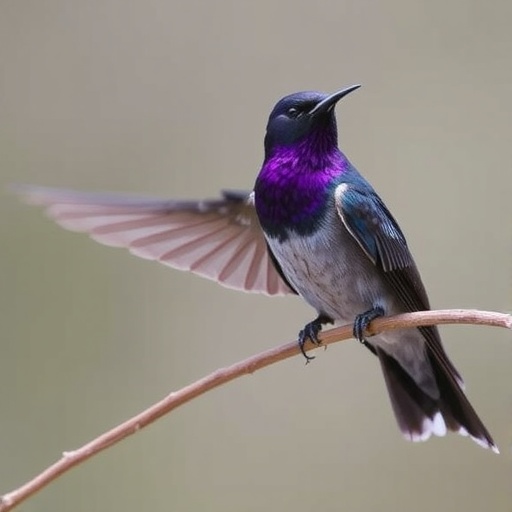
The catastrophic “Great Texas Freeze” of February 2021 left an indelible mark not only on human infrastructure but also on the delicate avian populations of the Gulf Coast. Among the hardest hit were the purple martins, a migratory songbird species known for their early arrival from South American wintering grounds to breed in the southern United States. Recent research led by biologists at the University of Massachusetts Amherst, published in Nature Ecology & Evolution, has shed unprecedented light on how this extreme weather event caused extensive mortality and resulted in long-lasting demographic and genetic consequences for this emblematic species. Their findings reveal that such weather-driven mass mortality episodes may be increasing in frequency and severity as global climate change ushers in a new era of atmospheric unpredictability, with profound implications for animal populations worldwide.
For over nine days, the Gulf Coast endured two successive deep freezes in February 2021, a meteorological anomaly that brought record-low temperatures, heavy snowfall, and widespread power outages to regions unaccustomed to such harsh winter conditions. This sequence of events, now infamously dubbed “The Great Texas Freeze,” coincided tragically with the purple martins’ annual early-season migration northward. These birds, one of the earliest migrators to the Gulf Coast, routinely begin arriving in late January and early February to establish breeding territories. However, the freeze’s timing proved deadly. The extreme cold not only disrupted their physiology but claimed thousands of adult martins, forcing biologists and conservationists to confront the stark realities of climate change’s erratic impacts on migratory species.
In an extraordinary collaboration, the research team harnessed the power of citizen science through the Purple Martin Conservation Association (PMCA), an organization with nearly four decades of experience facilitating protective efforts for purple martins across North America. This network of dedicated backyard conservationists, combined with Louisiana State University’s Museum of Natural History’s robust archival bird collections, offered a rare opportunity to establish an extensive pre-freeze baseline. By comparing population data before and after the freeze, the researchers could quantify mortality rates with unprecedented spatial and temporal scope, overcoming past challenges of studying such unpredictable natural disasters.
The exquisite detail captured by this data repository revealed that up to 27% of the purple martin breeding population in Texas and Louisiana perished due to the freeze. Mortality was not uniform—in some monitored sites, up to 52% of adult martins died, marking an immediate demographic shock that endangered local breeding populations. Moreover, surviving individuals exhibited behavioral and physiological stress responses, including significant delays in breeding activities and reduced reproductive output in spring 2021. This reproductive impairment extended the freeze’s impact well beyond the immediate mortality, portending long-term effects on population dynamics.
Genetic analyses conducted in the aftermath showed novel shifts in the migratory timing and population structure of surviving martins. In 2022, the surviving birds arrived at breeding locales two weeks later than typical. More strikingly, these individuals genetically resembled northern populations of purple martins more than the original Gulf Coast groups. This suggests selective pressures imposed by the freeze could be accelerating adaptive shifts in migratory timing and local genetic composition, illustrating an evolutionary response to acute climatic stressors. Yet, with the population only beginning to exhibit recovery signs by 2023, these genetic and phenological alterations underscore the profound and enduring consequences of extreme weather on wild bird populations.
The team warns that recovery to pre-freeze population levels could take six to seven years, contingent on the absence of similarly severe weather events in subsequent winters. This projection amplifies concerns regarding the cumulative impacts of repeated mass mortality episodes, particularly as climate models forecast increased volatility in winter weather patterns for the southern United States. Purple martins in Texas and Louisiana are already experiencing greater rates of decline compared to other regions, compounding the urgency of targeted conservation strategies informed by this research.
Lead author Maria Stager, an assistant professor of biology at UMass Amherst specializing in avian physiology and evolutionary biology, emphasizes the paradox inherent in climate change research. “People often ask why I study cold when interested in climate change, but birds’ ability to survive unprecedentedly cold snaps amid rising global temperatures is crucial to their persistence,” she notes. The study’s findings illuminate the complexities of climatic extremes—both heat and cold—as selective agents shaping migratory species’ survival, breeding success, and ultimately, their evolutionary trajectory.
The integration of citizen science not only enriched the data quality but also strengthened community engagement around avian conservation. Homeowners and bird enthusiasts caring for purple martin nesting houses became critical participants in documenting mortality and enabling sample preservation. This grassroots effort, combined with cutting-edge genetic and ecological analyses, illustrates a paradigm of modern ecological research leveraging public participation to address urgent environmental challenges.
Beyond purple martins, this research stands as a sentinel case study for understanding how extreme weather events, historically rare but now more frequent, manifest immediate mortality and longer-term demographic shifts with genetic consequences. It exposes vulnerable periods in species’ life cycles when climatic extremes can induce population bottlenecks and disrupt evolutionary equilibria. Furthermore, it highlights the importance of establishing and maintaining longitudinal monitoring programs capable of detecting these episodic yet devastating events.
As global climate change accelerates the frequency of unprecedented weather phenomena, examining the interplay between migratory behavior, phenology, physiology, and population genetics becomes increasingly vital. Such insights will guide conservationists in predicting species resilience or susceptibility and inform adaptive strategies that buffer critical populations during periods of climatic upheaval.
This body of work underscores the significance of interdisciplinary approaches combining ecology, evolutionary biology, genetics, and citizen science to unlock complex environmental narratives. The “Great Texas Freeze” is a tragic chapter in North American natural history, yet through dedicated research and collective engagement, it has catalyzed a deeper understanding of the vulnerabilities and adaptive capacities of migratory songbirds confronting an unpredictable climate future.
Subject of Research: Impact of weather-induced mass mortality events on migratory purple martin populations, including demographic, behavioral, and genetic consequences.
Article Title: Storm-induced mass mortality results in both immediate and long-term consequences for a migratory songbird
News Publication Date: March 6, 2026
Web References:
- Nature Ecology & Evolution: https://www.nature.com/articles/s41559-026-03005-5
- DOI: http://dx.doi.org/10.1038/s41559-026-03005-5
- Purple Martin Conservation Association: https://www.purplemartin.org/
Image Credits: PMCA
Keywords: purple martin, migratory songbird, Great Texas Freeze, mass mortality, climate change, citizen science, phenology, population genetics, conservation, Gulf Coast, bird mortality, adaptive evolution


