


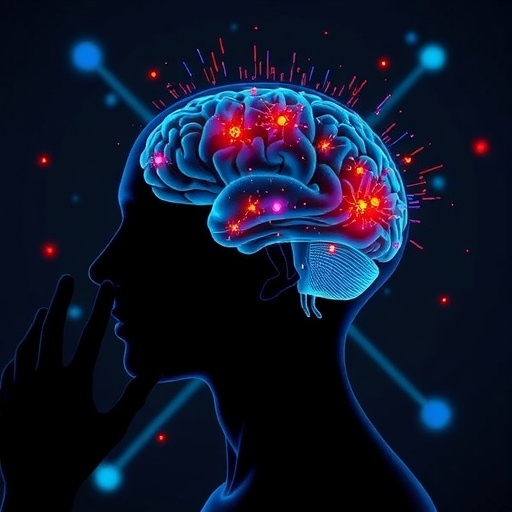
In a groundbreaking advancement for the treatment of insomnia, researchers have unveiled compelling evidence that continuous theta burst stimulation (cTBS), a non-invasive brain stimulation technique, can significantly modulate brain oscillations implicated in sleep regulation. This revelation, published in Translational Psychiatry in 2025 by Zhu, Jiang, Shi, and colleagues, elucidates a promising neurophysiological pathway in combating a notoriously difficult sleep disorder that affects millions worldwide.
Insomnia, characterized by persistent difficulties in falling asleep or maintaining restorative sleep, has long challenged clinicians, with pharmacological solutions posing risks of dependency and adverse effects. The emerging neurotechnological approaches, particularly those targeting the neural substrates of sleep-wake regulation, have kindled hope for safer, more effective therapies. The research undertaken by Zhu and colleagues specifically investigates whether applying continuous theta burst stimulation—a patterned form of transcranial magnetic stimulation—can recalibrate aberrant brain rhythms in patients whose insomnia remains resistant to conventional treatments.
Theta bursts, rhythmic neural oscillations around 5 Hz, are intricately involved in sleep processes, particularly in promoting transitions between sleep stages. The authors applied cTBS protocols to key cortical areas hypothesized to influence sleep architecture, aiming to restore natural oscillatory dynamics. Using detailed electrophysiological recordings, including electroencephalography (EEG), they characterized how these modulations altered the frequency and amplitude of brain waves previously linked to impaired sleep patterns.
Crucially, their findings display that cTBS not only shifted the dominant frequency of cortical oscillations toward physiologically favorable bands but also enhanced the synchronization of neural networks involved in sleep onset and maintenance. The intervention suppressed aberrant high-frequency beta activities often observed in insomnia patients, which correspond to hyperarousal states disrupting sleep initiation. This neuroplastic modulation suggests a direct mechanistic link between targeted brain stimulation and alleviation of insomnia symptoms.
The study meticulously outlines the stimulation parameters, intensity, and cortical targeting strategies, establishing a replicable framework for clinical application. The team emphasizes the significance of personalized stimulation protocols, as individual variability in baseline oscillatory states necessitates tailored intervention for maximal therapeutic benefit. By integrating advanced neuroimaging and neurophysiological monitoring, the approach transcends symptom management, instead aiming to recalibrate the underlying functional brain dynamics.
Investigators also conducted comprehensive polysomnography before and after the treatment course, observing marked improvements in total sleep time, sleep efficiency, and rapid eye movement (REM) sleep proportions. These objective enhancements dovetail with subjective reports from participants, who noted reductions in sleep latency and nocturnal awakenings. The dual validation underscores the translational potential of cTBS as a viable non-pharmacologic option in clinical settings.
While the precise neurobiological mechanisms underpinning cTBS effects remain an active area of inquiry, the modulation of thalamocortical circuits and changes in inhibitory-excitatory balance appear central. The oscillatory entrainment achieved by cTBS may restore disrupted connectivity patterns, enabling the brain to transition more smoothly between wakefulness and sleep states. The temporal precision and intensity of the theta burst delivery are likely critical variables shaping these neural outcomes.
Safety assessments further corroborate the minimal adverse event profile of cTBS, with no serious side effects recorded. Mild transient headaches and scalp discomfort were the most frequently reported symptoms, underscoring the technique’s tolerability compared to pharmacological interventions. This safety margin encourages its broader exploration across diverse insomnia populations, including those with comorbid neuropsychiatric conditions where medication risks are heightened.
Importantly, the study sheds light on the temporal durability of cTBS effects, noting sustained benefits persisting weeks beyond treatment cessation. This durability suggests that cTBS induces lasting neuroplastic adaptations rather than transient suppression of pathological oscillations. Such long-term remodeling of neural circuits may herald a paradigm shift in sleep disorder therapeutics, moving toward enduring symptom remission.
The implications extend beyond primary insomnia, as disruptions in brain oscillations characterize many neuropsychiatric and neurological disorders with secondary sleep disturbances. Cognitive dysfunction, mood disorders, and neurodegenerative diseases often exhibit sleep impairments that exacerbate symptomatology. The modulation of brain oscillatory activity by cTBS thus holds promise for a spectrum of conditions where sleep is both a symptom and a contributing factor to disease progression.
This pivotal research also highlights the convergence of neuroengineering, sleep medicine, and psychiatry, illustrating how interdisciplinary approaches can yield impactful clinical innovations. By harnessing the brain’s intrinsic rhythms and selectively enhancing physiologic oscillations, neuromodulation therapies like cTBS offer personalized, non-pharmacologic avenues to restoring health and wellbeing.
Future investigations aim to optimize cTBS protocols through integration with closed-loop systems capable of adapting stimulation in real time based on ongoing neural activity. Combining such neurofeedback paradigms with multimodal imaging could refine target identification and maximize therapeutic efficacy. Moreover, longitudinal studies exploring combinatorial treatments alongside behavioral interventions stand to amplify treatment outcomes.
In conclusion, the work by Zhu and colleagues marks a seminal contribution to insomnia research, illustrating that continuous theta burst stimulation can effectively modulate dysfunctional brain oscillations and improve sleep quality in patients. This promising modality challenges traditional approaches, providing new hope for those grappling with chronic sleep disorders and expanding the therapeutic frontier of non-invasive brain stimulation technologies.
Cite Scienmag News
Cassandra Pierce. (October 17, 2025). Theta Burst Stimulation Alters Brain Waves in Insomnia. Scienmag. https://scienmag.com/theta-burst-stimulation-alters-brain-waves-in-insomnia/
Cassandra Pierce. "Theta Burst Stimulation Alters Brain Waves in Insomnia." Scienmag, 17 October 2025, https://scienmag.com/theta-burst-stimulation-alters-brain-waves-in-insomnia/. Accessed 4 September 2026.
Cassandra Pierce. "Theta Burst Stimulation Alters Brain Waves in Insomnia." Scienmag. October 17, 2025. https://scienmag.com/theta-burst-stimulation-alters-brain-waves-in-insomnia/


