


A research team from the URV’s Nutrition and Mental Health group has studied the prevalence of autistic spectrum disorder (ASD) and attention deficit hyperactivity disorder (ADHD) in schoolchildren in the Tarragona region. The research, which also determined the extent to which these disorders affect children’s social relationships, collected data on 7,000 pupils, of whom 700 were studied in detail. The results determined that 1.5% of the children had ASD, while 5% were diagnosed with ADHD. This study, known as EPINED, has discovered that the risk of suffering from abuse, isolation or social exclusion can triple in those children who suffer from one of these disorders.

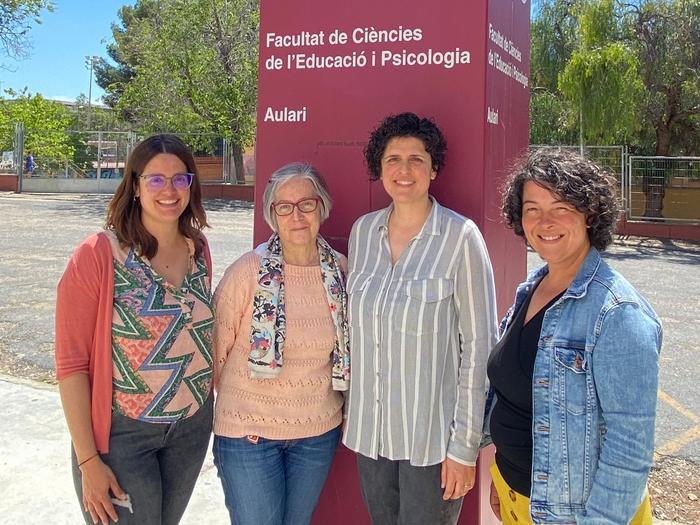
Credit: Nutrition and Mental Health Research Team, URV
A research team from the URV’s Nutrition and Mental Health group has studied the prevalence of autistic spectrum disorder (ASD) and attention deficit hyperactivity disorder (ADHD) in schoolchildren in the Tarragona region. The research, which also determined the extent to which these disorders affect children’s social relationships, collected data on 7,000 pupils, of whom 700 were studied in detail. The results determined that 1.5% of the children had ASD, while 5% were diagnosed with ADHD. This study, known as EPINED, has discovered that the risk of suffering from abuse, isolation or social exclusion can triple in those children who suffer from one of these disorders.
In the first part of the study, Núria Voltas, Fina Canals, Paula Morales and Carmen Hernández, researchers from the Department of Psychology, determined the prevalence – the number of cases diagnosed at a given time and in a given environment – of autistic spectrum disorders and attention deficit and hyperactivity disorder in children in the Tarragona area. To do so, they screened more than 7,000 children in two age groups, namely pupils in the fourth year of Infant Education and pupils in the fifth year of Primary Education (PE) from a representative sample of the whole province. By means of tests answered by teachers and families, they were able to identify those cases with signs of presenting either of the two disorders. From the screening, a sample of 700 children was selected, including a control group to evaluate the correct functioning of the methodology.
After conducting interviews with the children and their families and studying all the cases individually, the researchers determined that, of the children in the sample, 1.5% had ASD and 5% had ADHD. “We also assessed other children with difficulties but who fell outside the diagnosis because they did not have all the symptoms. If we include them, we can say that 3.5% of children had some symptom of ASD”, asserted the researchers.
A research team from the URV’s Nutrition and Mental Health group has studied the prevalence of autistic spectrum disorder (ASD) and attention deficit hyperactivity disorder (ADHD) in schoolchildren in the Tarragona region. The research, which also determined the extent to which these disorders affect children’s social relationships, collected data on 7,000 pupils, of whom 700 were studied in detail. The results determined that 1.5% of the children had ASD, while 5% were diagnosed with ADHD. This study, known as EPINED, has discovered that the risk of suffering from abuse, isolation or social exclusion can triple in those children who suffer from one of these disorders.
In the first part of the study, Núria Voltas, Fina Canals, Paula Morales and Carmen Hernández, researchers from the Department of Psychology, determined the prevalence – the number of cases diagnosed at a given time and in a given environment – of autistic spectrum disorders and attention deficit and hyperactivity disorder in children in the Tarragona area. To do so, they screened more than 7,000 children in two age groups, namely pupils in the fourth year of Infant Education and pupils in the fifth year of Primary Education (PE) from a representative sample of the whole province. By means of tests answered by teachers and families, they were able to identify those cases with signs of presenting either of the two disorders. From the screening, a sample of 700 children was selected, including a control group to evaluate the correct functioning of the methodology.
After conducting interviews with the children and their families and studying all the cases individually, the researchers determined that, of the children in the sample, 1.5% had ASD and 5% had ADHD. “We also assessed other children with difficulties but who fell outside the diagnosis because they did not have all the symptoms. If we include them, we can say that 3.5% of children had some symptom of ASD”, asserted the researchers.
A research team from the URV’s Nutrition and Mental Health group has studied the prevalence of autistic spectrum disorder (ASD) and attention deficit hyperactivity disorder (ADHD) in schoolchildren in the Tarragona region. The research, which also determined the extent to which these disorders affect children’s social relationships, collected data on 7,000 pupils, of whom 700 were studied in detail. The results determined that 1.5% of the children had ASD, while 5% were diagnosed with ADHD. This study, known as EPINED, has discovered that the risk of suffering from abuse, isolation or social exclusion can triple in those children who suffer from one of these disorders.
In the first part of the study, Núria Voltas, Fina Canals, Paula Morales and Carmen Hernández, researchers from the Department of Psychology, determined the prevalence – the number of cases diagnosed at a given time and in a given environment – of autistic spectrum disorders and attention deficit and hyperactivity disorder in children in the Tarragona area. To do so, they screened more than 7,000 children in two age groups, namely pupils in the fourth year of Infant Education and pupils in the fifth year of Primary Education (PE) from a representative sample of the whole province. By means of tests answered by teachers and families, they were able to identify those cases with signs of presenting either of the two disorders. From the screening, a sample of 700 children was selected, including a control group to evaluate the correct functioning of the methodology.
After conducting interviews with the children and their families and studying all the cases individually, the researchers determined that, of the children in the sample, 1.5% had ASD and 5% had ADHD. “We also assessed other children with difficulties but who fell outside the diagnosis because they did not have all the symptoms. If we include them, we can say that 3.5% of children had some symptom of ASD”, asserted the researchers.
Another aim of the research was to determine whether and to what extent infants diagnosed with any of these disorders feel socially disadvantaged. The researchers found that 35% of primary school children with ADHD reported experiencing some form of bullying, isolation or social exclusion. “This phenomenon is aggravated in children with combined ADHD, i.e. with all the typical symptoms: attention deficit, hyperactivity and impulsivity,” explained Núria Voltas.
The researchers also found that 58% schoolchildren with ASD, who are characterised by behavioural problems and difficulties in social interaction and communication, felt displaced and excluded. “Children with ASD want to relate to others but don’t know how to; in the case of ADHD, they are so muted and intense that the disorder influences their relationship with others”, explains Fina Canals. These characteristics mean that their behaviour can be perceived as “strange” or “annoying” by their peers. For schoolchildren without any type of diagnosed disorder, the index of perceived harassment, isolation or social exclusion stands at 18%.
The research also revealed that in cases with both disorders, i.e. those with comorbid disorders, there was a stronger feeling of social isolation. These results do not refer to children with ASD and ADHD in the fourth year of Infant Education as they are not mature enough to answer the tests on their perception of victimisation by bullying.
“Bullying has long-lasting consequences and increases the feeling of fear towards social relationships; having ASD or ADHD and feeling victimised increases emotional problems”, says Fina Canals. When these people grow up and enter adolescence and adulthood, they present “very high rates of mental health disorders” and a “high risk of suicide”. For this reason, the authors of the research call for anti-bullying programmes to include specific measures for at-risk groups.
Another aim of the research was to determine whether and to what extent infants diagnosed with any of these disorders feel socially disadvantaged. The researchers found that 35% of primary school children with ADHD reported experiencing some form of bullying, isolation or social exclusion. “This phenomenon is aggravated in children with combined ADHD, i.e. with all the typical symptoms: attention deficit, hyperactivity and impulsivity,” explained Núria Voltas.
The researchers also found that 58% schoolchildren with ASD, who are characterised by behavioural problems and difficulties in social interaction and communication, felt displaced and excluded. “Children with ASD want to relate to others but don’t know how to; in the case of ADHD, they are so muted and intense that the disorder influences their relationship with others”, explains Fina Canals. These characteristics mean that their behaviour can be perceived as “strange” or “annoying” by their peers. For schoolchildren without any type of diagnosed disorder, the index of perceived harassment, isolation or social exclusion stands at 18%.
The research also revealed that in cases with both disorders, i.e. those with comorbid disorders, there was a stronger feeling of social isolation. These results do not refer to children with ASD and ADHD in the fourth year of Infant Education as they are not mature enough to answer the tests on their perception of victimisation by bullying.
“Bullying has long-lasting consequences and increases the feeling of fear towards social relationships; having ASD or ADHD and feeling victimised increases emotional problems”, says Fina Canals. When these people grow up and enter adolescence and adulthood, they present “very high rates of mental health disorders” and a “high risk of suicide”. For this reason, the authors of the research call for anti-bullying programmes to include specific measures for at-risk groups.
Another aim of the research was to determine whether and to what extent infants diagnosed with any of these disorders feel socially disadvantaged. The researchers found that 35% of primary school children with ADHD reported experiencing some form of bullying, isolation or social exclusion. “This phenomenon is aggravated in children with combined ADHD, i.e. with all the typical symptoms: attention deficit, hyperactivity and impulsivity,” explained Núria Voltas.
The researchers also found that 58% schoolchildren with ASD, who are characterised by behavioural problems and difficulties in social interaction and communication, felt displaced and excluded. “Children with ASD want to relate to others but don’t know how to; in the case of ADHD, they are so muted and intense that the disorder influences their relationship with others”, explains Fina Canals. These characteristics mean that their behaviour can be perceived as “strange” or “annoying” by their peers. For schoolchildren without any type of diagnosed disorder, the index of perceived harassment, isolation or social exclusion stands at 18%.
The research also revealed that in cases with both disorders, i.e. those with comorbid disorders, there was a stronger feeling of social isolation. These results do not refer to children with ASD and ADHD in the fourth year of Infant Education as they are not mature enough to answer the tests on their perception of victimisation by bullying.
“Bullying has long-lasting consequences and increases the feeling of fear towards social relationships; having ASD or ADHD and feeling victimised increases emotional problems”, says Fina Canals. When these people grow up and enter adolescence and adulthood, they present “very high rates of mental health disorders” and a “high risk of suicide”. For this reason, the authors of the research call for anti-bullying programmes to include specific measures for at-risk groups.
Another aim of the research was to determine whether and to what extent infants diagnosed with any of these disorders feel socially disadvantaged. The researchers found that 35% of primary school children with ADHD reported experiencing some form of bullying, isolation or social exclusion. “This phenomenon is aggravated in children with combined ADHD, i.e. with all the typical symptoms: attention deficit, hyperactivity and impulsivity,” explained Núria Voltas.
The researchers also found that 58% schoolchildren with ASD, who are characterised by behavioural problems and difficulties in social interaction and communication, felt displaced and excluded. “Children with ASD want to relate to others but don’t know how to; in the case of ADHD, they are so muted and intense that the disorder influences their relationship with others”, explains Fina Canals. These characteristics mean that their behaviour can be perceived as “strange” or “annoying” by their peers. For schoolchildren without any type of diagnosed disorder, the index of perceived harassment, isolation or social exclusion stands at 18%.
The research also revealed that in cases with both disorders, i.e. those with comorbid disorders, there was a stronger feeling of social isolation. These results do not refer to children with ASD and ADHD in the fourth year of Infant Education as they are not mature enough to answer the tests on their perception of victimisation by bullying.
“Bullying has long-lasting consequences and increases the feeling of fear towards social relationships; having ASD or ADHD and feeling victimised increases emotional problems”, says Fina Canals. When these people grow up and enter adolescence and adulthood, they present “very high rates of mental health disorders” and a “high risk of suicide”. For this reason, the authors of the research call for anti-bullying programmes to include specific measures for at-risk groups.
Journal
Autism
Method of Research
Experimental study
Subject of Research
People
Article Title
Self-perceived bullying victimization in pre-adolescents on the autism spectrum: EPINED study
Article Publication Date
10-Jun-2024
Cite Scienmag News
Courtney Benton. (June 10, 2024). The risk of suffering school bullying triples in children with autistic spectrum disorders. Scienmag. https://scienmag.com/the-risk-of-suffering-school-bullying-triples-in-children-with-autistic-spectrum-disorders/
Courtney Benton. "The risk of suffering school bullying triples in children with autistic spectrum disorders." Scienmag, 10 June 2024, https://scienmag.com/the-risk-of-suffering-school-bullying-triples-in-children-with-autistic-spectrum-disorders/. Accessed 5 September 2026.
Courtney Benton. "The risk of suffering school bullying triples in children with autistic spectrum disorders." Scienmag. June 10, 2024. https://scienmag.com/the-risk-of-suffering-school-bullying-triples-in-children-with-autistic-spectrum-disorders/

