


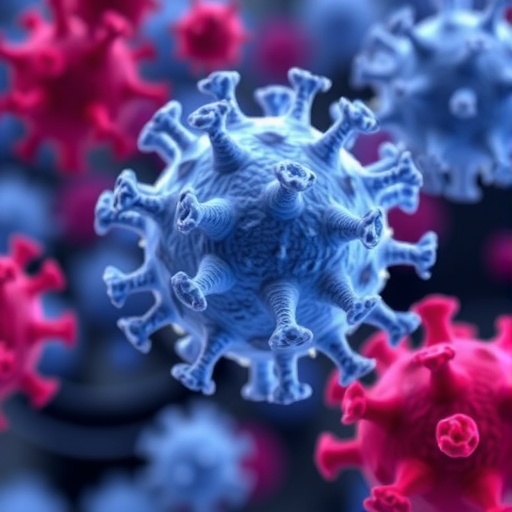
What if the secret to why some people living with HIV fail to fully recover their health, despite effective antiretroviral therapy, lies hidden in a little-understood viral protein? This provocative question has driven researchers at the University of Montreal’s CRCHUM to embark on an ambitious new clinical trial set to launch this fall, aiming to unravel the intricate ways in which HIV’s biology continues to impact the immune system beyond viral suppression.
Central to this investigation is gp120, an HIV envelope glycoprotein long recognized for its role in binding the virus to CD4+ T cells, the crucial sentinels that orchestrate immune defense. While antiretroviral treatments have succeeded in lowering viral loads to undetectable levels, Dr. Madeleine Durand and Andrés Finzi, leading virologists at the Université de Montréal’s affiliated hospital research center CRCHUM, hypothesize that soluble gp120 circulating in the bloodstream acts as a persistent toxin. Their groundbreaking 2023 study illuminated that in roughly one-third of people living with HIV (PLWH), gp120 remains detectable in plasma, even when viral particles are effectively suppressed by medication.
The pernicious nature of gp120 stems from its ability to bind to healthy CD4+ T cells, flagging these cells for destruction by the immune system itself—a process that Finzi’s laboratory first uncovered in 2016. This immune self-sabotage erodes the very defenses needed to control the virus, contributing to immune system deterioration despite therapy. Now, a new publication in the August 2025 issue of eBioMedicine sheds light on the antibody-mediated dynamics that exacerbate this phenomenon. The team identified a subset of non-neutralizing antibodies, termed anti-cluster A antibodies, which actually attack uninfected CD4+ cells rendered vulnerable by gp120 interaction.
This antibody-driven depletion diminishes CD4+ T cell counts, further crippling immune competence and impeding the body’s ability to fight residual viral reservoirs. Yet, intriguingly, the researchers discovered a counterbalancing force in a rare category of antibodies targeting the CD4 binding site (CD4BS) on gp120. These anti-CD4BS antibodies inhibit gp120’s attachment to healthy cells, effectively neutralizing its toxic effect and protecting immune function. Such findings were possible through meticulous analysis of blood samples from the Canadian HIV and Aging Cohort Study (CHACS), a comprehensive dataset including 850 PLWH and 250 HIV-negative controls, spearheaded by Dr. Durand.
Only approximately 15% of PLWH exhibit these protective “good” antibodies, often alongside the detrimental “bad” antibodies that enable immune cell destruction. This imbalance reveals new immunopathological layers in HIV infection, emphasizing why viral suppression alone may be insufficient to restore full immune health or prevent comorbidities associated with chronic inflammation and immune dysregulation.
Against this backdrop, the team turned their attention to fostemsavir, a novel antiretroviral approved for heavily treatment-experienced individuals facing therapeutic failure. Their recent research, published in The Journal of Infectious Diseases, demonstrates that fostemsavir administration correlates with a marked reduction in the levels of harmful anti-cluster A antibodies. This drug exerts a unique mechanism by allosterically deforming gp120, disrupting its ability to bind CD4+ cells and thereby attenuating the immune system’s misguided targeting of uninfected lymphocytes.
By neutralizing gp120 toxicity, fostemsavir not only suppresses viral entry but may also restore immune homeostasis. Samples drawn from biobanks in Italy and ViiV Healthcare revealed that patients treated with fostemsavir harbored fewer “bad” antibodies, implying a potentially broader immunomodulatory role for the drug beyond direct antiviral activity. This paradigm shift in understanding opens the door to novel therapeutic strategies aimed at reestablishing the immune system’s proper architecture.
Building on these scientific breakthroughs, the CRCHUM team is launching the RESTART clinical trial this autumn, a controlled study recruiting 150 participants over two years to evaluate the impact of fostemsavir in combination with existing antiretroviral regimens. Crucially, enrollment is limited to individuals exhibiting detectable gp120 antigenemia, identified through a sensitive test developed by Finzi’s group. By focusing on this biomarker, researchers can personalize treatment approaches targeting the viral toxin specifically.
Primary endpoints include cardiovascular health outcomes, as chronic immune activation in PLWH accelerates inflammatory conditions such as atherosclerosis, osteoporosis, and neurocognitive decline—collectively known as early-onset comorbidities. These disorders occur up to 15 years earlier than in HIV-negative populations, significantly impacting quality of life and longevity.
Participants will undergo comprehensive cardiac CT imaging at baseline and study completion to quantify coronary plaque progression, a validated surrogate marker of cardiovascular disease risk. These imaging assessments will be conducted under the expertise of Dr. Carl Chartrand-Lefebvre, director of UdeM’s Department of Radiology, Radiation Oncology and Nuclear Medicine, providing robust clinical endpoints to gauge fostemsavir’s potential benefits beyond viral suppression.
The RESTART trial, funded by the Canadian Institutes for Health Research, exemplifies a transformative shift in HIV therapeutics—from focusing solely on viral suppression to addressing the nuanced interplay of viral proteins, immune responses, and chronic inflammation. As Dr. Durand emphasizes, if soluble gp120 is validated as a legitimate therapeutic target, a new arsenal of treatments may emerge, including drugs and broadly neutralizing antibodies that mimic the protective effects of anti-CD4BS antibodies.
With over 41 million individuals living with HIV worldwide as of 2024, and 1.3 million new infections annually, the stakes could not be higher. Improving immune restoration and mitigating comorbidities holds promise for enhancing life expectancy and the well-being of millions. This cutting-edge research at CRCHUM not only deepens our understanding of HIV pathogenesis but also paves the way for innovative clinical interventions tailored to the complex immunological landscape of people living with HIV.
As the RESTART trial unfolds, the scientific community awaits compelling data that could redefine how we conceptualize and treat HIV infection in the era of advanced antiretroviral therapy, moving us closer to the goal of fully restoring health and immune competence in this vulnerable population.
News Publication Date: 24-Sep-2025
Web References:
- https://www.chumontreal.qc.ca/en/actualites/hiv-thwarting-protein-hope-better-quality-life
- https://www.thelancet.com/journals/ebiom/article/PIIS2352-3964(25)00300-7/fulltext
- https://clinicaltrials.gov/study/NCT07030920?term=Rukobia&rank=2
References:
- Journal of Infectious Diseases, DOI: 10.1093/infdis/jiaf461
Cite Scienmag News
Ophelia Keating. (October 2, 2025). The RESTART Trial Explores Drug Targeting Toxic HIV Protein. Scienmag. https://scienmag.com/the-restart-trial-explores-drug-targeting-toxic-hiv-protein/
Ophelia Keating. "The RESTART Trial Explores Drug Targeting Toxic HIV Protein." Scienmag, 2 October 2025, https://scienmag.com/the-restart-trial-explores-drug-targeting-toxic-hiv-protein/. Accessed 5 September 2026.
Ophelia Keating. "The RESTART Trial Explores Drug Targeting Toxic HIV Protein." Scienmag. October 2, 2025. https://scienmag.com/the-restart-trial-explores-drug-targeting-toxic-hiv-protein/


