


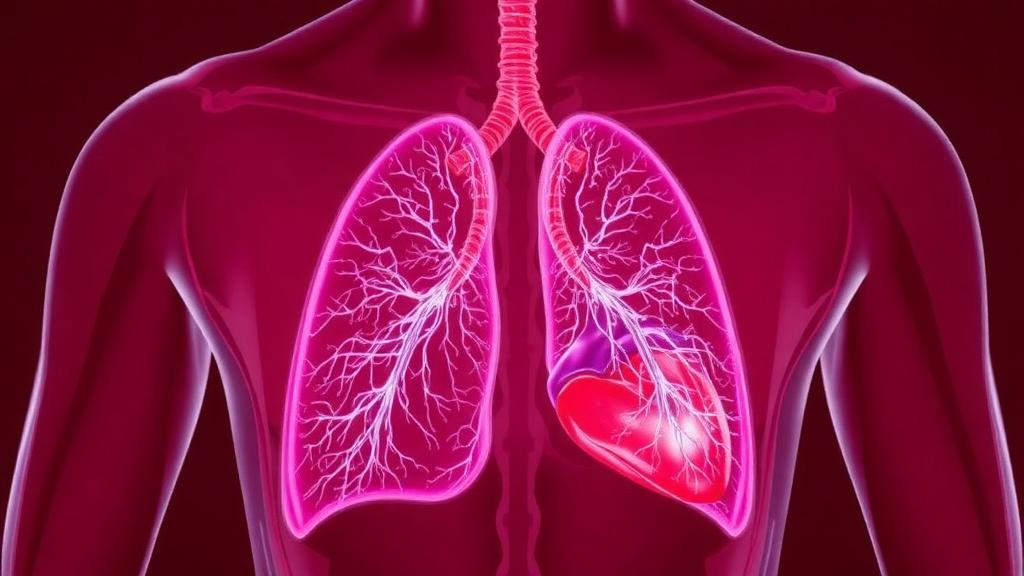
Six decades after acute respiratory distress syndrome was first described, one of intensive care medicine’s most stubborn killers is being rethought from the inside out. A new perspective article published in Intensive Care Medicine by Antoine Vieillard-Baron of the Paris-Saclay hospital network, Michelle Chew of the Karolinska Institute, and critical care physiologist Michael R. Pinsky of the University of Pittsburgh argues that the field has spent too long staring at the air sacs of the lung while ignoring the delicate network of blood vessels threaded between them. Their central claim is deceptively simple: ARDS is not merely a disease of injured alveoli and failing oxygenation, but a combined disorder of airflow and pulmonary blood flow, and the forgotten half of that equation, the pulmonary circulation, may hold the key to better treatment and improved survival.
The numbers behind the syndrome remain sobering. ARDS arises from a variety of insults, including pneumonia, sepsis and trauma, and it damages both the alveolar epithelium that forms the air-blood barrier and the capillary endothelium that lines the lung’s blood vessels. That dual injury causes capillary leak, flooding the lung with protein-rich fluid, and it disrupts one of the body’s most elegant physiological tricks: hypoxic pulmonary vasoconstriction, or HPV. In a healthy lung, when a region is poorly ventilated, the tiny arteries feeding it constrict, diverting blood toward better-aerated territory. In ARDS, this reflex is impaired, so blood continues to perfuse collapsed or fluid-filled lung units. The result is intrapulmonary shunt, where blood passes through the lungs without picking up oxygen, alongside increased dead space ventilation, where air reaches regions with no blood flow to receive its carbon dioxide, and, in many patients, pulmonary hypertension.
Why does this matter so much for the patient as a whole? Because the right ventricle, the thin-walled chamber that pumps blood into the lungs, is exquisitely intolerant of pressure. The normal pulmonary circulation is a low-pressure, low-resistance, highly compliant system. In a 70-kilogram adult at rest it holds roughly 300 milliliters of blood, of which about 120 milliliters sit within the alveolar capillaries, and it can absorb large increases in cardiac output with barely a flicker of pressure rise, thanks to the recruitment of previously unperfused vessels and the distension of larger arteries. Normal pulmonary arterial systolic pressure sits between 15 and 25 millimeters of mercury. When ARDS drives vascular resistance upward, the right ventricle dilates, right atrial pressure climbs, venous return is impeded, and cardiac output falls. Right ventricular dysfunction thus becomes both a consequence of ARDS severity and an amplifier of it, disrupting ventilation-perfusion matching and perpetuating the injury.
The authors pay particular attention to the geometry of blood flow within the lung, a concept classically described by the physiologist John West. Because pulmonary arterial pressure is modest, gravity creates a hydrostatic gradient from the non-dependent, uppermost lung regions down to the dependent, lowermost ones. Where lung height exceeds arterial pressure, capillaries collapse completely and flow ceases, the so-called Zone 1; in Zone 2, capillaries partially collapse and flow is intermittent; only in Zone 3, the dependent lung, are vessels fully perfused. Positive airway pressure, the very tool used to keep ARDS patients alive, raises the pressure inside alveoli and expands these poorly perfused zones, worsening the mismatch between ventilation and perfusion. Fluid loading can mitigate the effect, but it illustrates a fundamental tension at the heart of modern ventilatory care: every breath delivered under pressure is also a hemodynamic event.
Mechanical ventilation itself reshapes the pulmonary circulation in ways that are neither linear nor intuitive. The relationship between lung volume and pulmonary vascular resistance is U-shaped. At low to moderate lung volumes, recruitment of extra-alveolar vessels actually lowers resistance, which is why an appropriately chosen level of positive end-expiratory pressure, PEEP, can recruit collapsed alveoli, improve oxygenation, reduce the hypoxic vasoconstrictive drive, and thereby unload the right ventricle. Push lung volume higher, however, and the intra-alveolar vessels are compressed, resistance climbs, and right ventricular afterload rises with it. Excessive tidal volumes also risk ventilator-induced lung injury through direct mechanical stress on alveoli, and the authors highlight a second, less familiar mechanism: the large cyclic swings in right ventricular stroke volume and pulmonary blood flow produced by each breath may themselves induce overperfusion-related vascular stress.
The clinical footprint of this vascular failure is well characterized. Acute cor pulmonale, defined echocardiographically by right ventricular dilation and paradoxical motion of the interventricular septum, occurs in a substantial share of patients with moderate-to-severe ARDS. Known risk factors include pneumonia as the underlying cause, a driving pressure of 18 millimeters of mercury or higher, a ratio of arterial oxygen to inspired oxygen fraction below 150, and an arterial carbon dioxide tension of 48 millimeters of mercury or more. Elevated pulmonary vascular resistance is independently associated with mortality. As resistance rises and the right ventricle dilates, the shared septum bulges into the left ventricle, limiting its filling through ventricular interdependence, and cardiac output drops further. The authors also describe a striking bedside phenomenon first termed the low tide: during each insufflation, right ventricular stroke volume falls, producing measurable swings in pulmonary arterial and systemic pulse pressure. In ARDS patients, systemic pulse pressure variation is associated with worse outcomes, though the authors caution that such dynamic indices are not specific enough on their own, and that assessing the cardiac output response to a passive leg raise remains the more reliable test of fluid responsiveness.
From this physiology flows a treatment philosophy that departs from the aggressive open-lung strategies of recent years. The optimal ventilatory approach, the authors contend, is the one that minimizes blood gas abnormalities while preserving the pulmonary circulation, promoting recruitment rather than overdistension. Because lung injury in ARDS is profoundly heterogeneous, global compliance measurements can be misleading, so the authors advocate a combination of limited tidal volumes and plateau pressures, minimization of driving pressure, careful titration of PEEP to oxygenation, and avoidance of hypercapnia. They point to emerging bedside tools, including electrical impedance tomography, which maps regional ventilation in real time, and the recruitment-to-inflation ratio, as promising ways to explore at the bedside how a given ventilatory strategy affects the pulmonary circulation and the right ventricle. Combining echocardiography with respiratory mechanics monitoring, they suggest, can verify the delicate balance between protecting the lung and protecting the heart.
For the most severely affected patients, the therapeutic ladder extends further. Prone positioning, turning the patient face-down, improves lung mechanics and aeration, reverses dependent alveolar collapse and small-airway air trapping, and, crucially, preserves pulmonary perfusion in the dorsal lung regions, reducing vascular resistance and improving hemodynamics. When prone positioning fails to achieve adequate gas exchange, veno-venous extracorporeal membrane oxygenation can take over part of the gas exchange burden, and it does something remarkable to the circulation as well: by improving oxygenation and reducing the pressure the right ventricle must generate, it lowers pulmonary artery pressure, unloads the right ventricle and increases cardiac output. These interventions, the authors argue, succeed in part precisely because they rescue the pulmonary circulation, not just the lung parenchyma.
The broader message is a call for intellectual realignment in the intensive care unit. Sixty years after Ashbaugh’s landmark description of the syndrome, the authors write that understanding has shifted from a purely respiratory disorder to a dual pathology involving both lung tissue and lung vasculature. An integrated strategy that optimizes oxygenation and ventilation through lung recruitment while minimizing hemodynamic compromise may be more appropriate than traditional open-lung approaches, which risk trading acceptable blood gases for a failing right heart. There are honest gaps in the framework, and the authors acknowledge them: no threshold level of PEEP guarantees hemodynamic safety, because the impact of raising PEEP depends on whether the lung recruits or simply overdistends, and estimates of pulmonary vascular resistance can be obscured by Zone 2 conditions within the injured lung. Even so, the direction of travel is clear. By preserving pulmonary vascular function, clinicians may be able to optimize gas exchange and support cardiac function simultaneously, treating ARDS not as a lung disease with circulatory side effects, but as what it has been all along: a disease of the heart-lung unit.
For a condition that has resisted six decades of therapeutic advances, the reframing carries real weight. It suggests that some of the mortality attributed to refractory hypoxemia may in fact be hemodynamic failure in disguise, visible only to the clinician who thinks to look at the right ventricle and the vessels feeding it. It also offers a unifying explanation for why protective ventilation, prone positioning and extracorporeal support all improve survival: each, in its own way, protects the pulmonary circulation. As monitoring technology brings echocardiography, impedance tomography and respiratory mechanics together at the bedside, the vision of a truly heart-lung-centered approach to ARDS is moving from physiology textbook to daily practice, and that shift may prove to be one of the most consequential ideas in critical care this decade.
Subject of Research: Pulmonary vascular dysfunction and right ventricular failure in acute respiratory distress syndrome
Article Title: The pulmonary circulation in ARDS: from pathophysiology to clinical applications
Article References: The pulmonary circulation in ARDS: from pathophysiology to clinical applications. (n.d.). https://doi.org/10.1007/s00134-026-08597-x
Image Credits: AI Generated
DOI: 10.1007/s00134-026-08597-x
Keywords: ARDS, pulmonary circulation, right ventricular dysfunction, pulmonary hypertension, mechanical ventilation, PEEP, acute cor pulmonale, hypoxic pulmonary vasoconstriction, prone positioning, ECMO, ventilator-induced lung injury, hemodynamics
Cite Scienmag News
Ophelia Keating. (October 12, 2026). The Hidden Heart-Lung Link That Decides Who Survives ARDS. Scienmag. https://scienmag.com/the-hidden-heart-lung-link-that-decides-who-survives-ards/
Ophelia Keating. "The Hidden Heart-Lung Link That Decides Who Survives ARDS." Scienmag, 12 October 2026, https://scienmag.com/the-hidden-heart-lung-link-that-decides-who-survives-ards/. Accessed 12 October 2026.
Ophelia Keating. "The Hidden Heart-Lung Link That Decides Who Survives ARDS." Scienmag. October 12, 2026. https://scienmag.com/the-hidden-heart-lung-link-that-decides-who-survives-ards/


