

Thursday, July 9, 2026
Science
No Result
View All Result
  • Login
  • HOME
  • SCIENCE NEWS
  • CONTACT US
  • HOME
  • SCIENCE NEWS
  • CONTACT US
No Result
View All Result
Scienmag
No Result
View All Result
Home Science News Cancer

The changes to cell DNA that could revolutionise disease prevention

August 22, 2024
in Cancer
Reading Time: 2 mins read
0
The changes to cell DNA that could revolutionise disease prevention
67
SHARES
608
VIEWS
Share on FacebookShare on Twitter
ADVERTISEMENT

University of Queensland researchers have discovered a mechanism in DNA that regulates how disease-causing mutations are inherited.  

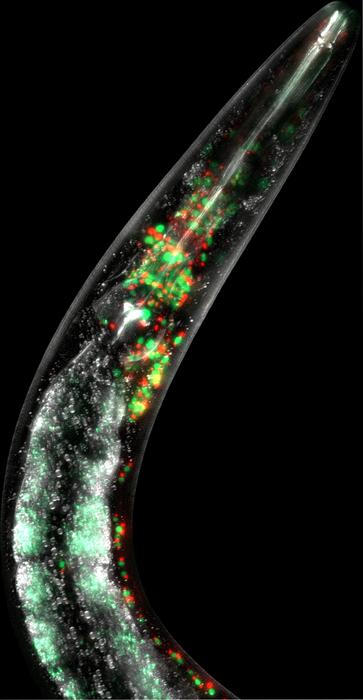
Mitochondria of c.elegans

Credit: A/Prof Steven Zuryn

University of Queensland researchers have discovered a mechanism in DNA that regulates how disease-causing mutations are inherited.  

Dr Anne Hahn and Associate Professor Steven Zuryn from UQ’s Queensland Brain Institute said the findings could provide a promising therapeutic avenue to stop the onset of heritable and age-related diseases. 

“Mitochondrial DNA is essential for cell function,” Dr Hahn said.  

“But as we age it mutates, contributing to diseases like dementia, cancer and diabetes.   

“Our team identified 2 enzymes that regulate a chemical modification – adenine methylation or 6mA – in mitochondrial DNA across various species, including humans.” 

“Removing this modification leads to uncontrolled accumulation and inheritance of mutations in the DNA,” Dr Hahn said. 

“Our study shows the 6mA modification controls these mutations, suggesting that enhancing levels of 6mA could slow disease progression.” 

The concept of epigenetics is an evolving field of research that reveals how environmental factors such as childhood experiences, can influence gene expression.  

This challenges the old belief that DNA mutations inevitably lead to disease. 

Dr Hahn said the study bridges the gap between genetics and epigenetics. 

“It shows how this epigenetic mark guards against disease-causing mutations and ensures the continuity of healthy cells,” she said.  

Dr Zuryn said epigenetic modification was not only essential for individual health but also for safeguarding the genetic integrity of future generations. 

“Our discovery was largely performed in the model organism C. elegans, and cells grown in a laboratory,” he said. 

“The team is now exploring whether similar mechanisms exist in humans and how they might influence disease outcomes.  

“This research has vast implications and offers a novel perspective on genetic and epigenetic factors in health and disease.” 

The research paper has been published in Cell Metabolism. 

Media contact 

QBI Communications 
communications@qbi.uq.edu.au  
Merrett Pye +61 422 096 049 


Journal

Cell Metabolism

DOI

10.1016/j.cmet.2024.07.020

Method of Research

Experimental study

Subject of Research

Animals

Article Title

Misregulation of mitochondrial 6mA promotes the propagation of mutant mtDNA and causes aging in C. elegans

Article Publication Date

22-Aug-2024

Share27Tweet17
Previous Post

The Lancet Public Health: Climate change and ageing populations to drive greater disparities in deaths from hot and cold temperatures across Europe, modelling study suggests

Next Post

Antarctica vulnerable to invasive species hitching rides on plastic and organic debris

Related Posts

Genome Editing in Rats Advances Accurate ER+ Breast Cancer Models
Cancer

Genome Editing in Rats Advances Accurate ER+ Breast Cancer Models

July 9, 2026
Hidden Metastases Uncover Clues to Colorectal Cancer Return
Cancer

Hidden Metastases Uncover Clues to Colorectal Cancer Return

July 9, 2026
Workshop Advances Pediatric Medulloblastoma Treatment Development
Cancer

Workshop Advances Pediatric Medulloblastoma Treatment Development

July 9, 2026
Scientists identify novel hereditary prostate cancer type
Cancer

Scientists identify novel hereditary prostate cancer type

July 9, 2026
Unraveling the Epigenome Behind Leukemia Diversity
Cancer

Unraveling the Epigenome Behind Leukemia Diversity

July 9, 2026
CRISPR Advances Transform Cancer Diagnosis and Treatment in Clinical Oncology
Cancer

CRISPR Advances Transform Cancer Diagnosis and Treatment in Clinical Oncology

July 9, 2026
Next Post
Antarctica vulnerable to invasive species hitching rides on plastic and

Antarctica vulnerable to invasive species hitching rides on plastic and organic debris

  • Mothers who receive childcare support from maternal grandparents show more

    Mothers who receive childcare support from maternal grandparents show more parental warmth, finds NTU Singapore study

    27656 shares
    Share 11059 Tweet 6912
  • University of Seville Breaks 120-Year-Old Mystery, Revises a Key Einstein Concept

    1061 shares
    Share 424 Tweet 265
  • Bee body mass, pathogens and local climate influence heat tolerance

    682 shares
    Share 273 Tweet 171
  • Researchers record first-ever images and data of a shark experiencing a boat strike

    546 shares
    Share 218 Tweet 137
  • Groundbreaking Clinical Trial Reveals Lubiprostone Enhances Kidney Function

    531 shares
    Share 212 Tweet 133
Science

Embark on a thrilling journey of discovery with Scienmag.com—your ultimate source for cutting-edge breakthroughs. Immerse yourself in a world where curiosity knows no limits and tomorrow’s possibilities become today’s reality!

RECENT NEWS

  • New Marine Network Enhances Environmental Protections and Shipping Rules
  • Caloric Restriction Enhances Blood Sugar Control Through Adiponectin–Ceramide Pathway
  • Long COVID Causes Lasting Symptoms and Decline in Elderly Ecuadorians
  • Neoadjuvant Immunotherapy Shows Promise for High-Risk Localized Prostate Cancer

Categories

  • Agriculture
  • Anthropology
  • Archaeology
  • Athmospheric
  • Biology
  • Biotechnology
  • Blog
  • Bussines
  • Cancer
  • Chemistry
  • Climate
  • Earth Science
  • Editorial Policy
  • Marine
  • Mathematics
  • Medicine
  • Pediatry
  • Policy
  • Psychology & Psychiatry
  • Science Education
  • Social Science
  • Space
  • Technology and Engineering

Subscribe to Blog via Email

Enter your email address to subscribe to this blog and receive notifications of new posts by email.

Join 5,146 other subscribers

© 2025 Scienmag - Science Magazine

Welcome Back!

Login to your account below

Forgotten Password?

Retrieve your password

Please enter your username or email address to reset your password.

Log In
No Result
View All Result
  • HOME
  • SCIENCE NEWS
  • CONTACT US

© 2025 Scienmag - Science Magazine

Discover more from Science

Subscribe now to keep reading and get access to the full archive.

Continue reading
