

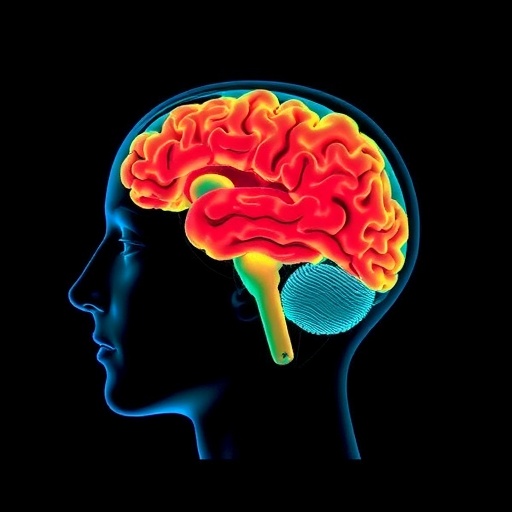
In a groundbreaking advancement poised to revolutionize neuroscience research and experimental methodologies, a team led by Haggerty, Qureshi, and Gabriel has unveiled “Thalamus,” a real-time system designed to synchronize and close the loop between multimodal behavioral and electrophysiological data capture. Set to be detailed in the highly anticipated 2026 issue of Communications Engineering, this novel platform promises to usher in a new era of integrated data acquisition, facilitating unprecedented insights into the dynamic interplay of neural and behavioral processes.
Neuroscientific investigations have long grappled with the challenge of correlating electrophysiological recordings—such as neural spike trains or local field potentials—with behavioral outputs that unfold across diverse spatial and temporal scales. Traditional approaches often struggle to align electrophysiological signals with behavioral events precisely and in real-time, resulting in lost opportunities to interrogate causality and dynamic feedback loops critical to brain function. Thalamus directly addresses these limitations by delivering a unified system that synchronizes multiple data streams with millisecond precision.
At the core of Thalamus is its closed-loop architecture, which integrates multimodal inputs encompassing electrophysiological signals, behavioral markers, and experimental stimuli, enabling interactive and adaptive experimental protocols. Rather than passively recording data, the system actively modulates experimental conditions depending on real-time electrophysiological and behavioral metrics. This capability represents a major leap forward, establishing a framework to explore neural mechanisms underpinning behavior through dynamic feedback rather than static observation.
The real-time element embedded within the system is achieved through sophisticated hardware and software integration. Custom-built interfaces receive continuous electrophysiological signals from neural recording devices—ranging from single-unit electrodes to high-density arrays—and behavioral sensors capturing movement trajectories, eye tracking, or environmental variables. These data streams are then time-stamped and aligned in a centralized computational framework engineered for low-latency processing.
Importantly, the system’s software backbone incorporates advanced algorithms for signal processing, feature extraction, and pattern recognition, all functioning live during experiments. This means researchers can set predefined neural or behavioral criteria to trigger events, such as stimulus delivery or optogenetic modulation, immediately upon detection of specific physiological states. Such instantaneous responsiveness empowers experimental designs previously impossible, enabling the dynamic probing of neural circuits with unparalleled precision.
The implications of Thalamus’ synchronized, closed-loop capabilities extend beyond fundamental neuroscience. In behavioral science, understanding how neural circuits modulate adaptive behaviors in real-time can illuminate mechanisms behind decision making, motor control, sensory processing, and learning. The system can also be instrumental in translational research, providing a platform to develop closed-loop neuromodulation therapies targeting neurological disorders such as epilepsy, Parkinson’s disease, or psychiatric conditions where real-time feedback control is critical.
An additional hallmark of Thalamus is its multimodal flexibility. The platform is designed to accommodate diverse experimental modalities and scales, integrating electrophysiology with behavioral phenotyping across model organisms ranging from rodents to primates. Moreover, it supports combinatorial use with optical imaging and stimulation techniques, such as calcium imaging and optogenetics, thereby facilitating comprehensive interrogation of brain circuits down to cellular resolution within behavioral contexts.
The implementation of such a system requires exceptional engineering both in hardware and software domains. Thalamus employs real-time operating systems optimized for deterministic performance, ensuring sub-millisecond latency and jitter control essential for closed-loop experiments. Hardware modules are designed for modular extensibility, capable of interfacing with a growing range of sensors and effectors, future-proofing research setups.
Furthermore, the user interface combines intuitive experimental design tools with rich visualization dashboards that display synchronized electrophysiological and behavioral data streams dynamically. These visualizations aid researchers in monitoring ongoing experiments, evaluating data quality, and adjusting parameters interactively. The platform’s open architecture also allows customization and integration with existing lab instrumentation, lowering barriers to adoption.
Looking ahead, the developers envision Thalamus as a foundational technology enabling new paradigms in brain-machine interfaces (BMIs). By seamlessly coupling neural activity with behavioral outputs in real time, it may accelerate the development of closed-loop prosthetic systems that adjust dynamically based on user intent and context. Such applications highlight the system’s potential in neuroengineering and clinical translation.
The elevated data fidelity and temporal resolution achievable with Thalamus also open doors for large-scale data science applications. Its synchronized data streams are ideally suited for machine learning approaches aimed at decoding neural codes underlying behavior. Real-time feedback loops enable adaptive algorithms to refine control strategies continually, fostering the evolution of smart experimental and therapeutic platforms.
Moreover, Thalamus addresses crucial challenges in reproducibility and standardization within neuroscience by providing a consistent framework for synchronized data capture across labs. This feature facilitates cross-validation of findings and meta-analyses, ultimately accelerating cumulative knowledge building in the field.
The team’s publication in Communications Engineering details the system’s architecture, benchmarking results, and demonstration experiments wherein Thalamus was utilized to dynamically probe sensorimotor processing in freely moving rodents. These case studies underscore the platform’s ability to seamlessly coordinate behavioral tracking and neural recording with closed-loop stimulation, elucidating causal dynamics within cortico-thalamic circuits.
As the neuroscience community eagerly anticipates widespread dissemination and implementation, Thalamus stands to transform the landscape of experimental neuroscience by uniting diverse data modalities into a coherent, interactive system. Its real-time, closed-loop design exemplifies the next generation of neurotechnology directed towards holistic understanding and manipulation of brain-behavior relationships.
With the inevitable complexity of brain function requiring increasingly sophisticated technical solutions, Thalamus represents a beacon of innovation, integrating cutting-edge engineering and computational neuroscience. This transformative platform not only expands experimental capabilities but also sets the stage for radical advances in brain research, neuroprosthetics, and neurotherapeutics that hinge on real-time, multimodal feedback.
The unveiling of Thalamus marks a pivotal moment in the evolution of neuroscience tools, poised to catalyze discoveries that were once beyond reach due to technical limitations. As neural systems increasingly become accessible through real-time, multimodal loops, researchers will be empowered to interrogate the emergent properties of cognition and behavior with unprecedented rigor and dynamism.
In summary, Thalamus’s sophisticated convergence of hardware innovation, algorithmic prowess, and real-time closed-loop control positions it at the forefront of neuroscience technology. Its capacity to synchronize rich behavioral and electrophysiological datasets within interactive feedback paradigms offers a new methodological paradigm—a key enabling technology for unraveling the complexities of living neural circuits in action.
Subject of Research: Development of a real-time, closed-loop system for synchronized behavioral and electrophysiological data capture in neuroscience research.
Article Title: Thalamus: a real-time system for synchronized, closed-loop multimodal behavioral and electrophysiological data capture.
Article References:
Haggerty, J., Qureshi, Q., Gabriel, E.D. et al. Thalamus: a real-time system for synchronized, closed-loop multimodal behavioral and electrophysiological data capture. Commun Eng (2026). https://doi.org/10.1038/s44172-026-00646-z
Image Credits: AI Generated


