

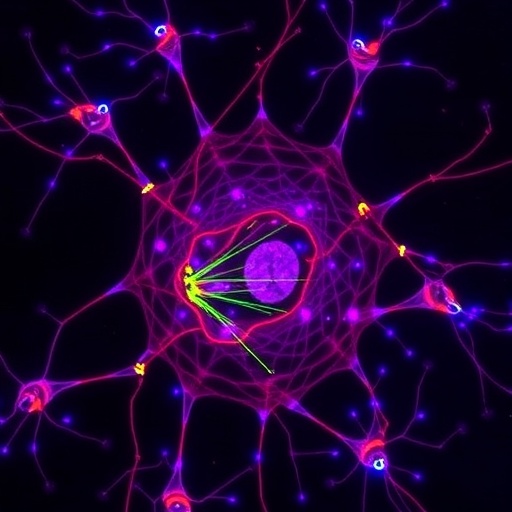
In a groundbreaking study poised to redefine our understanding of neurodegenerative disease progression, researchers have uncovered a crucial mechanism by which microglia, the brain’s innate immune cells, demonstrate resilience to localized myelin degeneration. The study, recently published in Nature Neuroscience, elucidates how the TGFβ signaling pathway orchestrates this protective response within microglia, potentially opening new therapeutic avenues for diseases marked by demyelination, such as multiple sclerosis.
Microglia play a pivotal role in maintaining central nervous system (CNS) homeostasis, yet their behavior in the context of focal myelin injury has remained elusive. This research deploys sophisticated in vivo models to simulate spatiotemporally restricted myelin damage, capturing the real-time dynamics of microglial activity. The data reveal an adaptive microglial phenotype governed by TGFβ signaling that effectively curtails inflammation and promotes repair in regions of the CNS undergoing myelin breakdown.
Focusing on the spatially and temporally confined nature of myelin degeneration, the team developed a precision lesion model mimicking the subtle and intermittent damage often noted in early stages of demyelinating disorders. This model allowed for the dissection of microglial responses within the precise neural microenvironment, an approach that surpasses traditional widespread injury models which can mask nuanced cellular interactions. Crucially, these findings highlight microglia’s capacity to tailor their response to localized injury signals via TGFβ pathway modulation.
The transformative aspect of this study lies in the delineation of TGFβ signaling as a master regulator of microglial resilience. Through an array of genetic and pharmacological manipulations, the researchers demonstrated that activation of TGFβ receptors on microglia triggers downstream effectors that limit inflammatory cytokine production and encourage phagocytic clearance of damaged myelin debris. Conversely, disruption of this pathway leads to exacerbated inflammation and impaired myelin repair, underscoring its protective significance.
Interestingly, single-cell RNA sequencing of microglia isolated from lesion sites unveiled a distinct transcriptional signature associated with TGFβ pathway activity. This signature includes upregulation of genes involved in tissue remodeling, anti-inflammatory responses, and cellular metabolism, indicating a highly specialized state geared toward neural tissue preservation. These insights pave the way for identifying molecular targets to enhance microglial function in demyelinating diseases.
Another key contribution of this research is the identification of a temporal window in which TGFβ-mediated microglial resilience is most effective. The data suggest that early intervention to boost TGFβ signaling immediately following myelin insult may maximize therapeutic outcomes. This temporal specificity is critical, as delayed activation of protective microglial programs might be insufficient to prevent chronic neuroinflammation and degeneration.
From a mechanistic viewpoint, the study integrates imaging techniques with quantitative analyses to visualize microglial morphology and behavior across different stages of myelin damage. Time-lapse microscopy showed dynamic changes in microglial process extension and retraction, patterns that were dependent on intact TGFβ signaling. Such morphofunctional adaptations likely facilitate the efficient surveillance and clearance of myelin debris in a spatiotemporally precise manner.
The therapeutic implications are vast. Modulating the TGFβ pathway in microglia could represent a novel strategy to halt or even reverse early myelin degeneration, a hallmark of multiple sclerosis and other white matter disorders. The prospect of driving microglial resilience pharmacologically promises to complement existing immunomodulatory treatments, potentially mitigating progression and improving patient outcomes.
Moreover, the study sheds light on the broader concept of localized CNS immune regulation. By demonstrating that microglial responses can be finely tuned according to the spatial and temporal nature of injury, it emphasizes the complexity of neuroimmune interactions. These insights challenge the one-size-fits-all paradigms often employed in neurodegenerative research and highlight the necessity of precision medicine approaches.
In addition to demyelinating diseases, the principles uncovered could extend to other pathologies involving restricted neuronal damage, such as traumatic brain injury or localized ischemia. The adaptability of microglia through TGFβ signaling hints at an evolutionary conserved mechanism that balances tissue repair with inflammation avoidance, a duality fundamental to CNS health.
Future directions raised by this research include exploring how TGFβ signaling cross-talks with other molecular pathways within microglia and assessing the long-term outcomes of enhancing microglial resilience in vivo. Furthermore, understanding how systemic factors or aging might influence this pathway’s efficacy is critical for translating these findings into clinical scenarios.
It is important to note the methodological rigor supporting these conclusions. The multidisciplinary approach combined advanced genetic tools, high-resolution imaging, transcriptomic profiling, and rigorous behavioral assays, ensuring comprehensive characterization of microglial states and functions across various experimental conditions.
Notably, the spatiotemporal segregation of injury and response observed in this study underscores a need to revisit the timing and localization of therapeutic interventions in neurodegenerative disorders. Targeting microglial TGFβ pathways during defined stages of myelin degradation could have transformative impacts on disease trajectory.
In conclusion, Zhu et al.’s meticulous investigation into the role of TGFβ signaling within microglia during spatiotemporally restricted myelin degeneration reveals a sophisticated neuroimmune mechanism underpinning brain resilience. This pioneering work not only enriches fundamental neuroscience but also charts a promising path toward novel interventions aimed at fostering endogenous CNS repair mechanisms. As neurodegenerative diseases continue to challenge medicine, such insights into microglial functionality could herald a new era in neurotherapeutics.
Subject of Research:
Microglial resilience mechanisms to localized myelin degeneration mediated by TGFβ signaling.
Article Title:
TGFβ signaling mediates microglial resilience to spatiotemporally restricted myelin degeneration.
Article References:
Zhu, K., Liu, Y., Min, JH. et al. TGFβ signaling mediates microglial resilience to spatiotemporally restricted myelin degeneration. Nat Neurosci (2026). https://doi.org/10.1038/s41593-025-02161-4
Image Credits: AI Generated


