


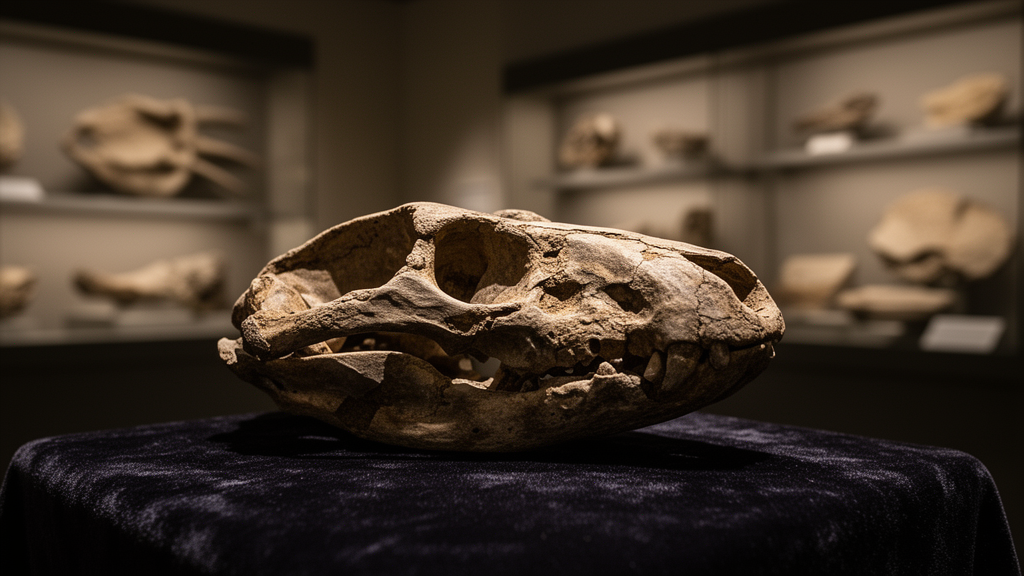
The vertebrate skull is one of the most intricate and versatile anatomical structures in the animal kingdom, serving critical functions in feeding, locomotion, combat, and sensory protection. For over four hundred million years, the evolution of tetrapods has been marked by a pervasive trend toward the simplification of the dermal skull roof, a process that has resulted in significant variation in bone composition across different lineages. While it is well established that many modern tetrapods possess fewer skull bones than their ancient ancestors, the specific mechanisms and evolutionary drivers behind this reduction have remained a subject of intense scientific debate. A new systematic review published in the Fossil Record provides the first comprehensive reconstruction of this evolutionary history, revealing that the loss of skull bones is far more complex and variable than previously understood.
Researchers examined the skull morphology of 313 extinct and extant tetrapod taxa, focusing specifically on the median and temporal series of the dermatocranium. The median series, which includes the nasal, frontal, parietal, and postparietal bones, primarily protects the brain and sensory organs, while the temporal series, comprising the intertemporal, supratemporal, and tabular, is associated with the otic region and neck muscle attachments. By utilizing maximum likelihood ancestral state reconstructions on two large composite phylogenetic trees, the study aimed to map the presence and absence of these bones across the entire tetrapod phylogeny. This approach allowed the researchers to test whether bone loss occurred in a modular fashion, where specific groups of bones are lost together, or if the developmental pathways controlling individual bones are largely independent.
The results indicate that the temporal series did not form a distinct developmental module, as the loss of these bones was highly variable across different lineages. However, a general pattern emerged in most groups: the intertemporal bone was consistently the first to be lost, followed by the supratemporal, and then the tabular and/or postparietal. This sequence was observed in stem-tetrapods, temnospondyls, therapsids, and lepospondyls. In contrast, the sauropsid lineage, which includes modern reptiles and birds, deviated from this pattern, with the tabular or postparietal often being the second bone to be lost rather than the supratemporal. This divergence suggests that the evolutionary pressures influencing skull simplification may have acted differently in the ancestors of modern reptiles compared to other tetrapod groups.
One of the most striking findings of the study is the high evolvability of the supratemporal bone. This element was lost and regained repeatedly throughout tetrapod history, with a total of 18 losses and 5 regains identified in the analyses. In contrast, the nasal, frontal, and parietal bones of the median series were found to be the most stable, remaining present in all analyzed taxa. This stability suggests that these bones are under strong functional or developmental constraints that prevent their loss, whereas the supratemporal is more susceptible to evolutionary change. The variability in the loss and regain of the supratemporal highlights the dynamic nature of skull evolution and challenges the notion that bone loss is a one-way evolutionary ratchet.
Interestingly, the order in which the temporal and median series bones were lost did not correspond with the order in which they ossify during development. In many vertebrates, bones that ossify later in ontogeny are typically the first to be lost due to heterochronic truncation, a process where the developmental trajectory is shortened. However, the study found that the tabular, which ossifies late in the sequence, was often the last element to be lost and never the first. This discrepancy suggests that the simplification of the tetrapod skull is not driven by a simple heterochronic process but is influenced by more complex underlying factors and constraints. The findings imply that developmental timing alone cannot predict the evolutionary fate of individual skull bones.
The study also investigated potential ecological and functional drivers of skull simplification, including lifestyle and body size. Previous hypotheses have suggested that bone loss might be an adaptation to biomechanical stresses associated with specialized behaviors such as head-first burrowing or crevice dwelling, or a by-product of miniaturization. However, the analyses revealed no obvious relationship between skull simplification and lifestyle or body size across the tetrapod phylogeny. While some groups with miniaturized body sizes, such as certain lissamphibians and mammals, show reduced bone counts, others with similar body sizes do not. This lack of correlation suggests that skull simplification is likely caused by complex combinations of developmental, ecological, and functional factors that are unique to specific lineages and times in evolutionary history.
The research also has significant implications for phylogenetic studies, particularly those addressing the origins of lissamphibians. The reduction in the number of skull bones has been used as a character trait to assess the relationships between lissamphibians and stem-tetrapods, with two main hypotheses currently competing: the Temnospondyl Hypothesis and the Lepospondyl Hypothesis. The study found that placing lissamphibians within temnospondyls or lepospondyls had only a minor effect on the overall pattern of bone loss, with both hypotheses yielding similar numbers of losses and regains. However, the variability in the loss and regain of specific bones, such as the supratemporal and postparietal, suggests that these characters may not be reliable for resolving deep phylogenetic relationships. The lack of homology in bone loss across different lineages highlights the potential pitfalls of using skull simplification as a phylogenetic character.
The authors argue that the current understanding of skull simplification is limited by the difficulty in assessing bone homology in the fossil record and the lack of consensus on what constitutes true bone loss. They distinguish between loss by fusion, where adjacent bones merge to form a composite element, and loss by failure of ossification, where the ossification centers fail to form. The study suggests that loss by fusion is not true bone loss, as the ossification centers are still present, and that future research should focus on reassessing skull homology across tetrapodomorphs using embryological methods. By applying these methods to extant groups, researchers can better understand the developmental mechanisms underlying bone loss and provide a more accurate framework for studying the evolution of the tetrapod skull.
In conclusion, the simplification of the tetrapod dermatocranium is a well-documented yet poorly understood phenomenon that began in the Devonian and evolved parallelly in various lineages into the Mesozoic. The new study demonstrates that the evolutionary loss of bones in the dermal skull roof is much more complex than initially thought, involving a mixture of developmental, ecological, and functional drivers. The findings challenge previous assumptions about the modularity of skull bone loss and the role of ontogenetic timing in evolution. As the fossil record continues to be refined and new embryological data becomes available, further work will be needed to fully capture the intricacies of skull simplification and to determine how these factors interact in individual lineages and across the evolutionary history of tetrapods.
Subject of Research: Evolution of the tetrapod skull: a systematic review of bone loss
Article Title: Evolution of the tetrapod skull: a systematic review of bone loss
Article References: Kean, K. J., Danto, M., Pérez-Ben, C., & Fröbisch, N. B. (2024). Evolution of the tetrapod skull: a systematic review of bone loss. Fossil Record, 27(3), 445-471. https://doi.org/10.3897/fr.27.133803
Image Credits: AI Generated
DOI: 10.3897/fr.27.133803
Keywords: Evolution, tetrapod, skull, systematic, review, bone, loss, scientific research
Cite Scienmag News
Gavin Prescott. (October 18, 2026). Tetrapod Skull Bone Loss Follows Complex Evolutionary Pathways. Scienmag. https://scienmag.com/tetrapod-skull-bone-loss-follows-complex-evolutionary-pathways/
Gavin Prescott. "Tetrapod Skull Bone Loss Follows Complex Evolutionary Pathways." Scienmag, 18 October 2026, https://scienmag.com/tetrapod-skull-bone-loss-follows-complex-evolutionary-pathways/. Accessed 18 October 2026.
Gavin Prescott. "Tetrapod Skull Bone Loss Follows Complex Evolutionary Pathways." Scienmag. October 18, 2026. https://scienmag.com/tetrapod-skull-bone-loss-follows-complex-evolutionary-pathways/


