

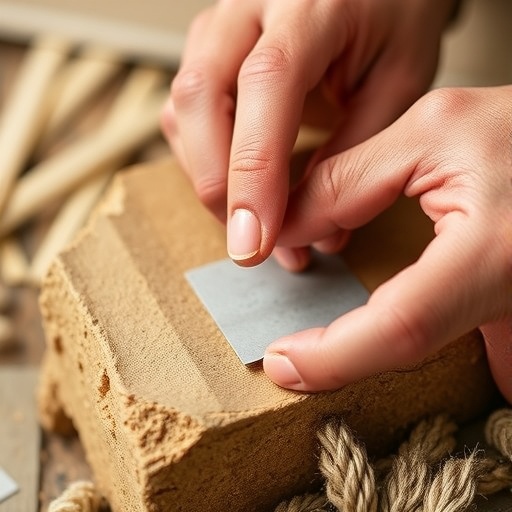
In the realm of archaeology, understanding material properties and the adhesion mechanisms of different compounds is crucial for the preservation and interpretation of artifacts. Recently, a groundbreaking study conducted by Mogale, Sahle, Ahmed, and colleagues investigates the performance of ethnographic compound adhesives through comprehensive lap-shear and compression testing. This work not only sheds light on the mechanical properties of these adhesives but also extends significant implications for the conservation and restoration of culturally important artifacts.
Lap-shear testing involves applying a shearing force to two bonded surfaces, enabling researchers to evaluate the shear strength of the adhesive used. This method is vital in understanding how different adhesives withstand various forces over time, especially in archaeological contexts where artifacts may experience stress due to environmental changes or handling. Mogale and his team meticulously designed experiments to assess several ethnographic adhesives, revealing essential data that could influence future conservation strategies.
Compression testing, on the other hand, measures the adhesive’s ability to withstand compressive forces. This test is especially relevant for artifacts that may be subjected to weight or pressure, such as sculptures or ceramic pieces. Through rigorous compression tests, the researchers have uncovered how certain adhesives outperform others under specific conditions, thereby establishing vital parameters for their effective application in restoration projects.
The insights gained from this study carry weighty implications for the archaeological community. As researchers and conservators increasingly turn to traditional or ethnographic materials to restore and preserve artifacts, understanding their mechanical properties ensures that these choices do not inadvertently compromise the structural integrity of the pieces. This study thus acts as a pivotal reference point for selecting adhesives that not only honor traditional methods but also provide the necessary durability and strength aligned with modern conservation standards.
In addition to enhancing conservation efforts, the research opens up new avenues for further exploration. The ability to quantify the performance of different ethnographic adhesives establishes a foundation for future studies aimed at developing new hybrid adhesives that blend traditional knowledge with modern materials science. Such innovative applications might enhance adhesive properties and lead to the discovery of even stronger, more flexible compounds suited for preserving a variety of artifacts.
The study is particularly significant in an age where archaeological preservation is often challenged by various factors, including climate change and urban development. As landscapes shift and pressure mounts on cultural heritage sites, the knowledge gained from this research can guide conservators in safeguarding these historical narratives. By employing the proper adhesives, professionals can ensure that the artifacts not only survive but thrive amidst contemporary challenges.
Beyond the practical applications, the researchers also emphasize the cultural significance embedded in these adhesives. Many ethnographic compounds carry stories of their own, rooted deeply in the histories and practices of the communities from which they originate. By understanding the efficacy of these materials, archaeologists can better appreciate and communicate these narratives in their interpretations, enhancing the societal value of archaeological findings.
Moreover, the interdisciplinary nature of this research demonstrates the powerful convergence of science and humanities. By applying rigorous scientific testing to cultural materials, the study exemplifies how archaeologists can employ contemporary methodologies to inform and enrich traditional practices. Such intersections are vital as they reiterate the relevance of historical knowledge in today’s scientific landscape.
The research also raises awareness regarding the sustainable use of materials in archaeology. As the field continues to grapple with the ethical implications of conservation, understanding the performance of traditional materials paves the way for more sustainable practices. This emphasis on ethnographic adhesives encourages a move away from synthetic compounds that may have harmful environmental consequences, promoting a more holistic approach to preservation.
Furthermore, the findings highlight the importance of collaboration within the field. The integration of chemists, archaeologists, and materials scientists fosters an environment where traditional knowledge can be enhanced by modern scientific understanding. This collaborative spirit is evident in the detailed discussions presented in the study, as the authors reflect on the potential for cross-disciplinary partnerships moving forward.
It’s worth mentioning that, while the performance of these ethnographic adhesives shows promising results, further investigation is required to explore their long-term behavior in real-world settings. Factors such as temperature fluctuations, humidity, and exposure to pollutants all play crucial roles in the lifespan of adhesive bonds. As such, longitudinal studies that monitor performance over time will be essential to refine application techniques and improve restorative practices.
In conclusion, the research conducted by Mogale and colleagues serves as a significant contribution to both the fields of archaeology and materials science. The detailed lap-shear and compression testing of ethnographic adhesives presents a new framework for understanding how these compounds function, which is pivotal for the preservation of cultural heritage. As archaeologists continue to explore the myriad ways in which we can respect and restore our shared history, studies like this provide the necessary tools for bridging past and present through informed conservation efforts.
The implications of this research extend well beyond the laboratory; they resonate with the broader narrative concerning the sustainability of heritage practices and the importance of storytelling in archaeology. By grounding modern applications in the rich tradition of ethnographic materials, conservators can ensure that cultural artifacts are preserved not just as objects of study, but as vibrant links to the communities and histories they represent.
In the pursuit of archaeological practice that honors the past while embracing the future, this study represents a significant stride forward. It encourages an ongoing dialogue between history and science, promising an enriched understanding of our cultural heritage as researchers and conservators continue to collaborate in ever more innovative ways.
Subject of Research: Evaluation of ethnographic compound adhesives through lap-shear and compression testing to inform archaeological conservation practices.
Article Title: Lap-shear and compression testing of ethnographic compound adhesives and implications for archaeology.
Article References:
Mogale, M., Sahle, Y., Ahmed, S. et al. Lap-shear and compression testing of ethnographic compound adhesives and implications for archaeology.
Archaeol Anthropol Sci 18, 36 (2026). https://doi.org/10.1007/s12520-025-02383-4
Image Credits: AI Generated
DOI: https://doi.org/10.1007/s12520-025-02383-4
Keywords: Ethnographic adhesives, archaeological conservation, materials testing, lap-shear, compression testing, sustainability, interdisciplinary research.


