

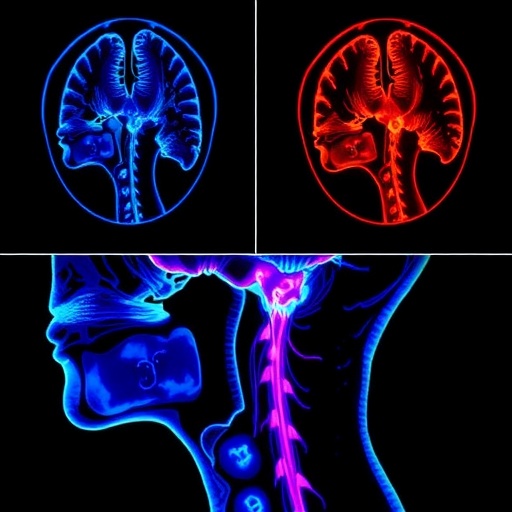
Scientists at the University of Warwick have unveiled a groundbreaking advancement in terahertz (THz) imaging technology, promising to revolutionize biomedical diagnostics and real-time clinical imaging. Their novel approach introduces a fully fibre-coupled THz imaging system that dramatically enhances speed, spatial resolution, and practicality, making it feasible for routine medical use outside of specialized laboratory environments. This innovation marks a significant leap forward in the ability to harness the unique properties of terahertz radiation for non-invasive tissue analysis.
Terahertz waves occupy a unique position on the electromagnetic spectrum, nestled between microwaves and infrared light. Their non-ionising nature means they avoid the harmful radiation risks commonly associated with X-rays, positioning them as an ideal candidate for safe medical diagnostics. Furthermore, terahertz radiation exhibits exceptional sensitivity to water content variations in biological tissues, a characteristic that enables precise differentiation between healthy and pathological tissues. Despite these advantages, the practical deployment of terahertz imaging has been hampered by the bulkiness and slow acquisition speeds of existing systems.
The Warwick team’s innovation addresses these challenges by engineering a compact, fibre-optic-based platform that significantly streamlines the imaging process. The fibre coupling introduces a new level of flexibility and miniaturization; it permits the THz system to be either handheld or integrated into robotic surgical instruments without compromising performance. This compactness is crucial for clinical settings where mobility and ease of use are paramount, and cumbersome apparatuses have previously impeded broader adoption.
Achieving near video-rate image acquisition represents a transformative shift for terahertz imaging technology. The system developed by the University of Warwick operates at speeds more than five times faster than the current state-of-the-art devices. Operating at approximately 360 micrometers spatial resolution, the system captures detailed images rapidly enough to be considered real-time for many clinical applications. This advancement not only enhances the efficiency of diagnostics but also positions terahertz imaging as a competitive adjunct or alternative to existing optical and radiological imaging techniques.
Proof-of-concept trials underscore the practical utility of this new technology. Using animal tissue samples, the team demonstrated the system’s ability to differentiate between various biological components, such as fat and protein within porcine tissue. More compelling still, the system was employed in vivo to capture dynamic images of a wound on a human volunteer’s arm in real time. These demonstrations highlight the system’s sensitivity to subtle biological differences and its readiness for translation from bench to bedside.
Professor Emma MacPherson, a leading physicist at Warwick’s Department of Physics, emphasizes the clinical implications of this breakthrough. She notes that the combination of speed, resolution, and portability engenders a new class of terahertz imaging devices that clinicians can deploy directly. The handheld or robotic-integrated devices could enable faster diagnostic decisions, reduce the need for invasive biopsies, and allow continuous monitoring of wound healing and skin lesions without exposing patients to ionizing radiation.
Terahertz imaging provides a compelling middle ground between traditional imaging techniques. While modalities like MRI or CT scans provide remarkable detail, they are often costly, immobile, and time-consuming. Conversely, optical methods like dermoscopy or ultrasound are more portable but offer limited tissue contrast and depth specificity. The University of Warwick’s compact, fibre-coupled THz imaging platform bridges this gap, offering a balance of resolution, speed, and for the first time, practical accessibility.
Technical innovation lies at the heart of this achievement. Integrating single-pixel imaging within a fully fibre-coupled architecture mitigated the bulk and complexity of traditional systems. Single-pixel imaging, which reconstructs images from structured illumination and subsequent computational algorithms rather than from large multi-pixel detector arrays, synergizes well with fibre coupling technology. This combination reduces hardware demands while preserving spatial resolution and imaging speed, enabling the sleek form factors feasible for clinical use.
The implications extend beyond diagnostic dermatology and wound assessment. Given terahertz waves’ sensitivity to molecular composition and hydration states, this technology holds promise for early cancer detection, intraoperative margin assessment in tissue excisions, and potentially monitoring the efficacy of treatments. Integrating the system within robotic surgical platforms could provide surgeons with unparalleled real-time feedback, significantly enhancing precision and patient outcomes.
Supporting the research, funding from the Engineering and Physical Sciences Research Council (EPSRC) facilitated the experimental studies necessary to refine system design and validate its biomedical applications. Published in the prestigious journal Nature Communications, the study details comprehensive experimental validations, corroborating the system’s robustness across diverse biological tissues and highlighting avenues for future clinical trials.
This breakthrough in terahertz imaging represents a pivotal moment in medical diagnostics technology, combining fundamental physics with cutting-edge engineering to overcome long-standing barriers. By offering rapid, non-ionising, high-resolution images through a versatile, compact device, the University of Warwick’s innovation promises to shift terahertz imaging from a niche research tool to an integral component of everyday clinical practice. Patients stand to benefit from faster, safer diagnoses while practitioners gain new capabilities for precise, real-time tissue characterization.
Subject of Research: Animal tissue samples
Article Title: All-fibre-coupled terahertz single-pixel imaging for biomedical applications
News Publication Date: 12-Jan-2026
Web References: http://dx.doi.org/10.1038/s41467-026-68290-x
References: MacPherson, E. et al., “All-fibre-coupled terahertz single-pixel imaging for biomedical applications,” Nature Communications, 2026. DOI: 10.1038/s41467-026-68290-x
Keywords: Terahertz imaging, biomedical diagnostics, fibre-coupled system, single-pixel imaging, non-ionising radiation, real-time imaging, medical imaging technology, high-resolution imaging, photonics, applied physics


