


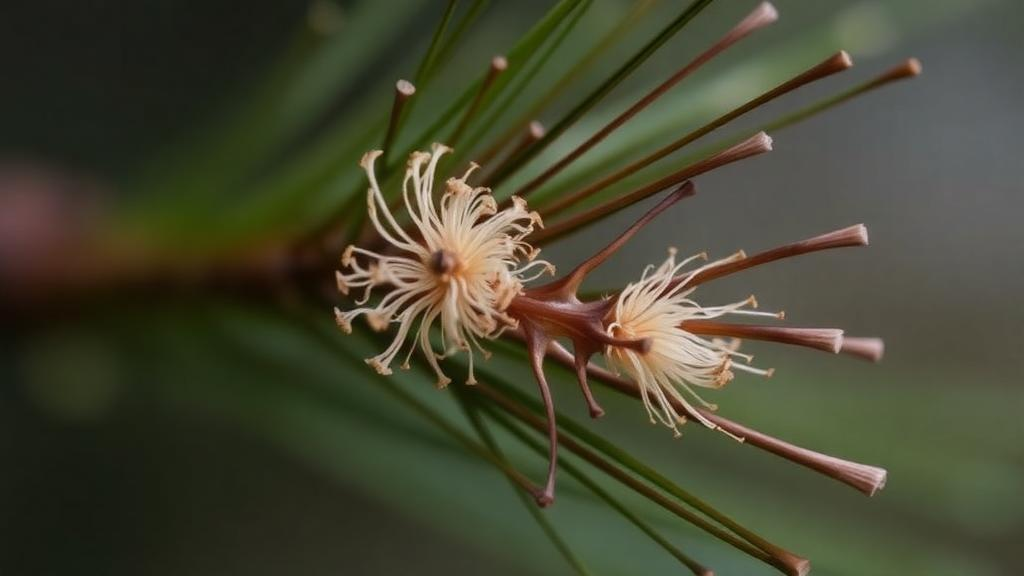
Deep in the forests of China, from the high slopes of Laojunshan in Yunnan to the misty woodlands of Changbaishan in Jilin, a group of inconspicuous fungi has been quietly living on pine needles, invisible to almost everyone who walks beneath the trees. A new study published in IMA Fungus has now formally described ten previously unknown species of Lophodermium, a genus of ascomycete fungi that colonize the needles of conifers. The discovery, based on years of field collection combined with DNA sequencing and detailed microscopy, substantially expands the known diversity of a genus that already counted more than 160 species worldwide, and it offers fresh clues about how these fungi specialize on particular hosts and distribute themselves across landscapes.
Lophodermium is the largest genus in the family Rhytismataceae, a group of fungi best known to foresters for the diseases they cause. Several members of the genus, including L. confluens and L. seditiosum, are pathogens responsible for needle cast, a disease in which infected needles brown and drop prematurely, sometimes inflicting serious economic losses in pine plantations and nurseries. Yet most Lophodermium species lead far quieter lives. They enter healthy needles and persist as endophytes, dwelling inside symptomless tissue without causing visible harm. Only later, typically after the needle has been shed, do their fruiting bodies mature and release spores. This dual identity, as both harmless resident and potential pathogen, makes the genus scientifically important and practically difficult to characterize.
The new study, led by researchers working with specimens deposited at the Herbarium of the College of Life Science at Capital Normal University in Beijing, focused specifically on Lophodermium species occurring on needles of Pinus, the largest living genus of conifers. China sits at the core of the East Asian distribution of pines and harbors rich lineages of the group, making it a natural laboratory for exploring fungal diversity on these trees. Of the roughly 39 Lophodermium species known worldwide from pine needles, 16 were first recorded in China, and the new work adds ten more to that tally.
The team’s approach combined classical taxonomy with molecular phylogenetics. Fresh specimens were collected across several provinces, air-dried, and examined under stereomicroscopes to document the external shape, size, and color of the fruiting bodies, called ascomata, along with finer anatomical details visible only in vertical section. Cultures were established by surface-sterilizing ascomata and growing the emerging hyphae on potato dextrose agar. From these specimens and cultures, the researchers extracted genomic DNA and amplified three genetic regions: the internal transcribed spacer (ITS), the nuclear large subunit (nrLSU), and the mitochondrial small subunit (mtSSU). Sequences were aligned and combined into a single dataset of 2,074 base positions, of which 867 were parsimony-informative, and analyzed using maximum parsimony, Bayesian inference, and maximum likelihood methods.
The resulting phylogenetic tree placed the ten new species into two distinct lineages, or clades, within the broader Rhytismatales order. Nine of the new species, Lophodermium calceolatum, L. flavilabium, L. flavilabioides, L. huangshanense, L. jingpohuense, L. laojunshanense, L. piceum, L. pini-hwangshanensis, and L. plumbeum, fall within a large clade that contains most pine-associated members of the genus. The tenth, L. haploxyli, occupies a separate branch alongside other Lophodermium species from pines and relatives from fir and spruce. Strikingly, none of the new species clusters with Lophodermium arundinaceum, the type species that defines the genus, a finding with significant implications for how the genus itself should be circumscribed.
Each new species was distinguished by a mosaic of morphological characters that, to the untrained eye, would seem almost impossibly subtle. L. calceolatum, collected on needles of Pinus armandii at roughly 3,550 meters in Yunnan, takes its name from the slipper-like profile of its ascomata in vertical section, and it lacks the lip cells present in its closest relative. Its sister species, L. jingpohuense from Heilongjiang and Jilin, does possess inconspicuous lips and a thinner covering stroma. The pair L. flavilabium and L. flavilabioides, both found on Korean pine, are nearly indistinguishable externally, with yellow to orange lips embedded in a gelatinous matrix; the decisive difference lies in whether the filamentous paraphyses branch at their tips. Their ITS sequences are 95 percent similar, close enough to underscore how much hidden diversity can be packed into superficially identical organisms.
Other species reveal equally fine-grained distinctions. L. huangshanense and L. laojunshanense, from Anhui and Yunnan respectively, differ in the color of their ascomata, the presence or absence of a hyaline zone near the opening of the covering stroma, the number of displaced epidermal cells lying on the basal stroma, and whether the ascospores bear gelatinous caps. L. piceum and L. pini-hwangshanensis, which form a strongly supported sister pair in the tree, share only 94 percent ITS similarity and differ in the development of the basal stroma and the abundance of their conidiomata, the asexual fruiting structures. L. plumbeum, named for its leaden gray ascomata, is set apart by paraphyses that coil into spirals at their tips, a feature absent in its lookalike L. yuexiense.
Beyond describing new species, the study grapples with a persistent problem in fungal taxonomy: sequences in public databases that cannot be trusted. The species L. kumaunicum, originally described decades ago, lacks molecular data from its type specimen, so no GenBank sequence attributed to it can be considered authoritative. The researchers found that two specimens previously identified as L. kumaunicum actually belong to their new species L. pini-hwangshanensis and L. piceum, and two culture-derived sequences from Pinus densata cluster instead near L. cathayae. The episode illustrates how mislabeled sequence data can propagate through databases and obscure the true boundaries of species, and why type-based sequencing remains essential.
The phylogenetic results also sharpen a long-standing question about the genus itself. Species closely related to the type, L. arundinaceum, occur exclusively on monocotyledonous hosts such as grasses, forming a well-supported clade of Lophodermium in the strict sense. The pine-associated species, by contrast, are scattered across multiple unrelated lineages, confirming that the genus as traditionally defined is polyphyletic. Ascospore shape, once a key character for delimiting genera in this group, turns out to be unreliable, since species within the same clade produce spores ranging from filiform to bifusiform. The authors take a deliberately conservative position, retaining the new species in Lophodermium in the broad sense until broader sampling, particularly of unsampled Asian and South American taxa, and phylogenomic analyses can resolve the relationships within the major clades.
Host specificity emerged as another recurring theme. Every one of the ten new species was restricted to one or a few pine species within the same subsection of Pinus, and species occurring on related host lineages tended to cluster together in the tree. The trio of L. jingpohuense, L. calceolatum, and L. fissuratum, for example, forms a monophyletic group whose members all infect pines of the subsection Strobus. The researchers caution, however, that apparent host specificity may partly reflect sampling bias, and they recommend that host association be treated as supporting evidence rather than a diagnostic character on its own. For forest managers, the practical payoff is clearer: knowing which fungal species lurk on which pines, and how they are related, provides a scientific foundation for monitoring and managing the needle cast diseases that some of these quiet endophytes can, under the right conditions, become.
Subject of Research: Taxonomy and phylogeny of ten newly described Lophodermium fungal species on pine needles in China
Article Title: Ten new species of Lophodermium ( Rhytismatales , Rhytismataceae ) on pine needles in China
Article References: Wang, S.-J., Zhuo, L., Xu, X.-Y., Sui, X.-N., Shen, X.-Y., Li, Y.-Y., & Hou, C.-L. (2026). Ten new species of Lophodermium (Rhytismatales, Rhytismataceae) on pine needles in China. IMA Fungus, 17, Article e175730. https://doi.org/10.3897/imafungus.17.175730
Image Credits: AI Generated
DOI: 10.3897/imafungus.17.175730
Keywords: Lophodermium, Rhytismataceae, fungi, pine needles, China, taxonomy, phylogenetics, endophytes, needle cast, new species, Pinus, mycology
Cite Scienmag News
Roger Howard. (October 19, 2026). Ten Hidden Fungal Species Found on Chinese Pine Needles. Scienmag. https://scienmag.com/ten-hidden-fungal-species-found-on-chinese-pine-needles/
Roger Howard. "Ten Hidden Fungal Species Found on Chinese Pine Needles." Scienmag, 19 October 2026, https://scienmag.com/ten-hidden-fungal-species-found-on-chinese-pine-needles/. Accessed 19 October 2026.
Roger Howard. "Ten Hidden Fungal Species Found on Chinese Pine Needles." Scienmag. October 19, 2026. https://scienmag.com/ten-hidden-fungal-species-found-on-chinese-pine-needles/


