


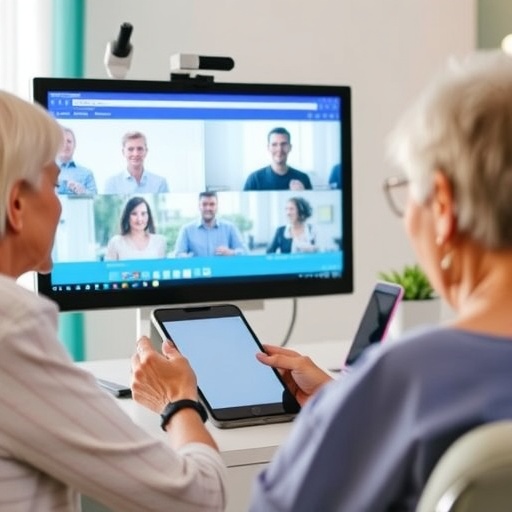
In an age where digital health solutions are evolving rapidly, a recent pre-post intervention study conducted in rural Germany has provided illuminating insights into how regular televisits can significantly impact the healthcare management of nursing home residents. The research, led by a team of experts including Redeker, Martin, and Veldeman, delves into the critical junction of technology and elder care, addressing a pressing issue: the alarming rate of unplanned hospital admissions among the elderly population residing in nursing homes.
As we grapple with a growing demographic of senior citizens, the healthcare system is facing unprecedented challenges. Nursing homes have become focal points in this scenario, often dealing with complex health issues that require timely and effective intervention. Traditionally, residents often faced barriers to accessing healthcare services, including transportation difficulties and scheduling conflicts with primary care providers. However, the introduction of regular televisits presents a potential turning point, paving the way for a more responsive and flexible healthcare model.
The study in question utilized a robust methodology, observing nursing home residents before and after the implementation of structured televisits. These virtual consultations allowed caregivers and healthcare providers to maintain constant communication with residents, effectively bridging the gap typically created by physical distance. The researchers meticulously monitored hospital admission rates, focusing on both planned and unplanned events, to quantify the impact of this innovative approach.
Findings from the study were compelling. The data revealed a notable decrease in unplanned hospital admissions following the introduction of regular televisits. This statistic not only underscores the efficacy of telehealth systems but also highlights their potential in alleviating pressure on hospital resources. By facilitating timely interventions and continuous monitoring, televisits can help prevent health issues from escalating to the point of requiring emergency care.
One of the most interesting aspects of the research was the focus on rural settings. Many rural nursing homes experience resource limitations, reduced access to specialized care, and longer travel distances for residents who may need medical attention. The findings suggest that by integrating technology into their healthcare delivery systems, these facilities can keep pace with the demands of a changing healthcare landscape. Televisits provide a feasible alternative to address these geographic and logistic challenges.
The implications of this study extend beyond just a reduction in hospital admissions. They provide a roadmap for improving overall health outcomes for older adults by making healthcare more accessible. This shift towards incorporation of technology into elder care can promote a healthier lifestyle, enhance patients’ quality of life, and support their independence. As older adults often prefer to receive care in familiar surroundings, televisits can allow them to express their concerns and receive consultative care without the anxiety associated with hospital visits.
However, challenges remain. Issues such as internet connectivity, the digital divide among older populations, technological literacy, and privacy concerns need to be addressed to maximize the success of telehealth initiatives. While many residents may be open to using technology, not all possess the requisite skills or resources. Training sessions and improved IT infrastructures will be essential to enhancing the effectiveness of such programs.
Feedback from nursing home staff and residents, gathered during the study, illustrated a mixed but generally positive reception towards televisits. Many caregivers highlighted that these visits improved their ability to monitor residents’ health and maintain continuity of care. Residents, on the other hand, expressed a blend of excitement and skepticism; while some appreciated the convenience and safety of being treated from their rooms, others felt more comfortable with traditional in-person consultations.
Looking ahead, the findings of this study set a precedent for further research exploring long-term effects of telehealth on nursing home residents. Future studies could investigate a broader scope, potentially including various regions and demographic groups to provide insights on best practices and hurdles in diverse settings. As this telehealth movement gains traction, integrating patient education on technology use into nursing home curriculums will also be crucial.
Healthcare policymakers should take heed of these findings as they craft regulations and support systems for telehealth applications. The COVID-19 pandemic sharply accelerated the use of telemedicine, highlighting its necessity and effectiveness. This study adds to the growing body of evidence supporting telehealth as a vital component of healthcare delivery, especially for vulnerable populations like nursing home residents.
In summary, the groundbreaking study conducted in rural Germany shines a light on the transformative potential of regular televisits for nursing home residents. With their ability to reduce unplanned hospital admissions and streamline healthcare accessibility, televisits represent a significant step forward in the ongoing evolution of elder care. As technology continues to advance, the healthcare field must embrace these innovations, ensuring that all patients receive the comprehensive, compassionate care they deserve.
The intersection of technology and elder care is proving to be a fertile ground for further exploration and innovation. As we look to the future, the lessons learned from this research should inspire healthcare professionals, policymakers, and communities to work collaboratively, fostering an environment where technology enhances both the quality and accessibility of care for our aging population.
Staying ahead in this rapidly evolving field will require adaptability and a commitment to constant improvement. With more studies like the one conducted by Redeker and his team, we can better understand how to leverage technology to meet the unique needs of elderly citizens. The time to act is now, as the aging population continues to grow, presenting both challenges and opportunities for the healthcare system.
The research not only provides a glimpse into the future of elder care but also urges us to consider how we define quality health service in our society. By taking their findings to heart, we can create a healthcare model that is both forward-thinking and person-centered, ensuring that every elder is treated with dignity and receives the care they need.
Redeker, AC., Martin, T., Veldeman, S. et al. Impact of regular televisits on unplanned hospital admissions of nursing home residents in rural Germany: a pre-post intervention study.
BMC Geriatr 25, 687 (2025). https://doi.org/10.1186/s12877-025-06244-6
Cite Scienmag News
Ophelia Keating. (September 8, 2025). Televisits Reduce Unplanned Hospital Admissions in Nursing Homes. Scienmag. https://scienmag.com/televisits-reduce-unplanned-hospital-admissions-in-nursing-homes/
Ophelia Keating. "Televisits Reduce Unplanned Hospital Admissions in Nursing Homes." Scienmag, 8 September 2025, https://scienmag.com/televisits-reduce-unplanned-hospital-admissions-in-nursing-homes/. Accessed 4 September 2026.
Ophelia Keating. "Televisits Reduce Unplanned Hospital Admissions in Nursing Homes." Scienmag. September 8, 2025. https://scienmag.com/televisits-reduce-unplanned-hospital-admissions-in-nursing-homes/


