

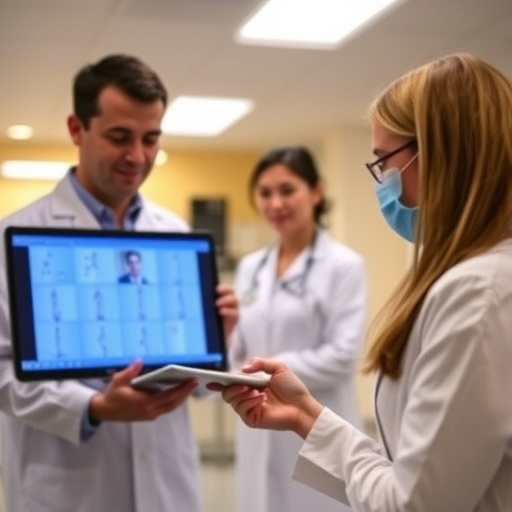
As the world continues to adapt to the ongoing challenges posed by the pandemic, telemedicine has emerged as a vital solution in various aspects of healthcare delivery. One of the most innovative uses of this technology has been in medical education, particularly within clinical clerkships. Groundbreaking research conducted by Altınışık et al. reveals a pioneering model where telemedicine has been utilized to conduct introductory clinical clerkships, offering a fresh perspective on medical training and providing valuable insights into the efficacy of remote educational frameworks.
The flexibility inherent to telemedicine has redefined the landscape of medical training. Traditionally, clinical clerkships require students to be physically present in healthcare facilities, engaging directly with patients. However, this new telemedicine-based model allows students to participate in clerkships from diverse locations, granting them access to a wealth of clinical cases and experiences that may not have been available otherwise. Students can connect with healthcare professionals through digital platforms, facilitating real-time discussions, case evaluations, and hands-on learning experiences.
One of the significant advantages of this innovative educational approach is the ability to simulate clinical scenarios. Telemedicine can recreate a plethora of clinical situations, enabling students to practice their diagnostic and decision-making skills in a controlled environment. This controlled simulation provides an opportunity for instructors to assess students’ performance in real-time, offering immediate feedback and guidance that can accelerate the learning process. Importantly, this model caters to a diverse range of learning styles, allowing for customized educational experiences based on individual student needs.
Moreover, the incorporation of telemedicine into clerkships can help reduce the barriers often faced by students, particularly those from rural or underserved areas. With traditional clerkships often concentrated in urban centers, students from remote locations may struggle to access these pivotal training opportunities. Telemedicine bridges this gap by connecting students to clinical experiences and medical professionals regardless of geographic constraints. The model showcased by Altınışık et al. promotes equity in medical education, ensuring that all students, regardless of their background, can gain the requisite clinical knowledge and skills.
The outcomes of the telemedicine-based clerkship model have shown promising results, as presented in the research findings. Students involved in the telemedicine clerkship reported high levels of satisfaction regarding their learning experience. They expressed confidence in their ability to perform clinical tasks and engage in patient care discussions, attributing their success to the interactive nature of the telehealth platforms. This feedback is critical as it underscores the effectiveness of telemedicine in achieving educational objectives typically associated with in-person clerkships.
As participants in this innovative educational model, medical students not only learn clinical skills but also adapt to the modern healthcare environment where telemedicine is becoming increasingly prevalent. Understanding how to effectively communicate with patients and healthcare providers through digital platforms equips these future medical professionals with the skills they will need in a field that is undergoing significant transformation. This enhancement of communication skills is especially essential as healthcare trends toward integrating remote consultations, allowing practitioners to provide care from a distance.
However, transitioning to a telemedicine-based learning model doesn’t come without its own set of challenges. Implementing technology in the educational arena presents hurdles, including technological literacy and access to the necessary devices and internet connectivity. Institutions must consider these challenges when designing programs, ensuring that all students have equal opportunities to participate in telemedicine-based clerkships. Therefore, measures should be put in place to provide resources and training to both students and educators, facilitating a seamless integration of technology into the clinical education framework.
Additionally, the role of instructors in this new model has shifted, necessitating a re-evaluation of teaching strategies and assessment methods. Educators in telemedicine-based programs need to be adaptable and receptive to evolving technologies to maximize the effectiveness of their instruction. The successful deployment of this innovative educational model relies heavily on the training of faculty, requiring them to recognize how best to utilize telehealth platforms for teaching, assessment, and feedback.
In conclusion, the research presented by Altınışık et al. in their examination of a telemedicine-based introductory clinical clerkship represents a significant leap forward in medical education. In light of ongoing global challenges, this innovative approach allows for equitable, flexible, and effective learning opportunities. As telemedicine becomes an integral part of healthcare delivery, embracing its application in medical training holds boundless possibilities, paving the way for a new generation of practitioners who are equipped to thrive in an increasingly digital world.
As the field of education continues to evolve, the potential for further refining and advancing telemedicine-based clerkships is immense. Ongoing research and evaluation will be crucial in understanding the long-term impact of these educational models on student outcomes and patient care. With successful implementation, this initiative could inspire similar innovations across various educational disciplines, changing the way we view the intersection of technology and learning.
In summary, the telemedicine-based clerkship model proposed by Altınışık et al. is not only a response to the immediate challenges posed by the pandemic but also a forward-thinking strategy that could shape the future of medical education. By harnessing the power of technology, this model offers an inclusive and adaptable avenue for training healthcare professionals, equipping them with the knowledge and skills necessary to navigate an evolving landscape of patient care.
Subject of Research: Telemedicine in medical education and its impact on clinical clerkships.
Article Title: The outcomes of a telemedicine-based introductory clinical clerkship: an innovative educational model.
Article References:
Altınışık, G., Karaca, O., Suner, A. et al. The outcomes of a telemedicine-based introductory clinical clerkship: an innovative educational model.
BMC Med Educ (2026). https://doi.org/10.1186/s12909-025-08444-5
Image Credits: AI Generated
DOI: 10.1186/s12909-025-08444-5
Keywords: Telemedicine, medical education, clinical clerkship, remote learning, healthcare innovation.


