


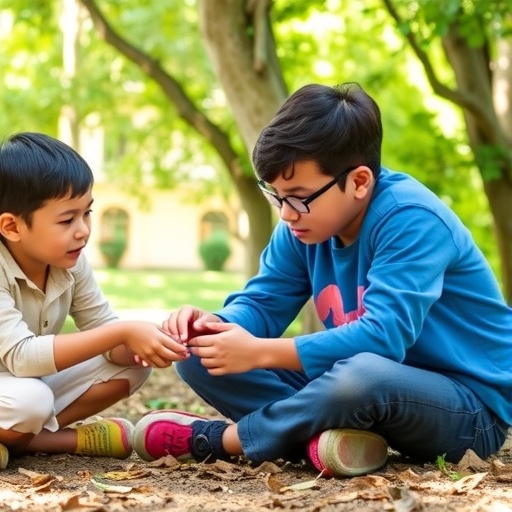
In recent years, there has been a growing awareness of the critical need to address the diverse learning requirements of children with autism. This awareness has prompted educators and researchers to explore innovative tools and methodologies that align with the learning preferences of these students. One such innovation is the development of interactive e-books designed specifically to enhance the understanding of sustainable development among middle school students with autism. This groundbreaking initiative is examined in a recent study that aims to uncover these students’ unique needs through insights gathered from teachers.
The study, conducted by I. Özergun-Köse and N. İmer-Çetin, sheds light on the essential role that educators play in tailoring instructional materials to fit the unique learning styles of students with autism. This targeted research offers a comprehensive analysis of how interactive e-books can be an effective resource for facilitating engagement and understanding of sustainable development concepts among middle school students who face learning challenges. With the increasing integration of digital technologies into education, the potential for e-books to serve as adaptive learning instruments has become particularly significant.
Central to the discussion is the notion of sustainable development, which encompasses the understanding of ecological balance, social equity, and economic viability. For students with autism, grasping these often abstract concepts can pose notable challenges. Thus, the study emphasizes that educational strategies must extend beyond traditional teaching methodologies to embrace interactive platforms that offer sensory-affective learning experiences. These methods can make such complex themes more accessible by allowing students to engage with material in a way that resonates with their individual experiences and cognitive processing.
As educators involved in the research have revealed, every child with autism is unique, possessing different strengths, weaknesses, and learning preferences. By gathering qualitative data from teachers, the researchers were able to map out a clearer picture of the kinds of features that could make e-books appealing and beneficial for students. Features such as visually stimulating graphics, interactive elements that promote student involvement, and audio descriptions were highlighted as essential components, ensuring that content remains engaging and comprehensible.
Moreover, the importance of collaboration was a significant theme of the research. Teachers expressed that open communication with parents and specialists is crucial to understanding the specific needs of their students. Such collaborative approaches ensure that an interactive e-book does not merely function as a standalone resource but as part of a wider educational framework that includes input from various stakeholders involved in the child’s learning journey. This synergy between teachers, parents, and educational professionals can lead to more tailored content that addresses specific developmental hurdles faced by students with autism.
The researchers also noted the importance of constructing a supportive learning environment in which students feel comfortable exploring and questioning sustainable development themes. Techniques such as gamification—where learning concepts are integrated into game-like formats—may prove particularly effective. This encourages increased motivation and helps students visualize their learning paths while making the educational experience feel less daunting.
Alongside these pedagogical strategies, the study brings to light the need for training teachers in utilizing technology, particularly when it comes to specialized content designed for students with unique learning requirements. The findings recommend that teacher training programs incorporate modules that focus on the effective use of interactive e-books and digital technology in special education contexts. Through more comprehensive training, educators can enhance their capabilities to support students effectively, ensuring that their classrooms become inclusive places of learning.
The research further discusses the intersection of special education and technological innovation. While digital tools offer significant advantages, there is also an acknowledgment of the challenges that may accompany their use. For instance, not all students will respond positively to technology, and some may require individualized attention beyond what an e-book can provide. Thus, while developing these resources, it is essential to consider the integration of traditional teaching methods alongside modern technology.
In addition to pedagogical considerations, the emotional well-being of students with autism must also be accounted for when developing educational tools. The interactive e-book must not only impart knowledge about sustainable development but also foster a sense of accomplishment and understanding within the student. The integrative approach should ensure an environment that nurtures both intellectual and emotional growth, generating a healthy connection with the material and promoting a love for learning.
Through the insights derived from teacher feedback, the study presents a clear call to action for educational policymakers and program developers. There is a pressing need to prioritize the creation of specialized educational content that caters to diverse learning profiles. E-books built with sustainability in mind can advance students’ understanding of their role in environmental stewardship while simultaneously reinforcing critical thinking skills.
Looking ahead, the ongoing exploration of autism within the educational paradigm will likely set the stage for similar studies focusing on other learning disabilities. Researchers underscore that understanding the needs of students, regardless of their learning challenges, is paramount for developing effective educational resources. This study exemplifies the significance of tailoring educational materials to match students’ needs, ensuring equitable access to quality education for all.
By aligning the educational landscape with innovative tools, society stands to benefit remarkably. Understanding the content of sustainable development is not just a personal milestone for students with autism; it can produce informed and responsible individuals who participate actively in their communities. The potential outcomes of such educational initiatives extend beyond individual achievement, contributing to collective societal benefits toward a more sustainable future.
Emphasizing the human element within educational technologies, this study serves as a reminder that the ultimate goal remains the same: delivering personalized learning experiences that empower all students, particularly those with autism, to succeed and thrive in an ever-evolving world.
Cite Scienmag News
Sloane Callahan. (October 14, 2025). Teachers’ Insights on Autism and Sustainability Awareness. Scienmag. https://scienmag.com/teachers-insights-on-autism-and-sustainability-awareness/
Sloane Callahan. "Teachers’ Insights on Autism and Sustainability Awareness." Scienmag, 14 October 2025, https://scienmag.com/teachers-insights-on-autism-and-sustainability-awareness/. Accessed 4 September 2026.
Sloane Callahan. "Teachers’ Insights on Autism and Sustainability Awareness." Scienmag. October 14, 2025. https://scienmag.com/teachers-insights-on-autism-and-sustainability-awareness/


