


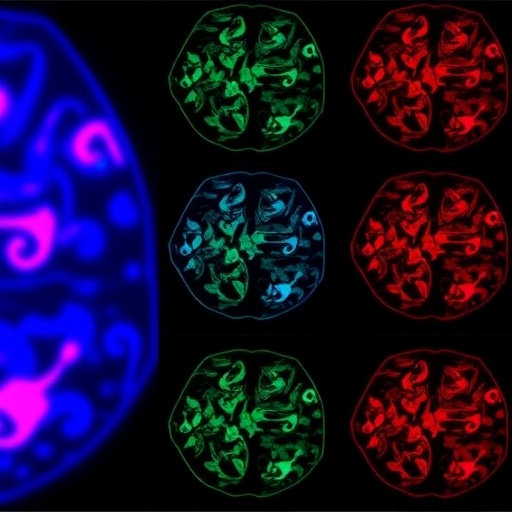
A groundbreaking preclinical study has unveiled a promising new avenue for fluorescence-guided surgery in pediatric and adolescent solid tumors. Researchers led by Dr. Ashley C. Dodd and Dr. Timothy B. Lautz at Ann & Robert H. Lurie Children’s Hospital and Northwestern University Feinberg School of Medicine have demonstrated widespread expression of folate receptor beta (FRβ) across a variety of pediatric solid tumors. This discovery opens up the potential for enhanced intraoperative tumor visualization using the novel fluorescent agent pafolacianine, marking a significant step forward in surgical oncology for young patients.
The research, published in the October 16, 2025 edition of Oncotarget, addresses one of the persistent challenges in pediatric cancer surgery: the difficulty in precisely identifying and completely excising tumors, especially when small metastatic lesions are spread throughout organs like the lungs. Traditional fluorescent dyes such as indocyanine green have been employed to illuminate tumors during surgery, but these agents lack specificity, relying on the enhanced permeability and retention (EPR) effect characteristic of tumor vasculature, which limits their accuracy and can impede successful complete resections.
Pafolacianine, a folate receptor–targeted fluorescent imaging agent already FDA-approved for adult patients with ovarian and lung cancers, offers a solution. By binding selectively to folate receptors highly expressed on cancer cells, this agent provides high-contrast visualization of tumor tissue in real time during surgery. While folate receptor alpha (FRα) had been the primary target in adult malignancies, its expression in pediatric tumors was unclear—prompting the current investigation into both FRα and FRβ receptor distribution.
The study meticulously analyzed tumor specimens from 13 pediatric and adolescent patients diagnosed with diverse tumor types including Wilms tumor, osteosarcoma, synovial sarcoma, rhabdomyosarcoma, Ewing sarcoma, and neuroblastoma. Immunohistochemical staining revealed a striking absence of FRα expression in these tumors, but a consistent and robust presence of FRβ was detected in every sample. Notably, FRβ was expressed not only on the tumor cells themselves but also within the tumor microenvironment, particularly in surrounding stromal components.
This extensive FRβ distribution distinguishes it as an ideal molecular target for fluorescence-guided interventions. Its low to negligible expression in normal healthy tissues further underscores the agent’s potential for high specificity, minimizing off-target background fluorescence during surgical navigation. The researchers emphasize that, unlike previous assumptions that linked FRβ mainly to tumor-associated macrophages, their findings show direct receptor presence on tumor cells, broadening the scope of possible imaging strategies.
From a mechanistic standpoint, the folate receptor family functions as high-affinity transporters for folate and folate-conjugated molecules, facilitating cellular uptake. The differential expression patterns of FRα and FRβ are often context-dependent, varying with tissue type, developmental stage, and pathological conditions. The novel identification of FRβ as a dominant receptor subtype in pediatric solid tumors offers a mechanistically insightful biomarker that can be exploited for targeted dye delivery, enhancing tumor margin delineation in real-time surgery.
This revelation led the research team to promptly initiate a clinical trial designed to assess the safety, feasibility, and efficacy of pafolacianine-assisted surgery in children undergoing resection of metastatic lung tumors. If successful, this modality could revolutionize pediatric oncologic surgery by enabling surgeons to visually discriminate malignant tissue from healthy structures with unprecedented accuracy, hence lowering recurrence rates and improving long-term outcomes.
Beyond improving surgical precision, the implications for pediatric cancer imaging extend to a broader tumor-agnostic application. Since FRβ expression was detected across multiple tumor histologies, including both sarcomas and nephroblastomas, this method may transcend traditional tumor-specific targeting, enabling a universal imaging platform for a wide spectrum of pediatric malignancies.
Fluorescence-guided surgery represents a paradigm shift in oncologic management, leveraging optical molecular imaging to transform the subjective and indirect visual inspection of tumors into objective, fluorescence-mediated detection. Such advancements are especially critical in pediatric populations, where minimizing surgical morbidity while maximizing tumor clearance is vital to the patient’s quality of life and survival.
Of technical interest, the immunohistochemical validation employed by the researchers utilized stringent controls and higher magnification imaging (20x) to distinctly identify receptor localization, differentiating FRβ signals on tumor cells versus infiltrating immune cells. This dual localization accentuates the multifaceted role of FRβ in tumor biology and enforces its suitability for targeting with fluorescent probes.
In conclusion, the study’s demonstration of universal FRβ expression in pediatric and adolescent solid tumors, coupled with the promising clinical utility of pafolacianine, holds transformative promise. By illuminating tumors with high specificity during surgery, pediatric cancer treatment can achieve new levels of precision. Continued clinical validation will be critical to establish the safety profile and diagnostic performance of this innovative imaging agent in children, potentially setting a new standard in fluorescence-guided oncologic surgery.
These findings underscore the evolving landscape of pediatric oncology, where molecular targeting and real-time imaging converge to improve therapeutic interventions. As the clinical trials progress, the broader oncology community will keenly anticipate data confirming the impact of FRβ-targeted fluorescence on surgical outcomes, recurrence rates, and patient survival in young populations afflicted with challenging solid tumors.
Cite Scienmag News
Nathaniel Bowman. (October 20, 2025). Targeting Folate Receptor Beta in Pediatric Tumors Could Enhance Fluorescence-Guided Cancer Surgery. Scienmag. https://scienmag.com/targeting-folate-receptor-beta-in-pediatric-tumors-could-enhance-fluorescence-guided-cancer-surgery/
Nathaniel Bowman. "Targeting Folate Receptor Beta in Pediatric Tumors Could Enhance Fluorescence-Guided Cancer Surgery." Scienmag, 20 October 2025, https://scienmag.com/targeting-folate-receptor-beta-in-pediatric-tumors-could-enhance-fluorescence-guided-cancer-surgery/. Accessed 4 September 2026.
Nathaniel Bowman. "Targeting Folate Receptor Beta in Pediatric Tumors Could Enhance Fluorescence-Guided Cancer Surgery." Scienmag. October 20, 2025. https://scienmag.com/targeting-folate-receptor-beta-in-pediatric-tumors-could-enhance-fluorescence-guided-cancer-surgery/


