


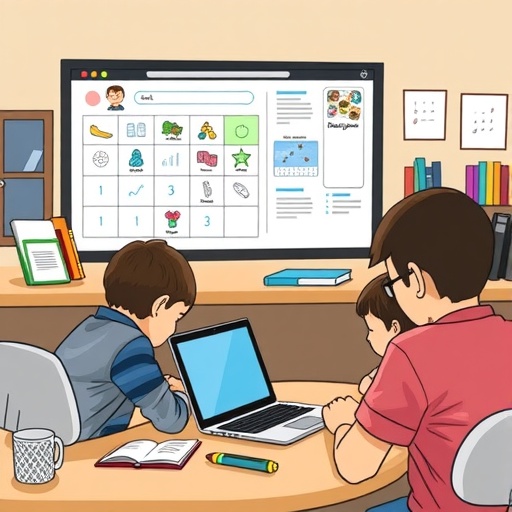
In the rapidly evolving landscape of education technology, traditional learning methods are increasingly being complemented by adaptive systems that cater to individual learning styles. A pioneering study titled “Adaptive recommendation of student-created micro-lessons based on learning style and knowledge-level modeling” dives deep into the utilization of tailored educational experiences, particularly focusing on micro-lessons designed by students themselves. This promising approach aims to bridge the gap between student engagement and effective learning.
At its core, the research outlines the development of a sophisticated framework designed to analyze and adapt educational content to each student’s unique learning preferences. The study introduces a model capable of assessing a learner’s existing knowledge and preferred learning style while simultaneously recommending micro-lessons that would most likely enhance their learning experience. By leveraging these analytics, the system becomes a personalized digital tutor, guiding students towards their educational goals in a more engaging way.
One of the standout features of this adaptive system is its emphasis on micro-lessons. These bite-sized lessons are particularly advantageous in today’s fast-paced educational settings, where students often struggle to find the time or focus for lengthy instructional materials. By breaking down complex subjects into manageable units, the micro-lessons not only simplify the learning process but also cater to the reduced attention spans that many students face. This innovation could potentially revolutionize how knowledge is imparted and absorbed in modern classrooms.
The ability to tailor educational content not only benefits individual learners but also promotes a collaborative learning environment. The research demonstrates that when students create their own micro-lessons, they engage with the material differently. They are not mere consumers of knowledge but active creators. This shift from passive to active learning fosters a deeper understanding of the content, as students must grasp concepts thoroughly enough to formulate their own lessons. Such engagement can be transformative, driving both motivation and retention.
Moreover, the study investigates the dual dimensions of learning styles and knowledge levels. While traditional educational models often adopt a “one-size-fits-all” mentality, the need for a more nuanced understanding of learners’ preferences is critical. By implementing a model that assesses both elements, educators can more effectively support diverse classrooms, meeting the varied needs of all students. This addresses long-standing issues of equity in education, as personalized learning experiences can help bridge achievement gaps that often exist among different student populations.
A significant aspect of this research is its reliance on data-driven decision-making. By collecting and analyzing a wide range of data from students, the adaptive recommendation system is able to continuously improve and refine its recommendations over time. This not only enhances the learning experience but also ensures that educational content remains relevant and engaging. As data analytics play an increasingly central role in educational development, this model serves as a benchmark for future research and implementation.
As educators around the globe strive to integrate technology into their classrooms, models such as the one presented in this study prove to be invaluable. They are not merely technological innovations; they represent a philosophical shift in education towards a more personalized and student-centered approach. This consideration for each student’s individuality creates an environment where all learners can thrive.
The implications of this study extend well beyond the classroom. For educational policymakers, the model provides insight into how resources can be allocated more effectively. By prioritizing funding for adaptive technologies that focus on personalized learning, schools can enhance educational outcomes on a larger scale. Additionally, this research opens pathways for collaborations among technology developers, educators, and researchers, facilitating a holistic approach to educational improvement.
Critically, while the focus remains on the benefits of adaptive learning systems, the study also addresses potential challenges. One significant concern is the reliance on technology, which may inadvertently widen the divide for students without access to digital resources. Therefore, the research advocates for inclusive strategies that ensure all students, regardless of socioeconomic background, can reach their full potential through these innovative learning approaches.
Looking forward, the adaptability of this model presents exciting possibilities. As artificial intelligence continues to develop at a rapid pace, the potential for adaptive recommendation systems to become even more sophisticated is enormous. Future iterations could combine natural language processing, machine learning, and additional data sources to predict learning behaviors with even greater accuracy. Envision a future where every student has a tailored educational assistant, guiding them through their academic journey, responsive to their immediate needs and long-term goals.
In addition, the trend of students creating their learning materials signifies a cultural shift in education. The increasing value placed on student agency indicates a move towards a paradigm where learners are seen not just as recipients of knowledge but as contributors and authors of their own educational experiences. Engaging students in the creation of micro-lessons could empower them in ways that standard educational practices have historically failed to achieve.
As we consider the future of education, it is critical to embrace innovations like those presented in this study. The adaptive recommendation of micro-lessons encapsulates a vision for more interactive, individualized, and effective learning experiences. As this research unfolds, there is no doubt that it will inspire educators, technologists, and students alike to explore the uncharted territories of personalized education.
In an age of unprecedented educational transformation, the findings of Ahmadaliev et al. not only propel the conversation but also set the stage for future explorations into the ways technology can enhance learning. With an ever-increasing emphasis on collaboration and innovation, the horizon of education is expanding, offering new pathways to success for all learners around the world.
Education is not a static field; it is one that must continually evolve in response to changing times, technologies, and learners’ needs. The adaptive recommendation model explored in this study represents one of the many steps forward in this ongoing journey. As educators, researchers, and students continue to explore the infinite possibilities of personalized learning, the future looks brighter than ever.
The findings of this research hold the promise of not just improving individual learning outcomes but also advancing educational equity, engagement, and effectiveness. As teaching methods transform and adapt to fit the needs of each learner, the landscape of education will ultimately reflect the diverse and dynamic world we live in.
Ahmadaliev, D., Xiaohui, C., Zhang, Z. et al. Adaptive recommendation of student-created micro-lessons based on learning style and knowledge-level modeling.
Discov Educ (2026). https://doi.org/10.1007/s44217-026-01106-8
Cite Scienmag News
Courtney Benton. (January 17, 2026). Tailored Micro-Lessons for Every Student’s Learning Needs. Scienmag. https://scienmag.com/tailored-micro-lessons-for-every-students-learning-needs/
Courtney Benton. "Tailored Micro-Lessons for Every Student’s Learning Needs." Scienmag, 17 January 2026, https://scienmag.com/tailored-micro-lessons-for-every-students-learning-needs/. Accessed 3 September 2026.
Courtney Benton. "Tailored Micro-Lessons for Every Student’s Learning Needs." Scienmag. January 17, 2026. https://scienmag.com/tailored-micro-lessons-for-every-students-learning-needs/


