


Review Finds Deep Learning Threat Detection Models Lack Systematic Temporal Validation
A systematic review reveals that deep learning models for social network threat detection lack chronological validation despite achieving high benchmark ...
A systematic review reveals that deep learning models for social network threat detection lack chronological validation despite achieving high benchmark ...

Researchers have developed SparseCalib, a query-native framework that cuts provenance graph storage space by up to ninety-seven percent while enabling ...

Computer scientists developed a tri-view intrusion detection framework combining statistical, temporal, and topological representations to accurately classify cyber threats across ...

A systematic ablation study of enterprise behavior logs reveals that statistical feature construction outweighs architectural complexity in deep learning cybersecurity ...

A study in Applied Network Science shows that converting network traffic features into natural language significantly improves the quality of ...

Researchers have developed an adaptive spatio-temporal graph attention network that couples ship trajectory tracking with seabed acoustic sensing to reliably ...
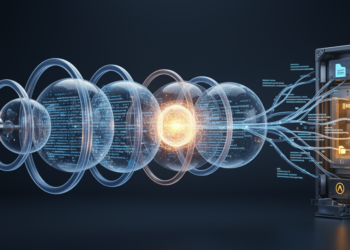
A fuzzy autoencoder classified none of 10,000 adversarially generated executable samples as legitimate and reached a reported safety-aware accuracy of ...
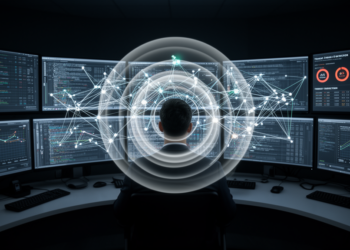
A hierarchical attention model reported 0.913 detection accuracy, 83.6% zero-shot attack recognition and 29.8-millisecond average detection latency in computational experiments.

A blockchain-integrated machine-learning framework reported accuracies above 99% for distinguishing attacks from normal activity in two IoHT healthcare-device datasets.
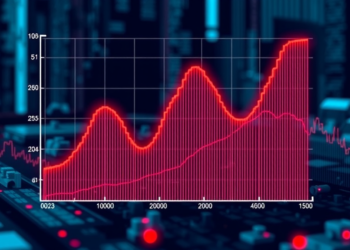
Researchers have developed CSCProv, a compression framework that shrinks massive provenance graphs by up to thirty times while preserving the ...


Embark on a thrilling journey of discovery with Scienmag.com—your ultimate source for cutting-edge breakthroughs. Immerse yourself in a world where curiosity knows no limits and tomorrow’s possibilities become today’s reality!