

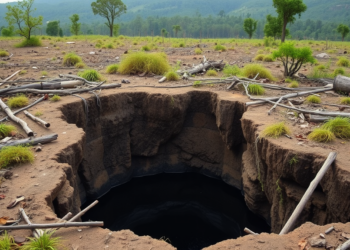
Ecological Traps Reveal Why Humanity Builds Its Own Dead Ends
A new perspective in Ambio argues that humanity's own construction of both material conditions and the information environment has created ...
A new perspective in Ambio argues that humanity's own construction of both material conditions and the information environment has created ...

A qualitative study of Brazil's plastic packaging industry shows that circular upgrading succeeds when firms control design and processes but ...

The University of Pittsburgh has named sustainability scholar Vikas Khanna, interim chair since July 2025, as the permanent chair of ...

Researchers have demonstrated a low-energy thermochemical process that regenerates spent NMC 532 cathode material from discarded lithium-ion batteries with near-original ...

New analysis argues that scientists who engage directly in food system controversies, rather than avoiding them, strengthen trust and effectiveness ...

A University of the Basque Country study finds that the future global green hydrogen trade must balance economic, environmental and ...
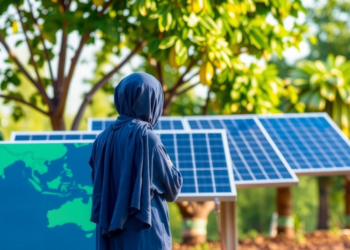
A new panel study of eleven New BRICS economies finds that human development and renewable energy consumption significantly boost sustainable ...

A comprehensive bibliometric analysis of five decades of research reveals that developed countries dominate sustainability scholarship in higher education while ...

A landmark special issue of the Journal of Intelligent Information Systems argues that recommender systems must be redesigned to actively ...

Researchers have developed SWIFT-KD, a federated learning framework combining hierarchical sliding-window transformers with knowledge distillation that predicts building energy consumption ...


Embark on a thrilling journey of discovery with Scienmag.com—your ultimate source for cutting-edge breakthroughs. Immerse yourself in a world where curiosity knows no limits and tomorrow’s possibilities become today’s reality!