

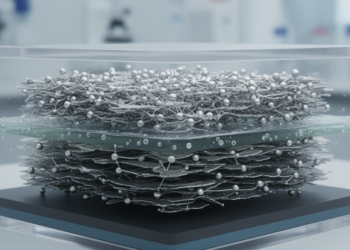
Nickel-Doped MoS2 Nanoparticles Improve Supercapacitor Electrode Performance
A laboratory study found that 6% nickel-doped MoS2 reached 1,210 F/g in a three-electrode test and 121 Wh/kg in an ...
A laboratory study found that 6% nickel-doped MoS2 reached 1,210 F/g in a three-electrode test and 121 Wh/kg in an ...

A critical review finds that transition-metal phosphide/carbon supercapacitor studies frequently report inflated performance and calls for consistent testing and mechanism-based ...
A finite-element model of a cerium dioxide–reduced graphene oxide electrode reported 2,758.7 mF cm−2 peak areal capacitance and 71% capacitance ...
A laboratory electrode study reported a specific capacitance of 1,049.95 F g−1 for a corn-straw biochar, MXene and MnO2 composite, ...
A laboratory NiTe–MoS2/rGO supercapacitor electrode achieved 782 farads per gram and retained 87% of its initial capacity after 5,000 cycles.
Researchers in Lahore report a biphasic chromium-zirconium oxide nanocomposite wired with carbon nanotubes that achieves 748 F g⁻¹ and an ...
Supercapacitors occupy a peculiar middle ground in the energy storage world: they charge in seconds, survive hundreds of thousands of ...
Researchers have unveiled a hybrid electrode material that pulls double duty in the clean-energy economy, storing impressive amounts of charge ...
Graphene has long been hailed as a wonder material for energy storage, but turning it into practical supercapacitor electrodes has ...
The choice of magnesium as a dopant in hydrated tungsten oxide is notable when considered against the broader landscape of ...

Embark on a thrilling journey of discovery with Scienmag.com—your ultimate source for cutting-edge breakthroughs. Immerse yourself in a world where curiosity knows no limits and tomorrow’s possibilities become today’s reality!