

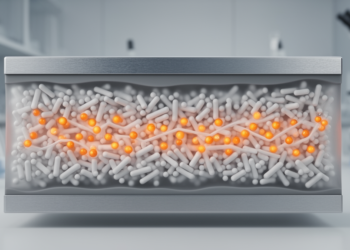
Tiny Ceramic Fillers Could Crack the Biggest Problem in Solid-State Batteries
A new review in Ionics argues that inorganic fillers, from inert oxides to garnet ceramics and porous frameworks, are the ...
A new review in Ionics argues that inorganic fillers, from inert oxides to garnet ceramics and porous frameworks, are the ...

Rice University researchers have created ZnBTCA, a soft, flexible metal-organic framework that selectively transports lithium ions and remained short-circuit-free in ...

Tohoku University researchers propose a framework called Physics-Grounded Materials AI that embeds thermodynamic, kinetic, and electronic-structure principles into machine learning ...
Researchers in Vietnam used liquid-phase synthesis and aluminum doping to boost the room-temperature ionic conductivity of low-temperature argyrodite Li7PS6 to ...
A kinetic Monte Carlo study tracks the birth, growth, and percolation of single voids at the lithium–solid electrolyte interface, revealing ...
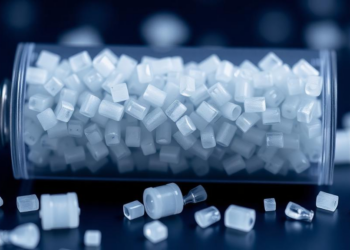
A new review details how engineering active ceramic fillers such as garnet, NASICON, perovskite, and sulfide materials into solid polymer ...

Two new studies reveal that residual electronic conductivity in solid electrolytes can silently drain solid-state batteries while they sit unused, ...

Researchers have created a graphene oxide and PVP modified solid polymer electrolyte that achieves fast lithium-ion transport, high transference numbers ...

Solid-state batteries are often presented as the technology that could finally move electric vehicles beyond the limits of today’s lithium-ion ...

Solid-state batteries promise a revolutionary leap in energy storage, offering higher energy densities and enhanced safety over conventional liquid electrolyte-based ...


Embark on a thrilling journey of discovery with Scienmag.com—your ultimate source for cutting-edge breakthroughs. Immerse yourself in a world where curiosity knows no limits and tomorrow’s possibilities become today’s reality!