


Lightweight Federated Learning Cuts Power Grid Edge Computing Redundancy by 77 Percent
Engineers developed a lightweight multi-task federated learning framework that trims model parameter redundancy by over 77 percent while maintaining accuracy ...
Engineers developed a lightweight multi-task federated learning framework that trims model parameter redundancy by over 77 percent while maintaining accuracy ...

A comparative evaluation of electricity demand in Panama reveals that a simpler linear regression model surpassed a multi-layer neural network ...

Researchers developed a hybrid access control architecture combining neural collaborative filtering with deterministic compliance gating to govern artificial intelligence agent ...

A review of cryptographic architectures for smart grid cyber-physical systems reveals that balancing robust security with the computational constraints of ...

A newly developed personalized federated learning framework enables accurate energy appliance identification across diverse households while maintaining consumer data privacy.

This evidence-based review synthesizes current AI capabilities for smart-grid fault detection while identifying maturity gaps and future research priorities.

A hybrid deep learning model combining recurrent neural networks and long short-term memory achieved a 0.963 assessment accuracy and a ...

A new multi-input LSTM framework improves day-ahead residential load forecasting by independently encoding daily and weekly temporal patterns, achieving the ...

A study of daily market data from 2010 to 2024 reveals that European Union carbon-pricing signals predict global clean energy ...
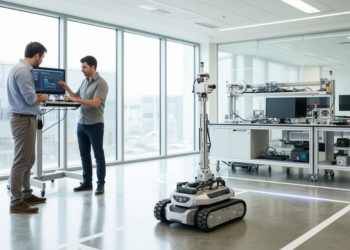
A comprehensive review examines how multi-objective reinforcement learning can guide artificial intelligence agents toward explicit ethical alignment through five foundational ...


Embark on a thrilling journey of discovery with Scienmag.com—your ultimate source for cutting-edge breakthroughs. Immerse yourself in a world where curiosity knows no limits and tomorrow’s possibilities become today’s reality!