

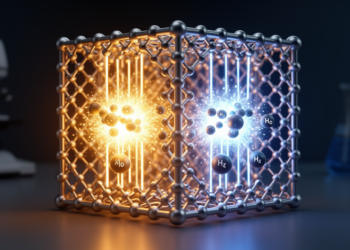
Dual-Site Catalysts and 3D Nanoreactors Push CO2 Hydrogenation Forward
A new review details how dual-site catalysts and three-dimensional nanoreactors boost the activity, selectivity and stability of thermo-catalytic CO2 hydrogenation.
A new review details how dual-site catalysts and three-dimensional nanoreactors boost the activity, selectivity and stability of thermo-catalytic CO2 hydrogenation.
A new review details how doped, defective, and metal-decorated carbon catalysts selectively convert oxygen to hydrogen peroxide as a sustainable ...

A new review argues that trapping metal atoms, clusters and nanoparticles inside zeolite pores could overcome the limits of carbon ...

A new review details how self-regenerating catalysts that reversibly restructure their active metals could dramatically extend industrial catalyst lifetimes.

A reticular coordination strategy anchors single platinum atoms onto cerium-oxo clusters, yielding a 14.9 wt% atomically dispersed catalyst that resists ...
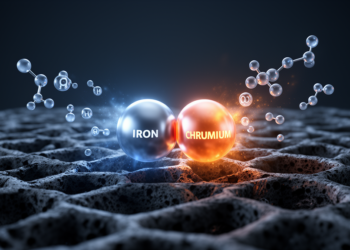
A neighboring iron-chromium dual-atom catalyst raises the intrinsic activity of iron sites 4.6-fold while suppressing the reactive oxygen species that ...
A new review outlines how atomically precise catalyst interfaces, from dopants and vacancies to curved surfaces and local electric fields, ...

A systematic review of 196 studies finds that Industry 5.0-enabled nanocatalysts show strong single-matrix pollution removal, but integrated air-water-soil remediation ...
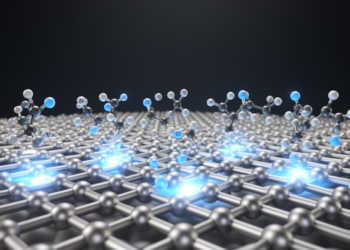
A new review argues that rational catalyst design across noble-metal, non-noble-metal, and metal-free systems is the key to efficient, selective ...
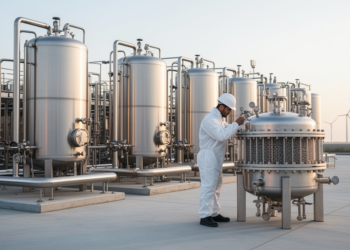
Hydrogen has long been celebrated as the carbon-free energy carrier of the future, capable of storing renewable electricity at scale ...


Embark on a thrilling journey of discovery with Scienmag.com—your ultimate source for cutting-edge breakthroughs. Immerse yourself in a world where curiosity knows no limits and tomorrow’s possibilities become today’s reality!