


Adaptive Solid Electrolyte Interphases Could Stabilize Expanding Silicon Battery Anodes
A review in The Innovation suggests that dynamic, self-healing interfaces could accommodate silicon anode expansion and improve battery lifespan.
A review in The Innovation suggests that dynamic, self-healing interfaces could accommodate silicon anode expansion and improve battery lifespan.

A review in Ionics analyzes advanced silicon-carbon composite anodes, detailing structural designs, interfacial challenges, and scalable manufacturing trade-offs for next-generation ...

A review indicates biomass pretreatment choices face competing constraints among silicon volume buffering, initial lithium inventory losses, and processing energy.

A new thermochemically engineered silicon anode architecture integrates a nanoporous shell and chemically anchored carbon networks to resolve structural instabilities ...

A comprehensive review analyzes liquid electrolyte design strategies, showing that advanced solvent mixtures, imide salts, and localized high-concentration formulations can ...

A new mini-review proposes a mechanical penalty ledger showing how swelling, stack pressure and structural hardware can shrink a 12% ...
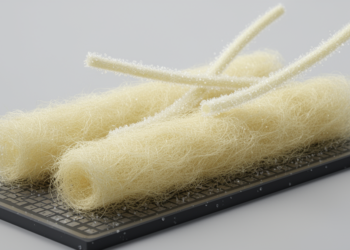
French researchers have turned kapok tree fibers into mechanical reinforcement for silicon-based battery anodes, creating flexible self-supporting electrodes that outperform ...

A new review in Discover Electrochemistry details how carbon nanostructures, conducting polymers, metal oxides, MXenes, phosphorene and borophene are overcoming ...

A head-to-head evaluation of pure nano-silicon, ball-milled, and CVD silicon/carbon anodes reveals that structural stability, not charge-transfer kinetics, governs long-term ...


Embark on a thrilling journey of discovery with Scienmag.com—your ultimate source for cutting-edge breakthroughs. Immerse yourself in a world where curiosity knows no limits and tomorrow’s possibilities become today’s reality!