


Direct Printed Aligners Deliver More Controlled Rotational Forces Than Thermoformed Appliances
An in vitro biomechanical evaluation demonstrates that direct printed clear aligners apply lower, more stable forces with less unwanted vertical ...
An in vitro biomechanical evaluation demonstrates that direct printed clear aligners apply lower, more stable forces with less unwanted vertical ...

Engineering molecular network symmetry in renewable benzoxazine and epoxidized palm oil copolymers enables triple-shape memory programming and maintains recovery stability ...

An in vitro biomechanical study reveals that aligner material properties and thermal behavior dictate incisor torque control more effectively than ...

A comprehensive review analyzes how renewable materials like vegetable oils, lignin, and cellulose use dynamic chemical bonds and physical mechanisms ...

A narrative review highlights how stimulus-responsive shape memory polymer composites coupled with additive manufacturing enable deployable, multifunctional medical devices.

A comprehensive review examines how wearable, intravesical, and implantable soft bioelectronics combine continuous sensing with targeted drug delivery to enable ...

A new review charts the materials, fabrication methods, and device designs needed to shrink peripheral nerve interfaces below one millimeter ...

A new structured literature review shows that clear aligner performance depends far more on exact formulation, processing and ageing conditions ...
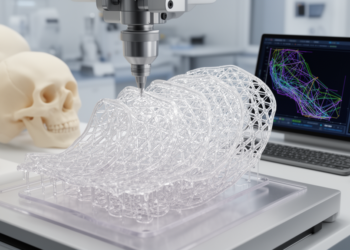
A 2026 review finds that AI-assisted 4D bioprinting may improve material screening, print-path optimization and deformation prediction for craniofacial reconstruction, ...

A new review maps how polymer blends and additives can overcome the stiffness, thermal and processing limits of thermoplastic polyurethane ...


Embark on a thrilling journey of discovery with Scienmag.com—your ultimate source for cutting-edge breakthroughs. Immerse yourself in a world where curiosity knows no limits and tomorrow’s possibilities become today’s reality!