

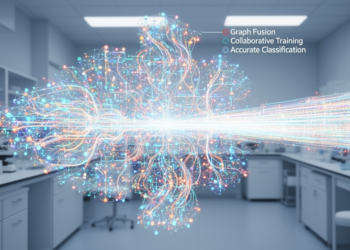
Graph Fusion and Collaborative Training Lift Health Big Data Classification Accuracy
A new open-access study reports that fusing attribute features with graph structure and training classifiers collaboratively reached 0.724 accuracy on ...
A new open-access study reports that fusing attribute features with graph structure and training classifiers collaboratively reached 0.724 accuracy on ...
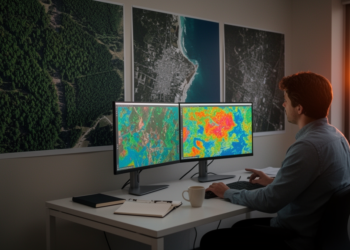
A systematic review finds deep learning exceeds 97 percent accuracy on remote sensing benchmarks but struggles with generalization, spectral exploitation ...
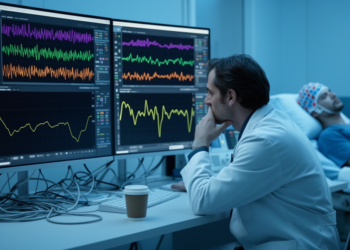
A proof-of-concept study shows a self-supervised EEG seizure detector matches its supervised counterpart on discrimination but trades precision for recall, ...

A new graph-based framework groups similar learners and augments sparse data to improve cognitive diagnosis predictions across three public datasets.

A new framework combining a 120,000-entity knowledge graph with contrastive learning outperforms traditional and graph-based baselines in evaluating digital economy ...
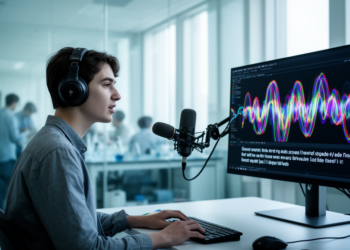
A new model called M-SREC pairs a lightweight Mistral backbone with self-supervised noise simulation to cut spoken translation error-correction latency ...

A self-supervised, distillation-guided AI framework identifies cloud layers in multi-wavelength Raman lidar data and transfers to unseen CARLNET sites without ...
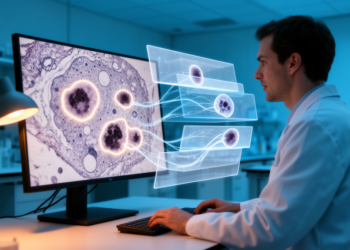
An explainable deep learning pipeline segments single cells in fluorescence microscopy images and classifies them as normal or metastasising, with ...
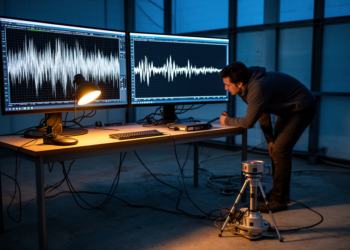
Researchers have developed a self-supervised deep learning model, SA-S2S, that removes random noise from 3D seismic data without requiring clean ...

A new contrastive learning framework adapts a speech-trained HuBERT model to unlabeled violin recordings, achieving the best reported correlations with ...


Embark on a thrilling journey of discovery with Scienmag.com—your ultimate source for cutting-edge breakthroughs. Immerse yourself in a world where curiosity knows no limits and tomorrow’s possibilities become today’s reality!