

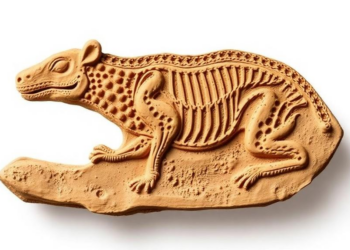
Ancient Capybara Fossil Reveals the Atacama Desert Was Once a Lush Wetland
A nearly 9-million-year-old capybara tooth from Chile's Atacama Desert reveals the region once hosted wetlands, crocodiles, and palms, challenging its ...
A nearly 9-million-year-old capybara tooth from Chile's Atacama Desert reveals the region once hosted wetlands, crocodiles, and palms, challenging its ...

Japanese researchers show that assimilating continuous hourly wind observations from the Antarctic PANSY radar into a numerical weather prediction system ...

A modeling study of Tropical Cyclone Shaheen shows that warmer sea surface temperatures intensified the simulated storm and boosted coastal ...

A new multiscale analysis of the United States quantifies how mobile location data systematically over-represents and under-represents populations across geography, ...

Australian-first research projects at least $855 billion in economic losses from sea level rise and storm surge by 2100, threatening ...

Researchers at Kyushu University found that the deep-sea protein PoXeR withstands extreme hydrostatic pressure by assembling into stabilizing trimeric structures.

A diterpenoid-rich fraction prepared from the roots of the Turkish sage Salvia oligophylla induced programmed cell death in MCF-7 breast ...


Embark on a thrilling journey of discovery with Scienmag.com—your ultimate source for cutting-edge breakthroughs. Immerse yourself in a world where curiosity knows no limits and tomorrow’s possibilities become today’s reality!