

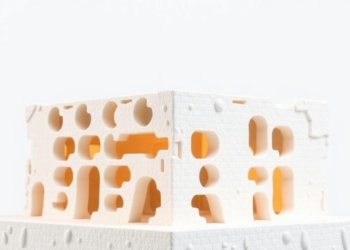
Waste Phosphogypsum Finds New Life in 3D-Printed Buildings Through Smart Additive Chemistry
Researchers show that route-specific admixture chemistry can turn stockpiled phosphogypsum waste into printable, load-bearing 3D-printed building structures.
Researchers show that route-specific admixture chemistry can turn stockpiled phosphogypsum waste into printable, load-bearing 3D-printed building structures.

Scientists found that the peanut embryonic axis, a bitter by-product usually discarded during processing, is rich in triterpenoids and fiber ...
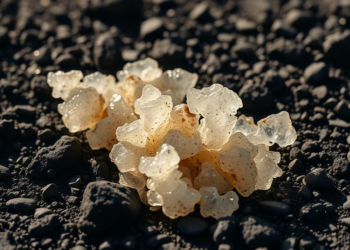
Researchers optimized the synthesis of a zinc oxide and expanded vermiculite nanocomposite that protects bitumen from both thermal and ultraviolet ...
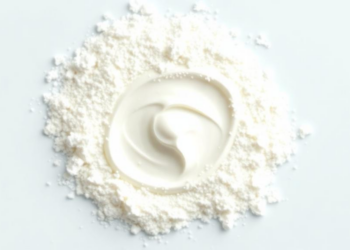
A combined ultrasound and heat pretreatment slashes the antibacterial activity of egg white powder, allowing small additions to strengthen yogurt ...
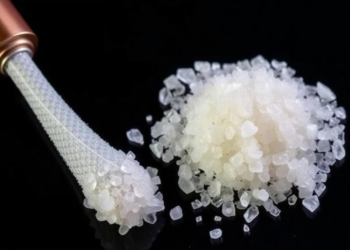
A new critical review in Polymer Bulletin surveys how polymeric soft solids, from elastomers and tough hydrogels to nanocomposites and ...

A new study shows that pregelatinized corn starch concentration nonlinearly controls whether freeze-dried grape matrices retain their structure, with an ...

A linear anionic polysaccharide from microbial fermentation cuts starch gel hardening and water loss while acting oppositely on potato and ...
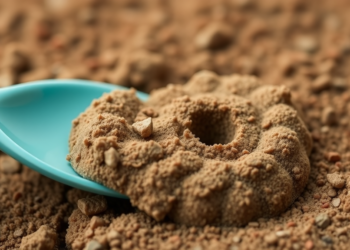
Researchers used a mud-and-sand-inspired combination of gellan gum and xanthan gum to transform protein-based high internal phase emulsions into stable, ...

A new study of eight commercial UHT milk products shows that consumer liking depends on an integrated quality system of ...

A new study shows that an AI agent combining data retrieval with mechanistic food-science knowledge outperforms conventional machine learning for ...


Embark on a thrilling journey of discovery with Scienmag.com—your ultimate source for cutting-edge breakthroughs. Immerse yourself in a world where curiosity knows no limits and tomorrow’s possibilities become today’s reality!