

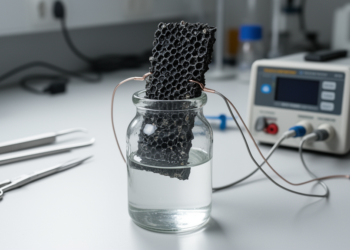
NiTe–MoS2/rGO electrode reaches 782 farads per gram in laboratory testing
A laboratory NiTe–MoS2/rGO supercapacitor electrode achieved 782 farads per gram and retained 87% of its initial capacity after 5,000 cycles.
A laboratory NiTe–MoS2/rGO supercapacitor electrode achieved 782 farads per gram and retained 87% of its initial capacity after 5,000 cycles.
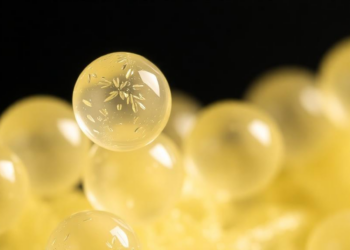
Researchers have developed recoverable chitosan-based hydrogel beads embedded with a zirconium metal-organic framework and reduced graphene oxide that remove nearly ...
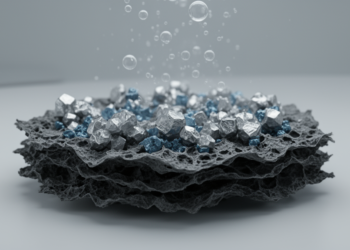
Researchers have unveiled a hybrid electrode material that pulls double duty in the clean-energy economy, storing impressive amounts of charge ...
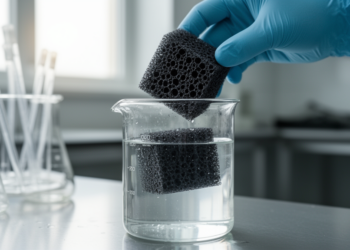
Brazilian researchers combined experiments and quantum simulations to reveal that three-dimensional graphene materials capture paracetamol through physisorption, with capacity peaking ...
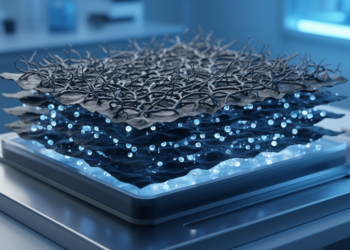
Researchers have grown a reduced graphene oxide–polypyrrole composite directly on stainless steel by chemical bath deposition, achieving a specific capacitance ...
Researchers have used water-soluble inorganic nitrogen precursors in a hydrothermal process to fine-tune nitrogen chemistry on graphene, producing a supercapacitor ...
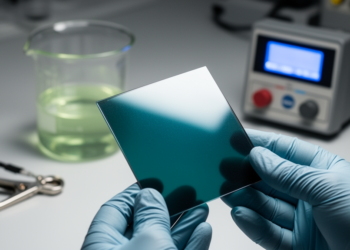
Composition-engineered amorphous nickel cobalt tungstate electrodes grown by a simple SILAR method deliver 785.72 C g−1 specific capacity and a ...
Researchers in Mexico have created graphene oxide-modified titanium dioxide nanotube-nanoring photoanodes that degrade 85 percent of methylene blue under solar ...
A new study shows graphene oxide and reduced graphene oxide can remove nearly all Rhodamine B dye from water within ...
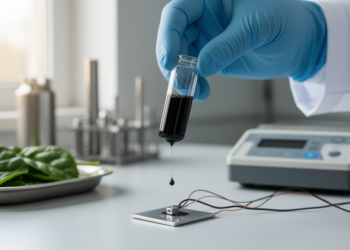
Researchers converted spinach leaf extract into nitrogen-rich reduced graphene oxide that detects dopamine in human serum with high sensitivity, backed ...


Embark on a thrilling journey of discovery with Scienmag.com—your ultimate source for cutting-edge breakthroughs. Immerse yourself in a world where curiosity knows no limits and tomorrow’s possibilities become today’s reality!