


Controlled Precursor Transformation Yields High-Performance LiFePO4 Cathodes
Controlling the dehydration and phase transformation of FePO4·2H2O precursors enables the synthesis of high-performance LiFePO4 cathodes with strong rate capability ...
Controlling the dehydration and phase transformation of FePO4·2H2O precursors enables the synthesis of high-performance LiFePO4 cathodes with strong rate capability ...

Researchers have synthesized hierarchical porous activated carbons from post-extraction orange peel residues using potassium acetate activation, producing supercapacitor electrodes that ...

A new thermochemically engineered silicon anode architecture integrates a nanoporous shell and chemically anchored carbon networks to resolve structural instabilities ...

Researchers synthesized nitrogen-doped hard carbon from waste macadamia nut shells, achieving high initial Coulombic efficiency and durable capacity retention in ...

Researchers extracted an interconnected aero-eutectic graphite framework from gray cast iron, creating a binder-free lithium-ion battery anode that eliminates metallic ...

A solvothermally synthesized ethylenediamine-derived polyimide anode achieved a reversible capacity of 156.2 mAh g−1 and retained 80 percent capacity after ...

Engineered yolk-shell magnetite microspheres featuring mesoporous carbon shells deliver high reversible capacity and retain ninety percent of their capacity across ...

Researchers synthesized zinc oxide and carbon nanopills that exhibit high capacity and long-term cycling stability as lithium-ion battery anodes.

A comprehensive review establishes that interfacial engineering rather than bulk material composition governs charge-transfer kinetics, mechanical buffering, and long-term cycling ...
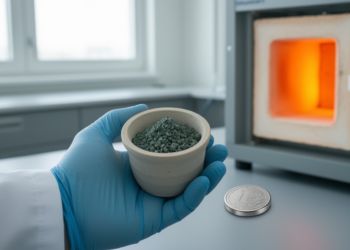
A solid-phase synthesis method produced a Na4Fe3(PO4)2P2O7 cathode that delivered 110 mAh·g−1 at 0.1 C and retained 91% capacity after ...


Embark on a thrilling journey of discovery with Scienmag.com—your ultimate source for cutting-edge breakthroughs. Immerse yourself in a world where curiosity knows no limits and tomorrow’s possibilities become today’s reality!