


Rigid Molecules and a Sharp Energy Boundary Set the Path to Better Organic Solar Cells
Researchers at Chiba University identified a thermodynamic boundary for photocurrent generation in organic solar cells and found that more rigid ...
Researchers at Chiba University identified a thermodynamic boundary for photocurrent generation in organic solar cells and found that more rigid ...
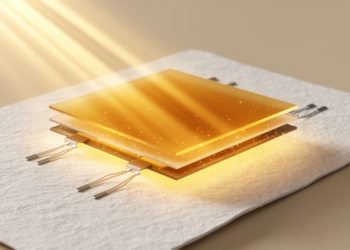
A simulation-only study predicts a lead-free, tin-free bilayer solar cell using Cs₂TiI₆ and La₂NiMnO₆ absorbers could reach 28.5% efficiency.
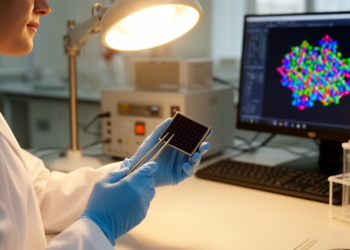
A research team used SCAPS-1D simulation to optimize a lead-free CsSnI3 perovskite solar cell and then fabricated it, lifting the ...
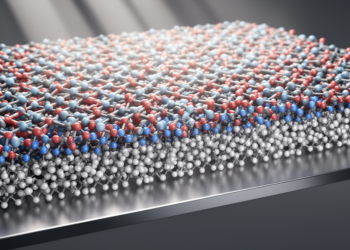
A methanol-assisted deposition process controlled cathode-interlayer molecular orientation and enabled a binary organic solar cell with certified 20.65% efficiency and ...

A SCAPS-1D simulation study reports that a lead-free inorganic Cs2BiAgI6 perovskite solar cell with optimized TiO2 and Cu2O transport layers ...

Simulations show that tuning the valence band offset at the hole transport layer interface of lead-free Cs2PdBr6 perovskite solar cells ...

Researchers have discovered that tightly packed C60 molecules create band-like electronic states that drive recombination in perovskite solar cells, and ...

Researchers have introduced solid-state emissive guest acceptors that open thermally accessible radiative pathways, suppressing non-radiative voltage losses and enabling certified ...
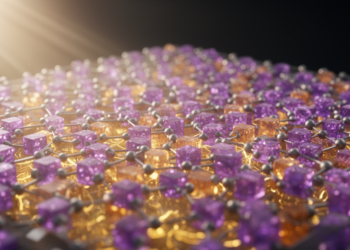
Researchers blended three self-assembled molecules into high-entropy hole-selective contacts, achieving a certified 27.31% efficiency and negligible loss after 1,300 hours ...

Researchers built 2D perovskite spacer cations in situ from formamidinium and n-hexyl phosphonic acid, achieving 26.32% efficiency and retaining over ...


Embark on a thrilling journey of discovery with Scienmag.com—your ultimate source for cutting-edge breakthroughs. Immerse yourself in a world where curiosity knows no limits and tomorrow’s possibilities become today’s reality!