

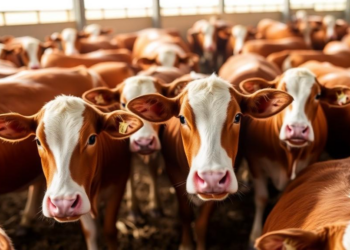
Livestock Farms Emit Aromatics That Could Drive Particle Pollution
Field measurements near South Korean livestock farms show that aromatic compounds, though less abundant than alkanes, account for over 99% ...
Field measurements near South Korean livestock farms show that aromatic compounds, though less abundant than alkanes, account for over 99% ...

A field study in Changchun, Northeast China, finds that IQAir, PurpleAir and AirGradient sensors track regulatory PM2.5 monitors closely overall, ...
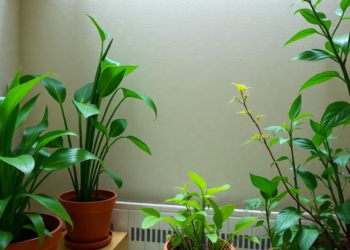
A three-month study in Lahore offices found indoor plants cut fine particulate matter by 96.7 percent in sealed rooms but ...

A study of U.S. nurses' children found that higher prenatal fine particulate matter exposure was associated with higher autism-related trait ...

A hybrid VMD-CBiLSTM model optimized by the shuffled frog-leaping algorithm achieved an average R2 of 0.981 when predicting PM2.5 concentrations ...

A hybrid decision framework combining DEMATEL, SWARA, entropy weighting, and TOPSIS has ranked 27 roadside plant taxa for pollution mitigation ...
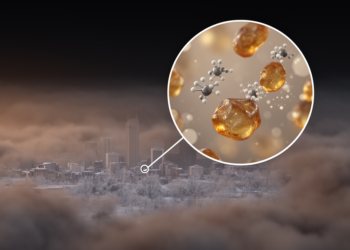
A WRF-Chem study of a November 2017 pollution episode in the North China Plain finds that ammonia uptake on secondary ...
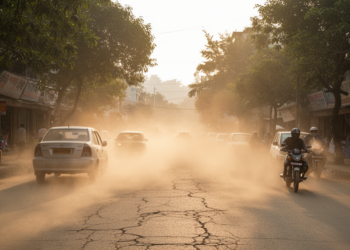
A modelling study in Imphal, India, finds that prescribed road-surface silt loading strongly controls how well AERMOD reproduces observed roadside ...

A summer cruise and urban monitoring campaign in the Greater Bay Area found that offshore fine-particle organic nitrogen declined with ...

A ten-year analysis of Warsaw monitoring data shows wintertime PM2.5 and PM10 conditions improved substantially, driven by emission reductions as ...


Embark on a thrilling journey of discovery with Scienmag.com—your ultimate source for cutting-edge breakthroughs. Immerse yourself in a world where curiosity knows no limits and tomorrow’s possibilities become today’s reality!